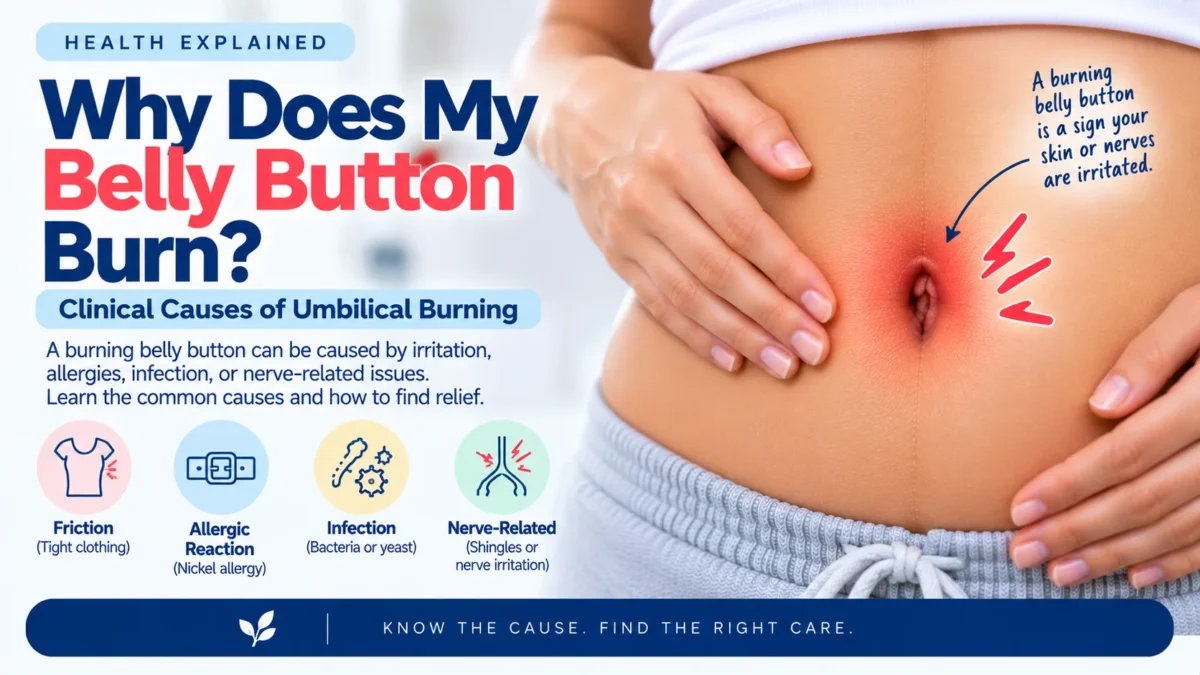
Why Does My Belly Button Burn? Clinical Causes of Umbilical Burning
Experiencing a sudden, intense burning sensation inside or directly around your belly button can be highly distressing. In clinical diagnostics, it is crucial to differentiate between a dull ache, a sharp pulling cramp, and a burning sensation. While cramps usually originate from deep internal organs like the intestines, a localized burning sensation is almost always a highly specific neurological response. This sensation occurs when the delicate nerve endings situated in the upper layers of your skin or the superficial connective tissue of your abdomen are subjected to chemical irritation, severe friction, or direct viral damage.
Because the umbilicus is a recessed, thin-skinned anatomical fold resting directly over your anterior abdominal wall, it is highly susceptible to external irritants. When a patient reports that their belly button feels like it is on fire or stinging, dermatologists and internal medicine specialists evaluate three distinct anatomical pathways. The burning could be the result of a destroyed epidermal skin barrier, an allergic immunological response, or a neuropathic misfire stemming from an inflamed nerve root. By carefully examining the visual appearance of the skin and tracking exactly when the burning sensation occurs, you can accurately identify the root cause of the fiery discomfort.
Mechanical Friction and Intertrigo
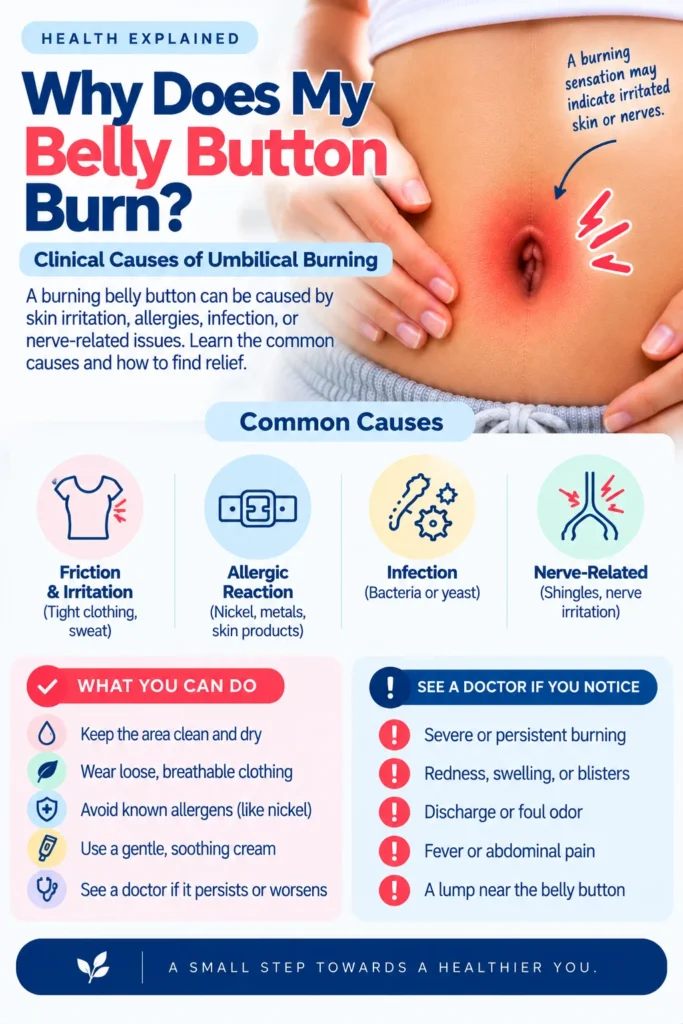
The most common, yet frequently overlooked, cause of a burning belly button is a severe mechanical friction burn. The skin inside the navel is incredibly thin. If you engage in high-intensity cardiovascular exercise while wearing tight, synthetic athletic clothing, the damp fabric continuously rubs against the umbilical skin.
Over a prolonged period, this relentless physical scraping physically destroys the top protective layer of your epidermis, known as the stratum corneum. Once this barrier is stripped away, the raw, exposed nerve endings underneath come into direct contact with your salty sweat. This triggers an immediate, highly acute burning or stinging sensation. When this friction occurs deep within the overlapping skin folds of the abdomen and is compounded by trapped moisture, it causes a clinical condition known as intertrigo. A belly button suffering from intertrigo will look deeply raw, beefy red, and will burn intensely rather than itch.
Allergic Contact Dermatitis
If the skin around your navel is bright red, slightly raised, and feels like it has been chemically burned, you are likely experiencing allergic contact dermatitis. This is a severe, localized immunological response to an external allergen.
The most frequent culprit for umbilical contact dermatitis is an allergy to nickel. Nickel is heavily utilized in the manufacturing of metal belt buckles, the heavy buttons on denim jeans, and various body piercing jewelry. When the metal rests against your sweaty stomach throughout the day, microscopic nickel particles leach into your skin. Your immune system identifies these particles as a toxic threat and launches a massive inflammatory attack. The resulting rash is typically confined to the exact area where the metal touched your skin, creating a hot, fiery, and deeply burning sensation that can easily blister if the exposure continues.
Neuropathic Pain and Herpes Zoster
If your belly button burns intensely, yet the surface skin looks absolutely flawless with no redness or rash, the pain is likely neuropathic. Neuropathic pain means the issue lies within the nerve itself, rather than the surrounding tissue.
The nerves that supply sensation to your belly button originate from your spinal cord and wrap around your torso. A highly aggressive cause of burning umbilical pain is the early stage of Herpes Zoster, commonly known as shingles. The shingles virus lies dormant in your nerve roots for decades after a childhood chickenpox infection. When it reactivates, it travels along a specific nerve pathway. Before the classic shingles blisters even appear on the skin, the virus aggressively damages the nerve, causing a relentless, deep, and searing electrical burn localized strictly to one side of the belly button.
Another neuropathic cause is anterior cutaneous nerve entrapment syndrome. This occurs when the tiny nerves supplying the skin of the abdomen become physically pinched or trapped as they pass through the dense abdominal muscles. This entrapment causes a sharp, highly localized burning or stabbing pain directly next to the navel that frequently worsens when you tense your stomach muscles.
Cutaneous Candidiasis and Weeping Inflammation
While fungal yeast infections are primarily known for causing intense, maddening itching, severe or advanced cases frequently transition into a burning sensation.
When Candida yeast rapidly multiplies inside the dark, humid cavity of the belly button, it creates a beefy red rash and a thick white discharge. As you aggressively scratch the intensely itchy rash, you physically tear the fragile skin. Once the tissue is severely compromised, the highly acidic metabolic waste produced by the multiplying yeast cells sinks into the raw microscopic wounds. This creates an intense, fiery burning sensation that is exacerbated every time you apply soap or attempt to clean the infected navel.
Micro-Tears and Early Umbilical Herniation
Sometimes, a burning sensation just behind the belly button is actually the earliest warning sign of a structural mechanical failure.
The umbilical ring is a naturally weak point in the dense fascial connective tissue of your abdominal wall. If you frequently lift extremely heavy weights or have a severe chronic cough, you subject this weak point to massive spikes in intra-abdominal pressure. Before a full umbilical hernia physically pops out, the tough fascial fibers begin to stretch and sustain microscopic tears. Because this connective tissue is highly innervated, these micro-tears often feel like a hot, searing, or tearing burn situated directly behind the navel, especially when you strain, cough, or lean back.
When to Seek Emergency Medical Attention
While a burning sensation caused by a friction burn or a nickel allergy can be safely managed with environmental changes and over the counter soothing creams, certain presentations require urgent clinical evaluation.
You must seek immediate emergency medical care if the burning pain is suddenly accompanied by severe, rigid abdominal cramping, a high-grade fever, or uncontrollable vomiting. Furthermore, if you notice the burning skin is rapidly turning a dark purple or black color, or if red streaks are actively spreading outward from the navel, you must be evaluated immediately. These are critical clinical warning signs of necrotizing fasciitis, a rapidly spreading flesh eating bacterial infection, or a strangulated hernia, both of which require life-saving emergency surgery.
Frequently Asked Questions
A burning sensation in the belly button is a specific neurological response indicating that the delicate nerve endings in your umbilical skin have been exposed or irritated. This is most frequently caused by a severe friction burn from tight clothing, an allergic reaction to a metal belt buckle, or early nerve inflammation.
Yes, while a mild yeast infection typically causes severe itching, an advanced or heavily scratched yeast infection will burn. Once your fingernails tear the delicate skin, the acidic waste produced by the fungal yeast seeps into the raw tissue, converting the intense itch into a fiery burning sensation.
This is a classic presentation of allergic contact dermatitis. The metal buttons on most denim jeans contain nickel. If you have a mild nickel allergy, the continuous contact between the metal and your sweaty skin triggers a localized, hot, burning immune response directly over your belly button.
The earliest stage of shingles presents as a deep, severe, searing electrical burn or hypersensitivity in the skin. This neuropathic burning often occurs several days before the actual red, fluid-filled shingles blisters physically erupt on the surface of your stomach.
Yes, if you lean far backward or stretch aggressively, you place immense mechanical tension on the linea alba, which is the connective tissue running down your stomach. If this tissue is weak, the sudden stretching can cause microscopic fascial tears behind the navel, resulting in a hot, tearing burn.
To stop the burning, you must eliminate the irritant. Wash the area gently with cool water to remove acidic sweat, ensure the navel is completely dry, and apply a thin layer of plain petroleum jelly to create a soothing, protective barrier against further clothing friction.
Human sweat contains high concentrations of salt and trace amounts of ammonia. If the delicate epidermal barrier inside your belly button is already slightly damaged from scratching or clothing friction, the salty sweat will seep directly into the raw nerve endings, causing a sharp, stinging burn.
Can an umbilical hernia feel like a burning pain?
Yes, in its early stages of development, an umbilical hernia can manifest as a burning sensation. Before the fat or intestines physically protrude, the immense internal pressure stretching and tearing the dense fascial fibers behind the navel often registers in the brain as a hot, localized burn.
You must never pour rubbing alcohol onto skin that is already burning. Alcohol is a severe chemical irritant that is highly cytotoxic. It will instantly trigger agonizing, blinding pain, completely dry out the compromised tissue, and significantly worsen the underlying inflammation.
You should consult a physician immediately if the burning sensation is accompanied by a severe, spreading red rash, physical blisters, a sudden high fever, or if the localized burning deepens into a severe, rigid abdominal cramp that makes you feel nauseous.
Conclusion
A burning belly button is a precise neurological distress signal, demanding that you immediately identify and remove the offending environmental or biological irritant. Because the umbilicus lacks the thick, protective epidermal layers found on the palms of your hands or the soles of your feet, it is exceptionally vulnerable to the microscopic friction of synthetic fabrics, the chemical leaching of cheap metallic alloys, and the corrosive nature of trapped fungal waste. By carefully examining the visual state of the skin surrounding the navel, you can quickly differentiate between the fiery rash of contact dermatitis and the invisible, deep electrical burn of early neuropathic viral damage. Protecting the delicate umbilical barrier requires meticulous moisture control, avoiding known chemical allergens, and applying soothing barrier ointments to grant the raw nerve endings the critical time they need to heal.
Disclaimer
This blog is for informational and educational purposes only, and does not intend to substitute any professional medical advice or consultation. For any health related concerns, please consult with your physician, or call 911.