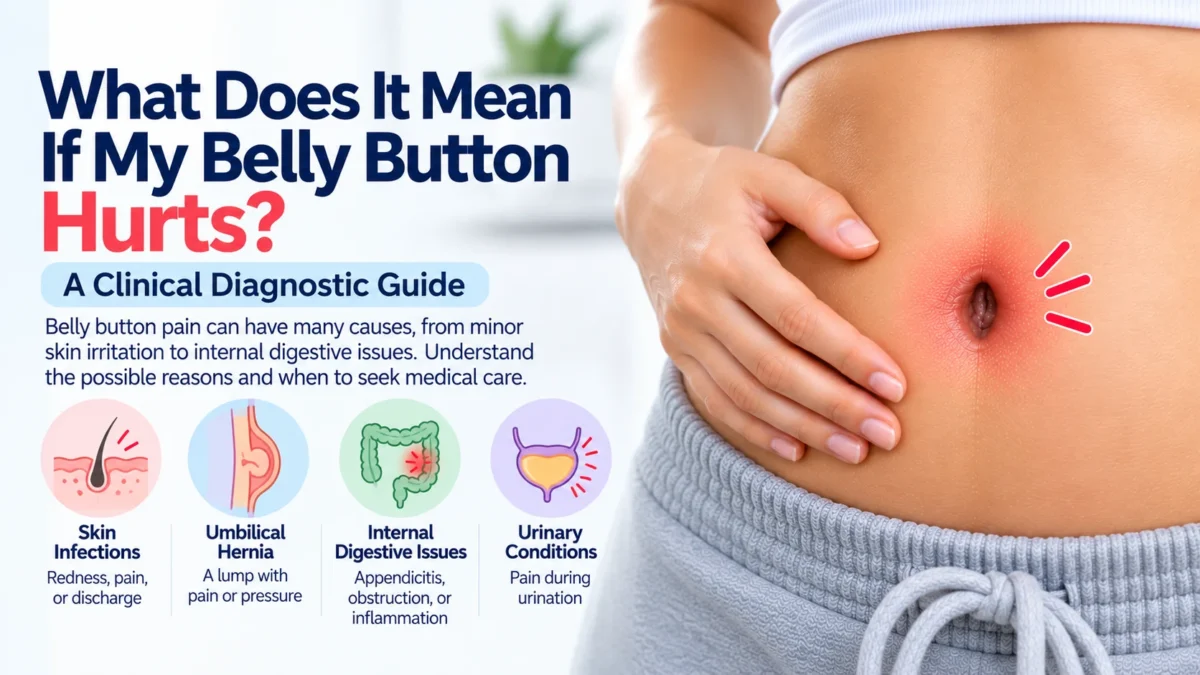
What Does It Mean If My Belly Button Hurts? A Clinical Diagnostic Guide
When you experience sudden or chronic pain localized directly at your umbilicus, it can be incredibly difficult to pinpoint the exact cause. The belly button is not just a simple scar left over from birth; it is a complex anatomical intersection where delicate surface skin, dense structural connective tissue, and deep internal nerve pathways all converge into a single focal point. Because of this unique anatomy, a hurting belly button can mean anything from a minor trapped skin infection to a life-threatening gastrointestinal emergency.
To accurately decipher what it means when your belly button hurts, clinical medicine categorizes the pain based on anatomical depth. The origin of the pain can be superficial, meaning it exists entirely on the outer layer of the skin. It can be structural, indicating a physical tear in the abdominal wall directly behind the navel. Finally, it can be deep and visceral, meaning the belly button itself is perfectly healthy, but the brain is projecting distress signals from a failing internal organ directly onto the umbilical region. By analyzing the exact sensation of the pain, its triggers, and accompanying symptoms, you can identify the root cause of your discomfort.
Level 1: Superficial Dermatological Pain
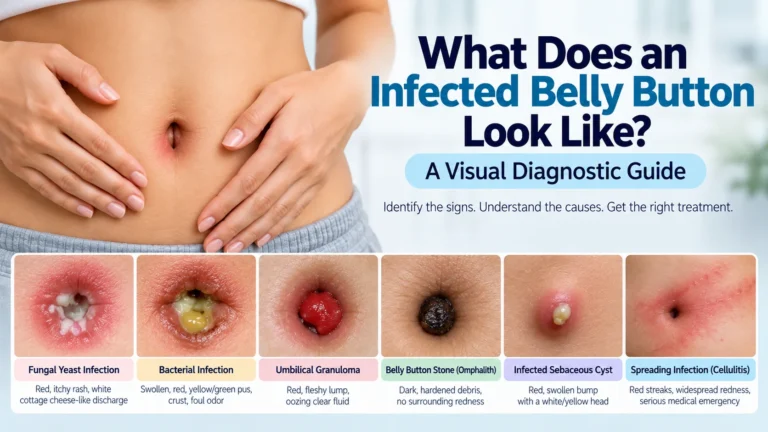
If the pain is sharp, stinging, itchy, or feels like a severe burn strictly on the surface of the navel, you are likely dealing with a superficial dermatological issue. Because the belly button is a dark, recessed cavity, it traps moisture, dead keratin cells, and lint, making it a perfect breeding ground for opportunistic pathogens.
When a bacterial infection, known as omphalitis, or a fungal yeast infection takes hold, the skin inside the navel becomes highly inflamed, raw, and exquisitely tender to the touch. This type of superficial pain is almost always accompanied by visible clinical signs. You will likely see bright red erythema spreading around the opening of the navel, and you may notice a foul-smelling, thick yellow or green purulent discharge weeping from the cavity. If the pain only occurs when you physically touch or clean the inside of the belly button, the issue is entirely skin-deep and usually resolves with clinical-grade topical antibiotics or antifungal creams.
Level 2: Structural Fascial Pain (Umbilical Hernias)
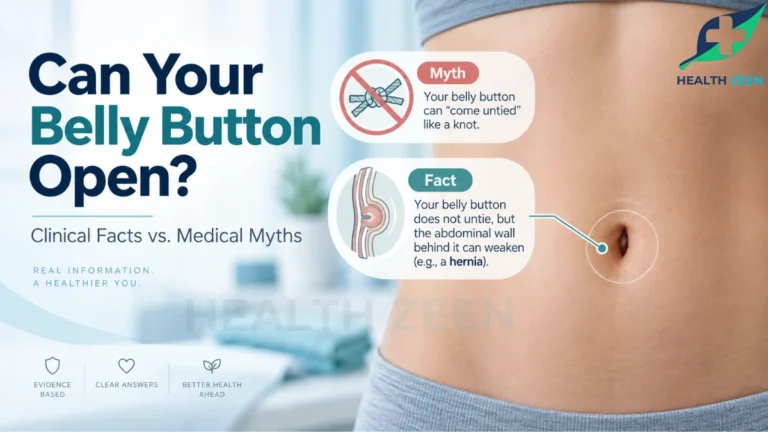
If the skin of your belly button looks perfectly normal, but you feel a sharp, tearing, or pulling pain localized directly behind the navel, you are likely experiencing structural pain caused by a fascial defect, most commonly an umbilical hernia.
The tissue immediately behind the belly button is the absolute weakest point in the human anterior abdominal wall. If you have been lifting heavy weights, coughing violently due to a respiratory illness, or have recently carried a pregnancy, the extreme intra-abdominal pressure can physically tear this connective tissue. When this happens, underlying abdominal fat or a loop of the small intestine is forcefully squeezed through the tear.
Pain from an umbilical hernia is highly mechanical. It typically disappears when you lie flat on your back, but flares up immediately as a sharp, pulling ache when you stand up, cough, sneeze, or strain on the toilet. You will also frequently feel a small, tender, squishy lump protruding directly inside or next to the navel. If this lump ever becomes rock-hard, turns purple, and is accompanied by excruciating pain, the hernia has become strangulated, meaning the blood supply to the trapped tissue has been cut off, requiring immediate emergency surgery.
Level 3: Deep Visceral and Referred Pain
Sometimes, your belly button hurts even though the skin is flawless and there is no hernia present. This is known as referred visceral pain, and it is a critical warning sign for severe internal gastrointestinal distress.
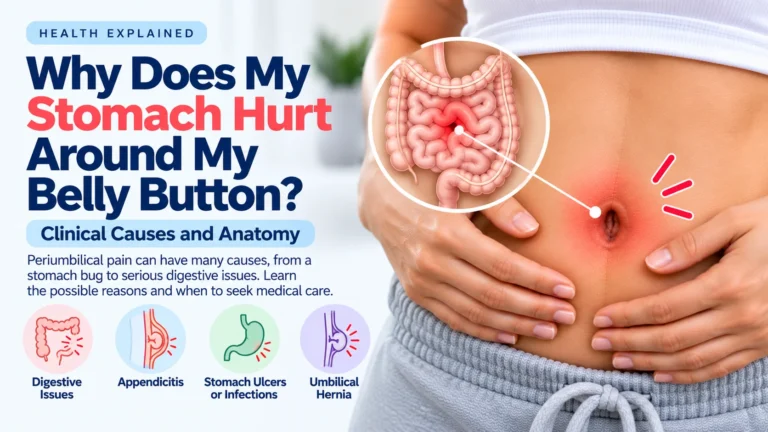
During human fetal development, the nerves that supply the midgut organs, which include the small intestine and the appendix, are wired directly to the T10 spinal nerve. The T10 nerve exclusively supplies the strip of skin that crosses directly over your belly button. Because internal organs lack precise pain receptors, whenever your midgut is inflamed, your brain misinterprets the signal and projects a dull, agonizing, continuous ache directly onto the belly button.
Early Acute Appendicitis
If you suddenly develop a dull, continuous ache right at the center of your belly button that slowly worsens over several hours, it is the classic hallmark of early acute appendicitis. Within twelve to twenty-four hours, as the appendix swells massively and begins to touch the abdominal lining, this pain will sharply migrate away from the belly button and localize in the lower right quadrant of your abdomen.
Small Bowel Obstructions
If the pain behind your belly button comes in intense, agonizing, colicky waves, you may be experiencing a small bowel obstruction. As your digestive tract aggressively spasms to push food past a physical internal blockage, the cramps peak sharply at the umbilicus. This deep visceral pain is a medical emergency and is almost always accompanied by severe abdominal bloating and uncontrollable projectile vomiting.
Level 4: Urological Pain Pathways
If your belly button strictly hurts during the physical act of urination, the pain is tied to a unique urological pathway known as the median umbilical ligament.
This dense fibrous cord permanently connects the top dome of your urinary bladder directly to the back of your belly button. If you develop a severe urinary tract infection, or cystitis, the mucosal lining of your bladder becomes highly inflamed. When this inflamed bladder forcefully contracts to expel urine, it violently yanks downward on the median umbilical ligament. This mechanical pulling transmits a sharp, stinging, or tearing sensation straight up the cord, resulting in sudden umbilical pain that synchronizes perfectly with urination.
When Should You Seek Emergency Medical Care?
While a minor fungal infection or a small, reducible hernia can be evaluated during a standard doctor’s appointment, certain types of belly button pain indicate a rapidly deteriorating, life-threatening clinical emergency.
You must proceed immediately to the nearest emergency room if your belly button pain is accompanied by a sudden, high-grade fever and uncontrollable shivering. Seek urgent care if the pain is severe and your abdominal muscles become rigid or rock-hard to the touch, which indicates severe internal bleeding or peritonitis. Finally, if you experience rebound tenderness, where pressing deeply on the stomach does not hurt, but suddenly letting go causes blinding, excruciating agony, you must be evaluated for a ruptured internal organ immediately.
Frequently Asked Questions
If your belly button only hurts when physical pressure is applied, you are likely dealing with a localized structural issue. This is most commonly a superficial dermatological infection, an inflamed sebaceous cyst hidden just beneath the skin, or a small umbilical hernia protruding through the abdominal fascia.
A sharp, mechanical pulling pain behind the belly button is the classic symptom of an umbilical hernia. This occurs when the connective tissue behind the navel tears, allowing underlying fat or intestines to push through. The pain typically worsens when you cough, sneeze, or lift heavy objects.
Yes, viral or bacterial gastroenteritis causes severe inflammation throughout the entire mucosal lining of your intestines. Because the nerve supply for the small intestine maps directly to the belly button area, this widespread internal inflammation frequently triggers a deep, dull, crampy pain centered at the navel.
What does the pain of appendicitis feel like at first?
The earliest stage of acute appendicitis almost always presents as a dull, poorly localized, aching pain positioned exactly at the belly button. Over the next six to twelve hours, this pain will become significantly sharper and migrate distinctly to the lower right side of your stomach.
Pain on the inside of the belly button is usually referred visceral pain. Your brain cannot pinpoint exact pain locations inside the digestive tract, so it projects distress signals from an inflamed small intestine, a blocked bowel, or an infected appendix directly to the T10 dermatome at the navel.
Mild belly button pain during the second and third trimesters is quite common. As the uterus expands rapidly, it severely stretches the abdominal skin and the underlying linea alba connective tissue. This mechanical stretching pulls the umbilical scar flat, causing localized soreness and sensitivity.
Yes, wearing exceptionally tight, high-waisted pants with heavy metal buttons can cause contact dermatitis or severe friction burns on the delicate skin of the umbilicus. Additionally, the extreme physical compression can increase intra-abdominal pressure, aggravating an undiagnosed umbilical hernia.
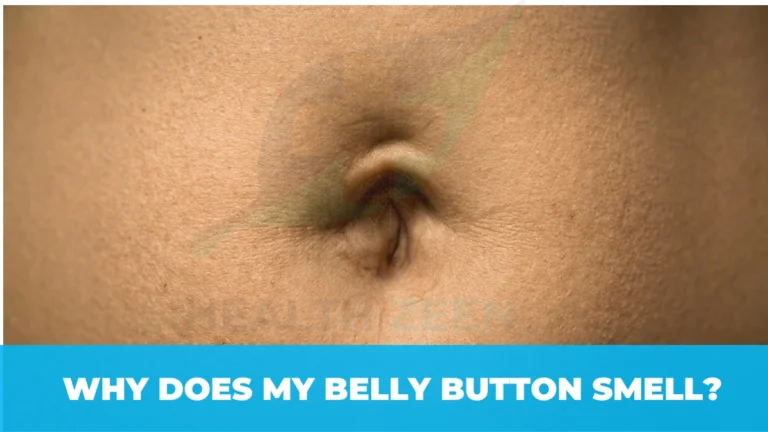
If your belly button hurts and emits a foul, putrid odor, you almost certainly have an active microbial infection. Dark, damp navels easily trap dead skin and sweat, leading to bacterial omphalitis or fungal yeast overgrowths that cause raw, inflamed skin and thick, smelly discharge.
If you have severe belly button pain accompanied by a fever, you must seek emergency medical attention immediately. The combination of periumbilical pain and a fever is a primary clinical red flag for a systemic infection, a strangulated hernia, or a rupturing appendix.
Yes, a rare congenital abnormality called an urachal cyst can form on the ligament connecting your bladder to your navel. If this hidden internal pocket fills with fluid and becomes infected, it will cause severe, highly localized stabbing pain just behind or slightly below the belly button.
Disclaimer
This blog is for informational and educational purposes only, and does not intend to substitute any professional medical advice or consultation. For any health related concerns, please consult with your physician, or call 911.