What Does Castor Oil in the Belly Button Do? Benefits and Myths
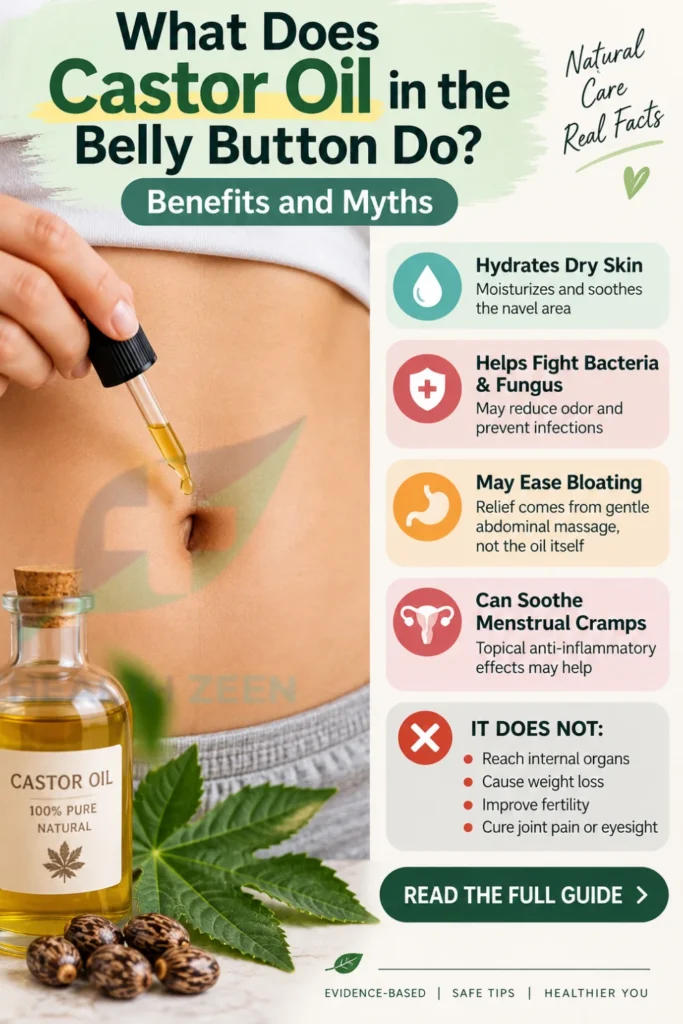
Applying castor oil to the navel provides localized skin hydration and mild antimicrobial benefits due to its high ricinoleic acid content. However, the heavy oil cannot penetrate the skin barrier to reach internal organs, meaning any perceived digestive or bloating relief actually comes from the physical abdominal massage stimulating the vagus nerve, not the oil itself.
The practice of putting castor oil in the belly button has recently exploded across social media platforms as a miracle cure for bloating, infertility, and weight gain. This trend originates from the traditional Ayurvedic practice known as Nabhi Chikitsa (navel oiling). While castor oil possesses well-documented dermatological benefits due to its unique chemical composition, modern anatomical science strictly contradicts many of the viral physiological claims. You must separate clinically proven dermatological facts from internet myths to understand exactly what this thick, viscous oil does when applied to the human umbilicus.
To understand what castor oil actually does in the belly button, you must analyze its primary active compound and how human skin anatomy functions. Castor oil is a thick triglyceride extracted from the seeds of the Ricinus communis plant.
Ricinoleic Acid and the Skin Barrier
Castor oil consists of roughly 90 percent ricinoleic acid, a rare monounsaturated fatty acid. According to pharmacological research published by the National Institutes of Health (NIH), topical application of ricinoleic acid exhibits remarkable localized anti-inflammatory and analgesic (pain-relieving) properties. However, the human skin barrier, specifically the stratum corneum, is incredibly highly evolved to keep foreign substances out. The heavy molecular weight of castor oil prevents it from achieving transdermal absorption deep enough to reach your stomach, liver, or intestines.
Debunking the Pechoti Gland Myth
Many holistic websites claim that the belly button houses the “Pechoti gland,” an organ allegedly connecting the navel to over 72,000 veins throughout the body. Modern medical science and human dissection have conclusively proven that the Pechoti gland does not exist. After the umbilical cord is cut at birth, the internal blood vessels completely dry up and solidify into fibrous ligaments. Therefore, oil placed in the adult navel has no direct anatomical pathway to the internal bloodstream.
While castor oil cannot absorb directly into your internal organs through the navel, applying it topically to the umbilicus still offers several highly beneficial dermatological and localized physiological effects.
Deep Skin Hydration
The belly button is a notoriously dry area prone to flaking and irritation. Castor oil is a powerful humectant, meaning it actively draws moisture from the air directly into the outer layers of the skin. Applying a few drops inside the navel cavity prevents severe dryness, heals micro-tears caused by aggressive scratching, and maintains the skin’s natural elasticity.
Localized Antimicrobial Properties
The dense folds of an “innie” belly button trap sweat and dead skin, making it a primary breeding ground for fungal and bacterial infections. Ricinoleic acid demonstrates scientifically proven antimicrobial and antifungal properties. Regularly applying a small amount of castor oil inside the navel safely inhibits the rapid overgrowth of Staphylococcus bacteria and Candida yeast, preventing chronic foul odors and umbilical infections.
Relief from Menstrual Cramps
Applying warm castor oil to the belly button frequently provides significant relief from severe menstrual cramps (dysmenorrhea). The relief does not occur because the oil penetrates the uterus. Instead, the localized anti-inflammatory action of the ricinoleic acid on the surface skin, combined with the relaxing heat of the warmed oil, safely soothes the superficial abdominal muscle wall.
Placing castor oil in the belly button does not directly cure bloating, irritable bowel syndrome (IBS), or indigestion, but the application method frequently provides secondary gastrointestinal relief.
When you apply castor oil to your navel, you naturally rub and massage the surrounding abdominal area to work the thick oil into the skin. This physical abdominal massage actively stimulates the vagus nerve. The National Center for Complementary and Integrative Health (NCCIH) notes that Ayurvedic massage therapies heavily influence the parasympathetic nervous system. Stimulating the vagus nerve triggers the “rest and digest” physiological response, which rapidly increases gut motility, safely forces trapped gas through the intestines, and effectively relieves severe bloating. The mechanical massage, not the oil itself, delivers the digestive relief.
You must apply castor oil correctly using sterile techniques to maximize its localized benefits and prevent secondary umbilical infections.
- Ensure your belly button is completely clean and dry following your normal shower routine.
- Purchase 100 percent pure, cold-pressed, hexane-free organic castor oil to avoid harsh chemical irritants.
- Slightly warm the oil by placing the glass dropper bottle in a bowl of hot water for three minutes. Do not microwave the oil, as it can cause severe localized burns.
- Lie flat on your back and place two to three drops of the warmed oil directly inside the naval cavity.
- Use your fingertips to gently massage the oil in a clockwise circular motion around the belly button for three to five minutes.
- Wipe away any excess oil pooling in the navel with a clean tissue to prevent moisture trapping.
What Are the Side Effects and Risks?
While generally safe for topical dermatological use, applying castor oil to the belly button carries specific clinical risks for patients with highly sensitive skin.
Dermatologists frequently report cases of allergic contact dermatitis resulting directly from pure castor oil application. If you experience intense itching, a raised red rash, or small blisters around the umbilicus after application, you must wash the oil off immediately with strong soap and water. Furthermore, failing to wipe away excess thick oil creates a damp, occlusive seal over the deep navel folds, actively encouraging severe bacterial colonization and foul-smelling umbilical infections over time.
No, putting castor oil in your belly button does not help you lose weight. There is zero clinical evidence or anatomical mechanism allowing topical oil to melt visceral fat or drastically alter human metabolic rates.
Yes, you can leave a very light layer of castor oil in your belly button overnight to maximize deep skin hydration. However, you must avoid leaving heavy pools of thick oil, which will stain your clothing and trap dangerous moisture in the navel folds.
No, placing castor oil in the belly button does not improve clinical fertility. The heavy triglyceride molecules cannot penetrate the thick abdominal muscle wall to reach the ovaries, uterus, or fallopian tubes.
Castor oil is vastly superior for treating localized inflammation and severe dryness due to its high ricinoleic acid content. Coconut oil is highly comedogenic, meaning it frequently clogs pores and causes localized acne breakouts around the abdominal skin.
No, placing oil in the navel cannot cure joint pain located in the knees, shoulders, or hands. The oil strictly provides localized anti-inflammatory relief to the immediate abdominal skin and does not enter the systemic bloodstream.
You should apply a few drops of castor oil to your belly button two to three times a week. Applying thick oils daily severely clogs localized hair follicles and increases the risk of developing painful epidermoid cysts.
Medical professionals strongly advise pregnant women against using castor oil topically or internally. Castor oil is a powerful uterotonic agent that can inadvertently trigger severe uterine contractions and induce premature labor.
No, placing castor oil in the navel does not improve eyesight. The anatomical concept of the belly button connecting to the optic nerve is a physiological myth completely debunked by modern medical science.
Your stomach gurgles because the physical act of massaging the oil around your belly button stimulates the vagus nerve and mechanically pushes trapped gas through your intestinal tract, rapidly increasing normal gut motility.
Yes, you must clean your belly button thoroughly with soap and water before applying castor oil. Applying heavy oil over trapped dirt and dead skin creates a permanent occlusive seal that rapidly fuels severe bacterial omphalitis.
Conclusion
Putting castor oil in the belly button is a safe, effective method for hydrating dry abdominal skin and leveraging the localized antimicrobial properties of ricinoleic acid. While social media trends and traditional Ayurvedic myths claim this practice cures systemic diseases and internal digestive disorders, modern anatomical science proves that the heavy oil cannot penetrate the skin barrier to reach internal organs. The remarkable digestive and anti-bloating benefits frequently reported by patients result directly from the mechanical abdominal massage stimulating the vagus nerve. You can safely incorporate sterile navel oiling into your weekly hygiene routine for dermatological health, provided you clean the umbilicus thoroughly to prevent bacterial accumulation.
Disclaimer
This blog is for informational & educational purposes only, and does not intend to substitute any professional medical advice or consultation. For any health related concerns, please consult with your physician, or call 911.