Why Does My Belly Button Have Crust? A Clinical Diagnostic Guide
Discovering a hard, crusty buildup inside your belly button can prompt immediate concern about your personal hygiene or an underlying medical condition. In clinical dermatology, a crust is not the same as a soft accumulation of trapped dirt or waxy body oil. A true crust is formally defined as desiccated exudate. This means that a fluid whether it be clear healing serum, opaque bacterial pus, or raw blood has leaked onto the surface of your skin, been exposed to the air, and slowly dried into a hardened, solid mass.
Therefore, the presence of a crust in your umbilicus fundamentally indicates that a biological barrier was recently breached. The delicate skin inside the navel was either scratched, surgically cut, severely inflamed by allergies, or invaded by an active microbial infection, causing it to weep fluid. Because the belly button is a deep, recessed cavity, this weeping fluid pools at the bottom and eventually undergoes desiccation as the moisture evaporates. To accurately determine exactly why your belly button is crusty, you must carefully examine the specific color, thickness, and texture of the crust itself, as each morphological characteristic points to a distinct clinical trigger.
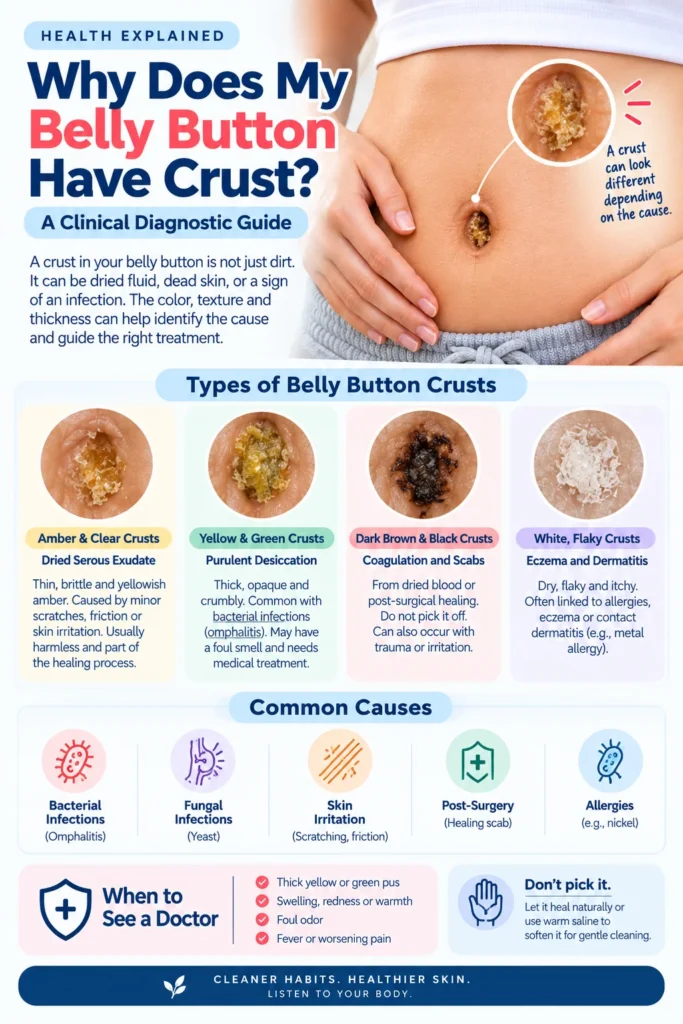
Amber and Clear Crusts: Dried Serous Exudate
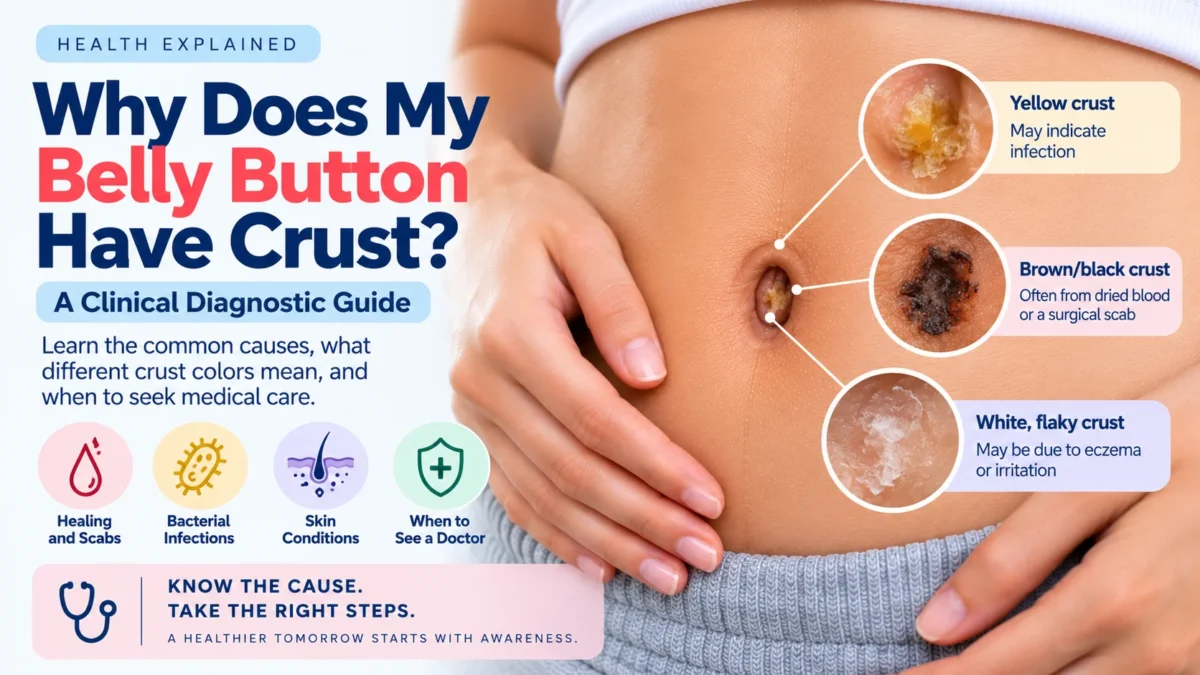
If the crust inside your belly button is thin, brittle, and possesses a translucent, yellowish amber color resembling dried tree sap, you are looking at desiccated serous fluid.
Serous fluid is a clear, protein rich liquid that your body naturally produces to protect and heal raw, damaged tissue. Because the skin inside the navel is incredibly thin, it is highly susceptible to microscopic mechanical injuries. If you aggressively scrub the navel with a rough washcloth, accidentally scratch it with a sharp fingernail, or experience severe friction from a tight, high waisted belt, the top layer of the epidermis will tear. The raw tissue immediately weeps clear serous fluid. When this fluid is exposed to the air, the water evaporates, leaving behind the hardened proteins that form an amber crust. This type of crust is entirely harmless and represents a normal stage of the wound healing process.
Yellow and Green Opaque Crusts: Purulent Desiccation
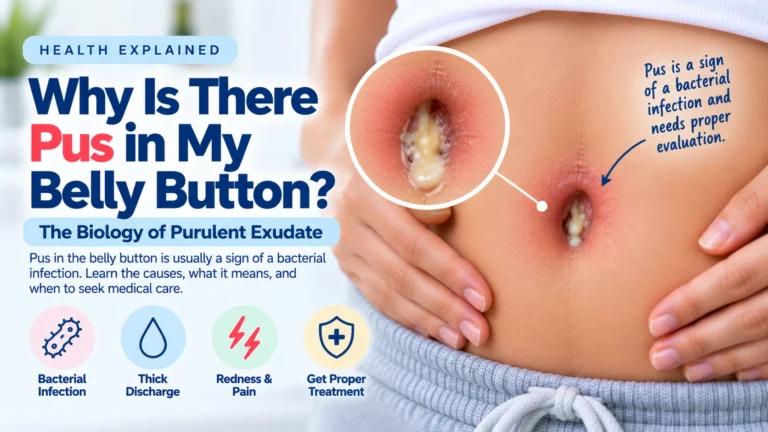
If the crust is thick, highly opaque, distinctly yellow or green, and crumbles easily when touched, it is the desiccated remnant of purulent exudate, commonly known as pus.
The presence of a purulent crust strongly indicates that your belly button recently battled, or is currently battling, an active bacterial infection known as omphalitis. When aggressive surface bacteria invade the umbilical skin, your immune system dispatches millions of white blood cells to destroy the pathogens. The resulting microscopic battlefield produces a thick, weeping liquid composed of dead tissue and destroyed bacteria. As this pus pools inside the navel and dries out, it forms a heavy, foul smelling, yellowish green crust. This crust often acts as a physical plug, trapping live bacteria underneath it, which can cause the underlying tissue to remain swollen, red, and highly painful.
Dark Brown and Black Crusts: Coagulation and Surgical Scabs
A crust that is dark red, rusty brown, or pitch black is composed of oxidized, coagulated blood. This type of crust forms exclusively when the deeper vascular layers of the umbilical skin are physically breached.
In many cases, a bloody crust is simply the result of aggressive scratching that tore the deeper dermal layers. However, the belly button is also the primary entry point for minimally invasive abdominal surgeries, such as laparoscopic gallbladder removal, endometriosis excision, or hernia repair. Surgeons routinely make their initial incision directly through the umbilical scar to hide the resulting surgical mark. Following the procedure, the incision will naturally weep blood and serous fluid, forming a dense, dark brown surgical scab inside the navel. You must never pick at a surgical crust, as forcibly removing it will tear the delicate underlying sutures and invite a severe postoperative infection.
White, Flaky Crusts: Eczema and Contact Dermatitis
Sometimes, the crust in your belly button is not formed by dried fluid at all, but rather by massive sheets of dead, shedding skin cells mimicking a crusty texture. If the buildup is dry, white, highly flaky, and accompanied by an intensely itchy red rash, it is likely driven by an inflammatory skin condition.
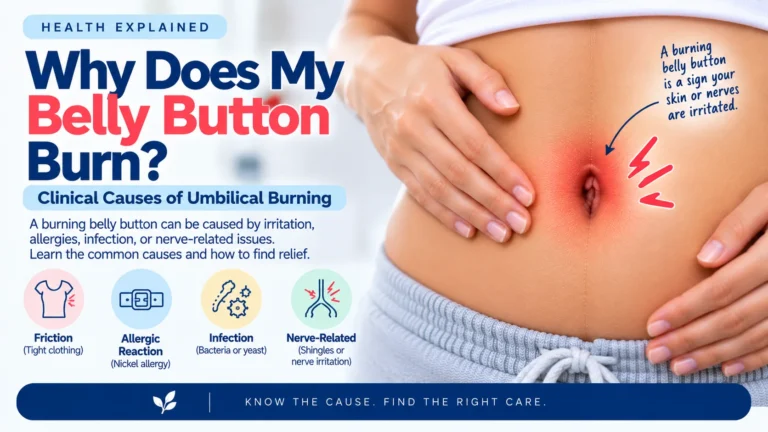
Allergic contact dermatitis is a massive immune response typically triggered by a nickel allergy from a metal belt buckle or a jean button resting against the stomach. As the skin reacts to the metal allergen, it becomes highly inflamed, scaling, and deeply crusted. Similarly, patients with chronic skin conditions like umbilical eczema or psoriasis will experience rapid epidermal scaling, where the top layer of the skin thickens, dies, and aggressively flakes off, leaving a dry, crusty, highly irritated ring around the entire navel.
The Danger of Mechanical Debridement
When confronted with a crusty belly button, the immediate human instinct is to use a fingernail or a pair of tweezers to forcefully pick the scab away. In clinical dermatology, this aggressive mechanical debridement is strictly advised against.
A crust serves as a temporary, biological bandage created by your body to shield raw, healing tissue from the outside environment. If you forcefully rip a dry crust off the skin, you will simultaneously tear the delicate new cells forming underneath it. This instantly reopens the wound, triggers fresh bleeding, delays the overall healing process, and provides a direct entry point for opportunistic bacteria. To safely manage a crust, you must allow it to detach naturally as the skin heals beneath it.
When to Seek Medical Evaluation
While thin amber crusts from minor scratches will resolve entirely on their own, certain types of crusting require clinical evaluation to prevent deeper tissue complications.
You should consult a physician if the crust is actively weeping thick, foul smelling yellow or green pus, as this confirms an active bacterial infection requiring prescription topical antibiotics. Furthermore, seek immediate medical care if the skin surrounding the crust becomes severely swollen, hot to the touch, or if a bright red rash begins to rapidly spread outward across your stomach. For postoperative surgical patients, if the dark brown surgical crust suddenly begins to leak copious amounts of blood or if you develop a high fever, you must contact your surgical team immediately, as these are primary indicators of a failing incision or a deep internal infection.
Frequently Asked Questions
A hard crust forms when a biological fluid, such as clear healing serum, bacterial pus, or blood, leaks into your belly button and is exposed to the air. The water in the fluid slowly evaporates, leaving behind a hard, desiccated mass of proteins, dead cells, and debris.
A thick, opaque, yellow or green crust is dried purulent exudate, or pus. This specifically indicates that you have an active or recently resolved bacterial infection in your navel. The yellow color is caused by millions of dead white blood cells and bacteria that have dried into a solid mass.
Yes, it is entirely normal to have a dark brown or black crust inside your navel after a laparoscopic surgery. Surgeons frequently use the belly button as an entry port. The crust is a natural blood scab protecting the healing surgical incision, and it must never be forcefully picked off.
While a yeast infection typically causes a soft, wet, white discharge resembling cottage cheese, it can eventually cause crusting. If you scratch the intensely itchy yeast rash until the skin bleeds or weeps clear fluid, that secondary fluid will dry into a hard crust over the fungal infection.
If the crust smells putrid, sour, or like rancid cheese, it means anaerobic bacteria are actively living beneath the hardened scab. As these bacteria digest the dead skin cells and trapped fluid, they release highly pungent sulfur gases that become physically trapped by the crust.
You must never pick a dry crust with your fingernails. To safely clean the area, lie flat and place a few drops of warm sterile saline or mineral oil into the navel for ten minutes. This safely rehydrates and softens the crust, allowing you to gently wipe it away with a damp cotton swab.
A clear, translucent amber crust is dried serous fluid. This protein rich liquid weeps from the skin whenever the delicate epidermal barrier is scratched, severely rubbed by tight clothing, or irritated by trapped sweat. It is a harmless, natural part of the skin's wound healing process.
Yes, an allergy to the nickel found in belt buckles or jean buttons causes severe allergic contact dermatitis. The skin becomes highly inflamed, extremely itchy, and frequently blisters. When these tiny blisters pop and weep fluid, they dry into a thick, flaky crust around the navel.
No, you should never pour hydrogen peroxide onto a healing crust. Hydrogen peroxide is a cytotoxic chemical that will violently destroy the healthy new skin cells attempting to heal beneath the scab. It causes severe irritation, delays healing, and worsens the underlying tissue damage.
The timeline depends on the underlying cause. A minor amber crust from a scratch will usually heal and flake off naturally within three to five days. However, a thick surgical scab may remain anchored to the navel for several weeks while the deep internal fascial sutures slowly dissolve and heal.
Conclusion
The appearance of a crust inside your belly button provides a highly accurate, visual historical record of recent biological events occurring on the surface of your skin. Because a crust is simply the desiccated aftermath of weeping fluid, identifying its exact morphology instantly reveals the nature of the underlying tissue damage. A translucent amber crust reassures you that the body is successfully healing a minor mechanical scratch with natural serous fluid, whereas a thick, opaque yellow crust serves as a clear warning sign of a bacterial skirmish requiring meticulous hygiene and potential clinical intervention. By resisting the overwhelming urge to forcefully pick and prematurely remove these biological bandages, safely rehydrating them with warm saline when gentle cleaning is required, and addressing the root cause of the weeping fluid, you can effectively support your immune system and ensure the flawless restoration of your umbilical skin barrier.
Disclaimer
This blog is for informational and educational purposes only, and does not intend to substitute any professional medical advice or consultation. For any health related concerns, please consult with your physician, or call 911.