Why Is There Stuff in My Belly Button? The Biological Makeup of Navel Debris
Looking down and suddenly discovering strange, unidentified stuff deeply lodged inside your belly button can be both confusing and alarming. Because the umbilicus is a recessed, dark cavity situated precisely at the center of the human body, it acts as a natural physiological funnel. Throughout the day, this structural basin quietly collects a wide variety of biological and environmental materials.
To understand why there is stuff in your belly button, you must realize that the human skin is a highly active, constantly regenerating organ. Your navel is not simply collecting dirt from the outside world; it is actively shedding biological waste from the inside out. Depending on your personal anatomy, hygiene habits, and underlying skin health, the stuff trapped in your belly button can range from completely harmless cotton fibers to hardened medical anomalies like umbilical stones, or even active purulent discharge from a hidden microbial infection. By clinically categorizing the different types of umbilical debris, you can accurately identify what is currently residing in your navel and determine the safest method to remove it.
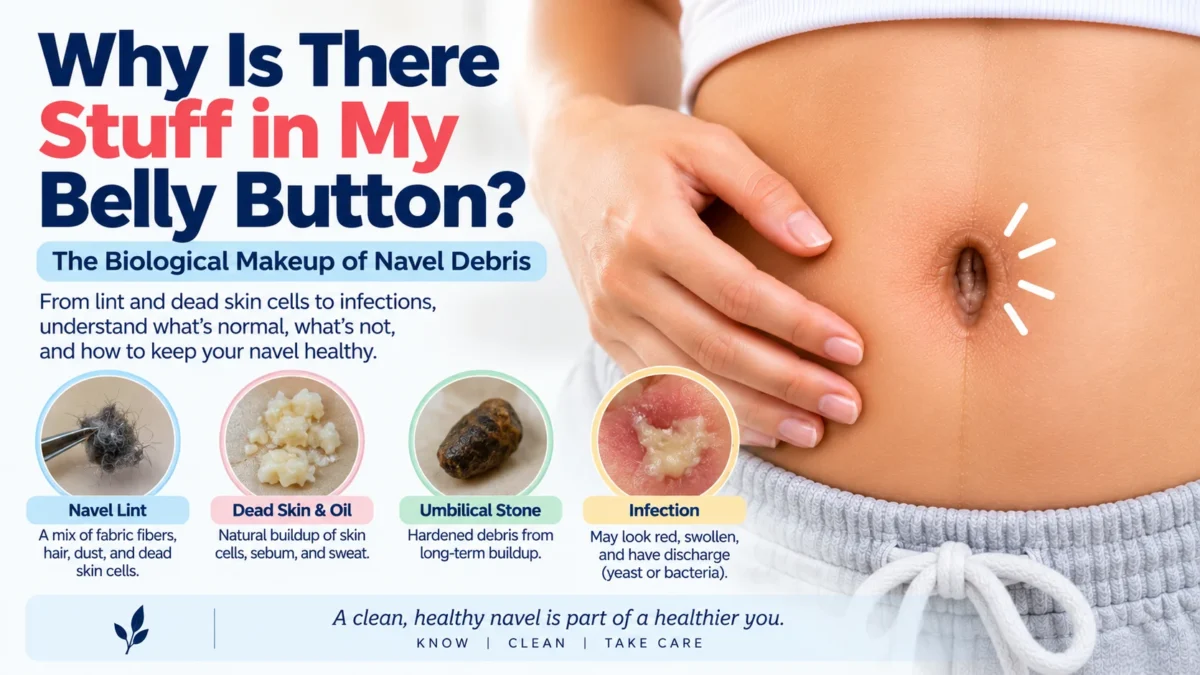
The most common type of stuff found in the belly button is navel lint, casually referred to as belly button fluff. While it may look like simple fabric fuzz from your shirt, its actual biological composition is much more complex.
Clinical studies analyzing the exact makeup of navel lint have revealed that it is a tightly compacted mixture of external cotton clothing fibers, shed human hair, microscopic house dust, and your own dead skin cells. The reason this material specifically accumulates inside the navel involves the biomechanics of your abdominal body hair.
The terminal hairs growing around the human abdomen typically grow in a concentric, circular pattern pointing directly toward the umbilicus. Furthermore, these hairs have microscopic scales on their surface. As your shirt rubs against your stomach throughout the day, the mechanical friction scrapes microscopic fibers off the fabric. The concentric abdominal hairs act like a one-way ratchet system, physically catching these fabric fibers and funneling them directly downward into the deep cavity of the belly button. Once inside the navel, the cotton fibers mix with your natural body oils, creating a dense, sticky clump of harmless fluff.
Epidermal Desquamation and Sebaceous Buildup
If the stuff in your belly button is not fluffy lint, but rather a soft, pale, or whitish-yellow paste, you are likely looking at a natural accumulation of biological waste.
The top layer of your skin, the stratum corneum, is constantly dying and shedding millions of microscopic dead keratin cells every single day, a process medically known as desquamation. On flat areas of your body like your arms or legs, these dead cells simply fall off into the environment or are washed away in the shower. However, inside the deep, enclosed folds of an innie belly button, these dead cells have nowhere to go.
Over weeks and months, millions of trapped dead keratin cells mix with sebum, which is the natural waxy oil secreted by your sebaceous glands to keep your skin waterproof. When sweat is added to this mixture, it creates a soft, cheese-like substance that strongly resembles smegma. While this sebaceous buildup is entirely natural and non-threatening, it can develop a distinctly sour or musky odor as harmless surface bacteria begin to feed on the trapped dead tissue.
If you have discovered a hard, dark brown or solid black mass wedged tightly into the deepest crevice of your navel, you have likely developed an omphalith, clinically known as an umbilical stone.
Many adults panic upon finding an omphalith, mistaking the dark mass for a deadly skin cancer like melanoma or an aggressive necrotic infection. In reality, a belly button stone is simply the extreme, end-stage result of neglected sebaceous buildup. If the dead keratin cells and sebum paste mentioned earlier are not thoroughly washed out of a very deep navel for several years, the material begins to heavily compact.
As this dense biological plug is exposed to oxygen over long periods, the melanin and lipids within the dead skin cells oxidize, turning the mass completely black. All the moisture eventually evaporates from the trapped sebum, leaving behind a rock-hard, calcified stone that firmly cements itself to the delicate skin of the umbilical scar. While harmless, attempting to forcefully rip a dry omphalith out of the navel can severely tear the underlying skin, causing heavy bleeding and secondary infections.
Infectious Exudate: When the Stuff is Pathological
Sometimes, the stuff in your belly button is not dead skin or clothing lint, but rather active infectious exudate indicating a rapidly multiplying microbial colony. Because the navel is dark, warm, and frequently damp, it is the perfect biological incubator for opportunistic pathogens.
Fungal Yeast Overgrowth
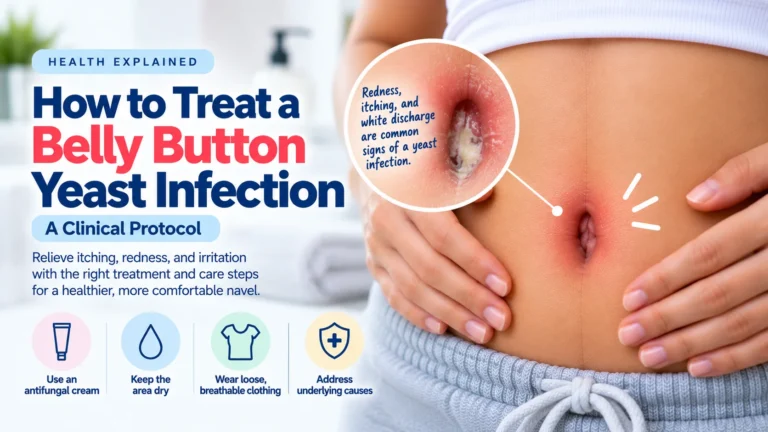
If the material in your belly button is thick, bright white, and clumpy, heavily resembling the texture of cottage cheese, you are likely suffering from cutaneous candidiasis, a fungal yeast infection. This clumpy stuff is a combination of massive fungal colonies and destroyed white blood cells. This type of pathological debris is almost always accompanied by a beefy, bright red rash that intensely itches and burns, frequently occurring in individuals with uncontrolled diabetes or deep abdominal skin folds.
Bacterial Purulent Discharge
If the stuff weeping from your belly button is a highly viscous, opaque liquid that appears murky yellow, thick green, or rusty brown, you are looking at purulent pus caused by a severe bacterial infection known as omphalitis. Bacterial pus is composed of liquefied dead tissue, live and dead white blood cells, and the rapidly multiplying bacteria itself, usually Staphylococcus aureus. This thick, putrid-smelling stuff will constantly ooze out of the navel and dry into a hard, crusty yellow barrier around the opening of the scar.
Dried Serous Crust and Umbilical Granulomas
If you feel a sharp, scratchy substance inside your navel that looks like a thin layer of dried, amber-colored glass, you are dealing with dried serous crust.
When the delicate skin inside the belly button is lightly scratched by a fingernail during aggressive cleaning, or irritated by the friction of a metal belt buckle, the top epidermal layer breaks. The raw tissue underneath immediately secretes a clear, yellowish, protein-rich healing fluid called serous fluid. As this fluid hits the air, it quickly dries and crystallizes into a sharp, brittle crust.
Alternatively, if your belly button constantly produces a wet, bloody crust, you may have an umbilical granuloma. A granuloma is a small, fleshy red overgrowth of raw healing tissue that forms deep inside the navel after a minor infection fails to heal properly. Because this tissue lacks a protective skin barrier, it constantly weeps trace amounts of blood and clear fluid, which continually dries into a crusty stuff that repeatedly fills the cavity.
How to Safely Remove the Stuff
The method you use to remove the stuff from your belly button must be dictated by what the material actually is.
If you are simply removing soft navel lint or daily sebaceous buildup, gentle mechanical cleaning is all that is required. While showering, use a soft washcloth and warm, soapy water to gently swab the inside of the cavity. Never use sharp fingernails or metal tools to scrape the skin, as the umbilical tissue is exceptionally thin and tears easily.
If you are dealing with a hardened, black omphalith, you must never attempt to pick it out while it is dry. You must first soften the stone by massaging a few drops of mineral oil, baby oil, or warm saline solution directly into the navel. Let the oil soak into the hardened keratin for fifteen to thirty minutes to dissolve the oxidized sebum. Once the stone is soft and pliable, you can gently coax it out using a cotton swab. If the stone is deeply embedded and painful, a dermatologist or general physician should professionally extract it using medical forceps.
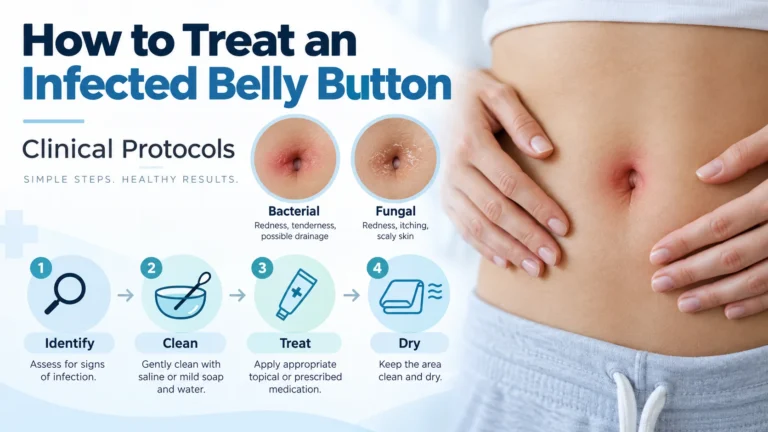
If the stuff in your belly button is thick yellow pus, clumpy white yeast, or is accompanied by a severe red rash and a foul odor, you must stop attempting to clean it yourself. This material is active infectious exudate, and you must consult a physician to receive a prescription for a clinical-grade topical antibiotic or antifungal cream to destroy the underlying pathogens.
Frequently Asked Questions
White stuff in the belly button can be one of two things. If it is a soft, pale paste with a slightly sour smell, it is a normal accumulation of dead keratin skin cells mixed with sweat and sebum. If it is bright white, clumpy like cottage cheese, and accompanied by a red rash, it is a fungal yeast infection.
A hard, black substance tightly stuck inside your belly button is likely an omphalith, or an umbilical stone. This is a harmless, compacted ball of dead skin cells and natural body oils that has been trapped in the deep folds of the navel for years, oxidizing and turning black over time.
You always have lint in your belly button because the terminal hairs on your stomach grow in a circular pattern pointing toward the navel. These hairs act like tiny hooks, constantly scraping microscopic cotton fibers off your clothing and physically funneling them down into the belly button cavity.
Yes, it is highly dangerous to aggressively pick dry stuff out of your belly button using your fingernails. The skin inside the navel is extremely delicate. Aggressive picking easily tears the epidermal barrier, instantly inviting aggressive bacteria into the raw tissue and causing severe omphalitis.
The smelly, cheese-like substance is a completely natural biological accumulation of shed dead skin cells, trapped sweat, and waxy sebum. Because the belly button is dark and enclosed, normal surface bacteria break down this trapped biological waste, resulting in a distinct, musky, or sour odor.
Crusty brown stuff is typically dried purulent exudate or oxidized blood. If you recently scratched the inside of your navel or have an active bacterial infection, the weeping pus and trace amounts of blood will pool in the cavity and dry into a hard, dark brown crust upon exposure to the air.
To safely dissolve a hard belly button stone, you should never pick at it dry. Instead, lie on your back and place a few drops of mineral oil or warm saline solution directly into the navel. Allow it to soak for twenty minutes to soften the calcified sebum before gently wiping it away with a cotton swab.
While the stone itself is simply dead skin, if an omphalith is left in the navel for too long, it can cause severe mechanical friction against the surrounding healthy tissue. This constant rubbing can eventually tear the skin, allowing bacteria to enter and trigger a painful secondary infection.
Even if you do not wear clothing, your belly button will still produce soft, paste-like stuff. This is because the human epidermis constantly sheds millions of dead skin cells every day. Inside the enclosed navel, these dead cells have nowhere to fall, so they continually accumulate and mix with your natural body oils.
You should see a physician immediately if the stuff in your belly button is accompanied by a deep red, spreading rash, extreme localized swelling, intense burning pain, or if the material is actively weeping thick, foul-smelling yellow or green pus, as these are clear indicators of a severe clinical infection.
Conclusion
Finding stuff in your belly button is a universal human experience driven by the unique anatomical structure of the umbilicus and the continuous, regenerative cycle of the human epidermis. Rather than a cause for panic, this debris is a fascinating combination of mechanical friction and biological waste. Whether your concentric abdominal hairs are actively funneling blue cotton lint into the cavity, or millions of trapped, dead keratin cells are slowly oxidizing into a solid umbilical stone, the majority of this material is entirely harmless. However, understanding the visual and textural differences between a normal sebaceous paste and the clumpy, purulent exudate of an active microbial invasion is crucial for your dermatological health. By maintaining a gentle, routine cleaning schedule with warm water and soft washcloths, and avoiding the dangerous habit of aggressive dry picking, you can easily manage the natural accumulation of biological debris while protecting your delicate umbilical skin barrier from severe secondary infections.
Disclaimer
This blog is for informational and educational purposes only, and does not intend to substitute any professional medical advice or consultation. For any health related concerns, please consult with your physician, or call 911.