How to Treat an Infected Belly Button: Clinical Protocols
Successfully treating an infected belly button requires much more than simply washing the area with extra soap. Because the adult umbilicus is a deep, recessed cavity that naturally traps heat and moisture, resolving an infection demands a targeted clinical approach. You must first identify the specific type of pathogen attacking your skin, apply the correct pharmacological ointment, and implement a rigorous mechanical drying protocol to restore the compromised epidermal barrier.
Applying the wrong treatment can actively worsen the condition. For example, using a standard antibacterial ointment on a fungal yeast overgrowth will not only fail to cure the infection, but it can actually accelerate the fungal growth by destroying the competing localized bacteria. To rapidly halt the pain, eliminate the foul odor, and stop the purulent discharge, you must follow a systematic treatment protocol that addresses both the microbial invasion and the underlying structural moisture problem causing the infection to thrive.
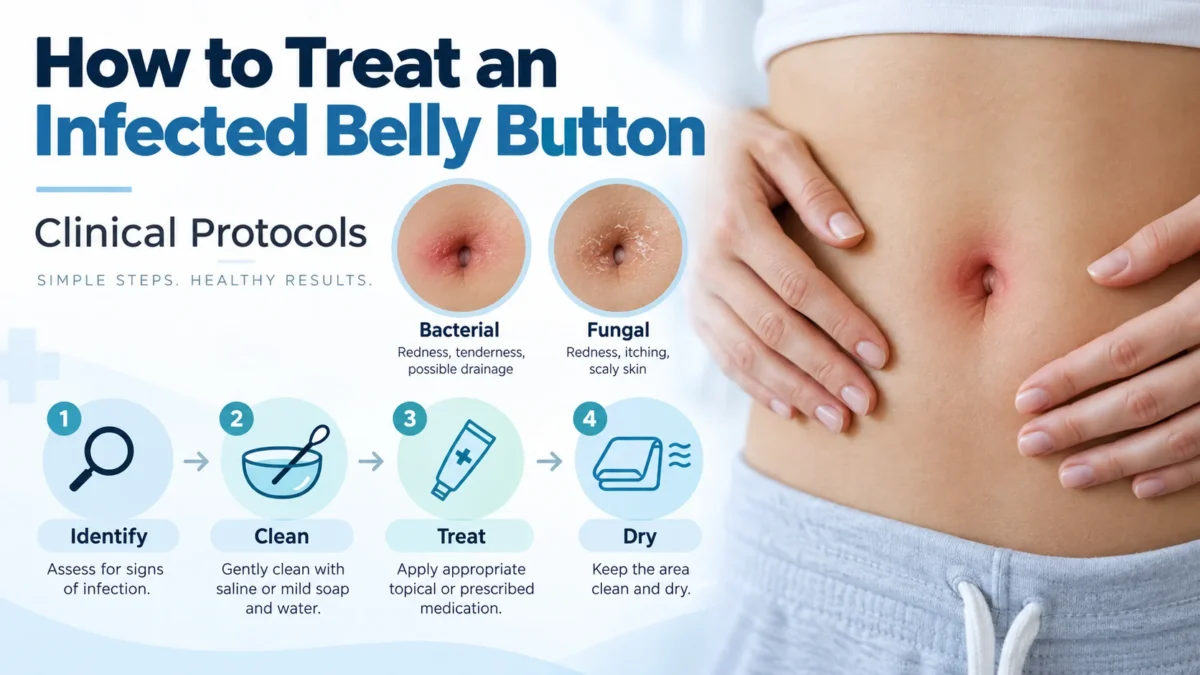
Step One: Identifying the Pathogen
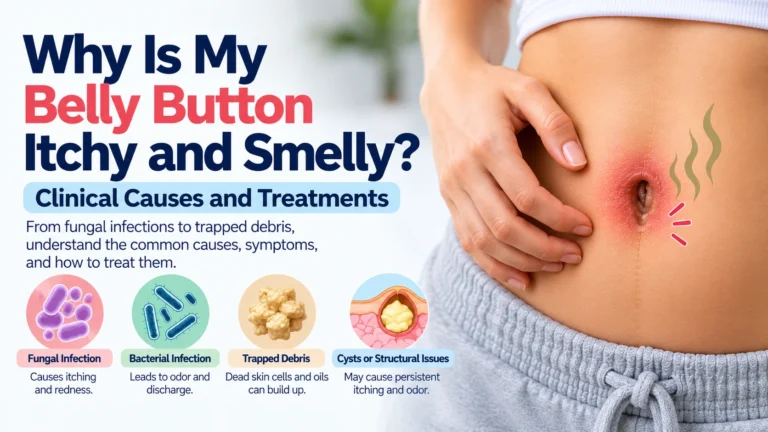
Before applying any medical ointment, you must determine whether your belly button is infected by bacteria or a fungal yeast overgrowth. You can clinically differentiate the two by examining the type of discharge and the specific odor.
If the infection is bacterial, clinically known as omphalitis, the naval cavity will feel incredibly tender and throb with a deep, aching pain. The area will leak a thick, highly purulent discharge that is typically yellow, green, or dark brown. Crucially, a bacterial infection produces a putrid, rotting odor similar to spoiled garbage or feces.
If the infection is fungal, clinically known as cutaneous candidiasis, it will present as a bright, beefy red rash that causes an intense, burning itch rather than deep, throbbing pain. The discharge is rarely green; instead, a yeast infection produces a thick, white, cottage cheese like substance. The odor associated with a fungal infection is distinctly sweet, musty, or highly yeasty, closely resembling the smell of damp bread or stale beer.
Pharmacological Treatment for Fungal Yeast Infections
If your symptoms align with a fungal yeast overgrowth, the primary goal of treatment is to destroy the cell walls of the multiplying Candida albicans yeast.
The most effective frontline treatment is an over-the-counter topical antifungal cream belonging to the azole family. Medications containing clotrimazole or miconazole are highly effective. After gently cleaning and completely drying the umbilicus, apply a thin layer of the antifungal cream directly to the red, inflamed tissue twice a day.
Because fungal spores are incredibly resilient and thrive in the microscopic folds of your naval scar tissue, you must continue applying the antifungal cream for at least forty-eight hours after the redness and itching have completely disappeared. Stopping the treatment too early frequently results in an aggressive, immediate relapse of the yeast infection. If the localized inflammation is agonizingly itchy, a doctor may recommend mixing a tiny amount of one percent hydrocortisone cream with the antifungal to rapidly suppress the localized immune reaction while the antifungal destroys the pathogen.
Pharmacological Treatment for Bacterial Omphalitis
If your belly button is leaking green or yellow pus and emitting a putrid odor, you are dealing with a bacterial invasion, typically driven by staphylococcus or streptococcus strains.
For mild localized bacterial infections, over-the-counter triple antibiotic ointments containing neomycin, polymyxin B, and bacitracin can be effective if applied twice daily to a clean, dry navel. However, because the belly button cavity is deep, many topical ointments fail to reach the core of the infection.
If the belly button is highly swollen, weeping large amounts of pus, or if the redness begins to streak outward across your stomach, you must seek professional medical care. A physician will typically prescribe a clinical-grade topical antibiotic such as mupirocin. If the infection has penetrated deeply into the abdominal tissue, topical treatments will be insufficient. Your doctor will prescribe a course of broad-spectrum oral antibiotics, such as cephalexin or clindamycin, to systemically eradicate the bacteria from your bloodstream and prevent the infection from spreading into the abdominal wall.
Clinical Cleaning and Debridement Protocols
Regardless of whether your infection is bacterial or fungal, topical medications cannot work effectively if they are applied on top of a thick layer of pus, oxidized dead skin, and trapped body oils. You must safely clean the area before applying medication.
Never clean an infected belly button while the tissue is dry. Instead, create a warm sterile saline solution by mixing one teaspoon of non-iodized salt into a cup of warm distilled water. Soak a clean cotton ball in the saline and gently press it into the navel cavity for three to five minutes. This warm compress acts as a mild debridement tool, safely rehydrating and loosening the hardened crust, dried pus, and oxidized keratin.
Once the debris is softened, use a fresh cotton swab to gently wipe away the discharge. You must never scrub or pick at the tissue, as this will tear the fragile new skin cells attempting to heal the wound.
The Meticulous Drying Phase
The single most critical step in treating and preventing any umbilical infection is moisture control. Pathogens cannot multiply rapidly in a bone-dry environment.
After washing or performing a saline soak, you must remove every microscopic drop of water from the deep folds of your belly button. Do not rely on air drying, and do not use a standard bath towel, which can harbor hidden mold spores. Take a clean, dry paper towel, fold it into a soft point, and gently press it deep into the naval cavity to absorb all hidden moisture. The umbilicus must be perfectly dry before you apply any prescribed antibacterial or antifungal ointments.
Dangerous Home Remedies to Avoid
When adults experience the pain and odor of an infected navel, they frequently panic and resort to harsh household chemicals. Using the wrong liquid will severely damage the tissue and actively prolong the infection.
You must never pour hydrogen peroxide or rubbing alcohol into an infected belly button. While these liquids kill bacteria, they are highly cytotoxic, meaning they also violently destroy healthy human skin cells and white blood cells. Pouring them into a raw, infected navel will cause agonizing microscopic chemical burns and severely delay the natural healing process.
Additionally, never pour baby powder or talcum powder into a wet, infected navel in an attempt to dry it out. The powder will rapidly mix with the weeping pus and trapped sweat, creating a thick, gritty paste that physically grinds against the raw skin and provides a protective physical shield for bacteria to multiply beneath.
Frequently Asked Questions
You can treat a mild infected belly button at home by gently cleaning the cavity with warm sterile saline, drying it completely with a clean paper towel, and applying the correct over-the-counter ointment based on your symptoms, such as an antifungal cream for yeast or an antibacterial ointment for minor bacterial infections.
The best cream depends entirely on the pathogen. For a fungal yeast infection that smells musty and itches severely, clotrimazole or miconazole creams are best. For a bacterial infection that smells putrid and leaks green pus, an over-the-counter triple antibiotic or prescription mupirocin is required.
No, you should never put hydrogen peroxide in an infected belly button. Hydrogen peroxide is a harsh chemical that destroys healthy newly formed skin cells and aggressively irritates the delicate tissue, which will significantly delay the healing process and cause severe localized pain.
With targeted daily cleaning and the correct topical medication, a mild to moderate belly button infection typically heals within five to ten days. However, you must continue applying the medication for a few days after the symptoms disappear to ensure the pathogen is completely eradicated.
You clean crust out of an infected belly button by soaking a cotton ball in warm saline and pressing it into the navel for several minutes. Once the warm moisture softens the hardened pus and dead skin, you can safely wipe it away with a soft cotton swab without tearing the underlying skin.
You must never use rubbing alcohol to dry out your belly button. It will severely burn the raw, inflamed tissue and cause extreme stinging pain. The only safe way to dry the cavity is by gently pressing a clean, dry paper towel into the folds.
If your belly button infection is not going away with antibiotic cream, you are likely suffering from a fungal yeast infection, which antibiotics cannot cure. Alternatively, you may have a severe, deep-seated bacterial infection that requires prescription oral antibiotics to eradicate systemically.
It is generally best not to cover an infected belly button with an airtight band-aid. The infection needs to remain as dry as possible, and placing an adhesive bandage over the deep cavity will trap excess body heat and sweat, creating the perfect damp environment for microbes to thrive.
If left untreated, a minor belly button infection can rapidly escalate into severe omphalitis. The aggressive bacteria can ulcerate the skin and spread into the surrounding abdominal tissue, causing a dangerous, fast-spreading deep tissue infection known as cellulitis, which requires emergency hospitalization.
You should go to the doctor immediately if the redness begins spreading in streaks across your stomach, if the infection produces thick green pus, if the pain becomes deep and throbbing, or if you develop a systemic fever, as these indicate a severe infection requiring prescription oral antibiotics.
Conclusion
Treating an infected belly button effectively requires a combination of targeted pharmacological intervention and strict mechanical hygiene. Because the adult umbilicus acts as a deep biological trap for sweat and dead skin, simply washing the area is rarely enough to eradicate an active microbial invasion. By carefully identifying the nature of your infection, you can apply the appropriate topical antifungal or antibacterial ointment to specifically target the invading pathogen. Coupling this medical treatment with a rigorous routine of warm saline soaks and meticulous drying using a clean paper towel ensures that the highly sensitive epidermal barrier can regenerate safely. While minor infections resolve quickly with proper home care, you must remain vigilant for systemic symptoms like a sudden fever or spreading redness, which demand immediate professional medical treatment to prevent serious abdominal complications.
Disclaimer
This blog is for informational & educational purposes only, and does not intend to substitute any professional medical advice or consultation. For any health related concerns, please consult with your physician, or call 911.