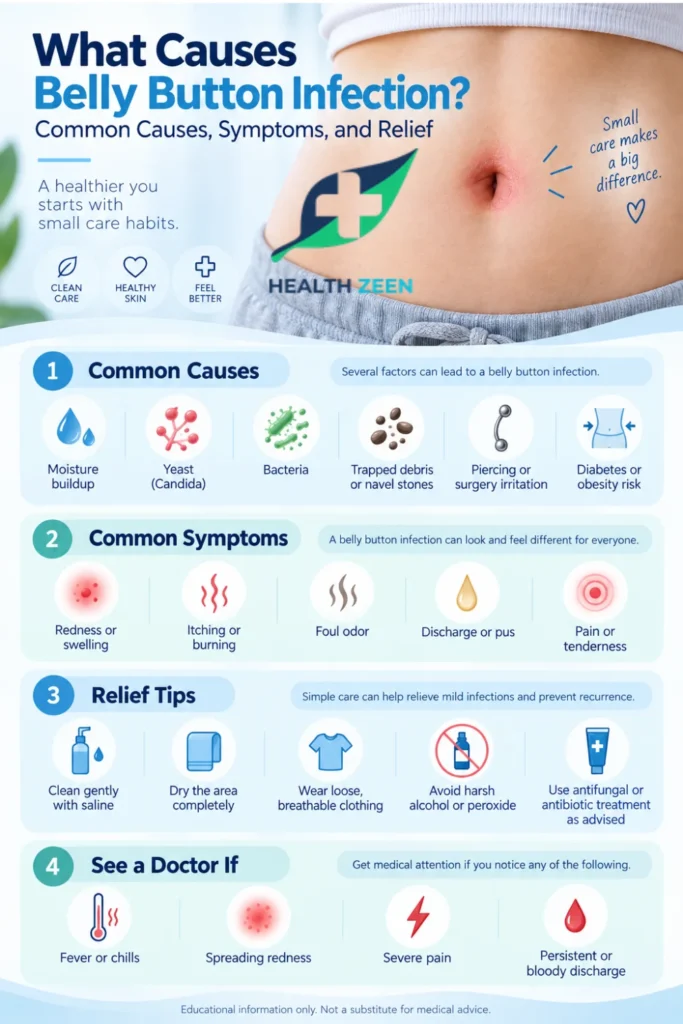
Your belly button gets infected primarily due to the rapid overgrowth of Candida yeast, the invasion of Staphylococcus bacteria, or the accumulation of oxidized debris trapped within the deep, dark, and moist anatomical folds of the umbilicus. When dead skin cells, trapped sweat, and natural sebum accumulate inside a recessed navel, they create an optimal biological breeding ground for these opportunistic microbes. This relentless microbial colonization frequently leads to clinical omphalitis, a localized condition characterized by severe dermal redness, purulent discharge, and a highly offensive foul odor.
Experiencing thick discharge, severe localized itching, or deep throbbing pain inside the navel is a highly common dermatological complaint. Because the adult belly button is a permanent, inwardly folded scar lacking adequate airflow, it is exceptionally susceptible to severe microbial entrapment and localized structural strain. Understanding exactly what causes a belly button infection requires identifying the specific type of pathogen, underlying dermatological condition, or structural defect involved, as the root clinical causes shift dynamically from superficial fungal overgrowth and simple friction to deep-tissue bacterial invasions and ruptured sub-dermal cysts.
Fungal Yeast Overgrowth (Candida)
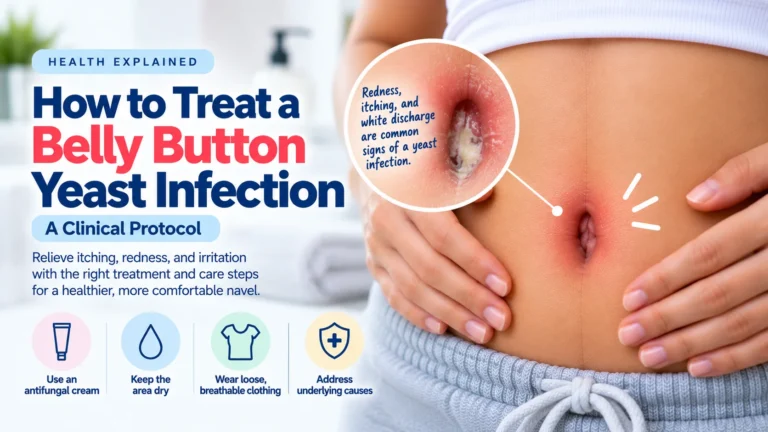
Fungal overgrowth is the absolute primary driver of umbilical discomfort and superficial navel infections. Candida albicans is a naturally occurring microscopic yeast that resides harmlessly on the human epidermis as part of your normal microbiome. However, this yeast requires a very specific warm moist environment to thrive. When the belly button remains excessively damp—often due to poor post-shower drying, high humidity, or trapped sweat from tight synthetic clothing—the yeast rapidly multiplies out of control.
This aggressive fungal expansion severely degrades the delicate epidermal barrier of the umbilicus. The resulting navel yeast infection causes a bright red, intensely itchy rash accompanied by a thick, white, cottage-cheese-like discharge. Because yeast feeds on the microscopic sugars found in your sweat, the infection frequently produces a distinct musty, bread-like odor that becomes highly noticeable as the fungal colonization deepens into the innermost folds of the scar tissue.
Bacterial Pathogens (Staphylococcus and Streptococcus)
While a fungal infection causes intense superficial itching, bacterial pathogens trigger deep, structural inflammation and extreme localized pain. The skin surrounding the human navel is densely colonized by billions of Staphylococcus aureus and Streptococcus bacteria. A severe bacterial belly button infection occurs when the protective skin barrier inside the navel is physically compromised. Micro-abrasions caused by aggressive scratching, severe clothing friction, or improper cleaning allow these opportunistic bacteria to breach the dermis.
Once these pathogens enter the underlying tissues, they rapidly multiply within the enclosed cavity, resulting in extreme localized swelling, throbbing pain, and localized heat. The immune system’s aggressive response to this bacterial invasion leads to the secretion of thick, foul-smelling yellow, green, or brown purulent discharge. In cases involving Pseudomonas aeruginosa bacteria, the discharge may appear distinctly bluish-green and emit a sweet, rotting odor, requiring immediate clinical antibiotic intervention.
Epidermoid and Urachal Cysts
In numerous clinical cases, the localized pain, swelling, and foul-smelling discharge do not originate on the superficial skin surface, but rather from a ruptured cyst located deep beneath the navel tissue. Epidermoid cysts form when epidermal skin cells fail to shed properly, migrating inward instead to form a highly pressurized sub-dermal sac filled with oxidized keratin and trapped sebum. If this pressurized sac ruptures directly into the umbilical cavity, it triggers a massive localized inflammatory response, releasing a thick, yellowish material that smells strongly of severe decay.
Additionally, rare congenital anatomical remnants known as urachal cysts can become infected deep within the abdominal cavity. The urachus is a fetal tube that connected the bladder to the umbilical cord during gestation. If a portion of this tube fails to close completely before birth, it can form a cyst that occasionally becomes infected in adulthood, leaking bloody, cloudy, or urine-scented purulent fluid directly upward through the central belly button tract.
Navel Stones (Omphaliths)
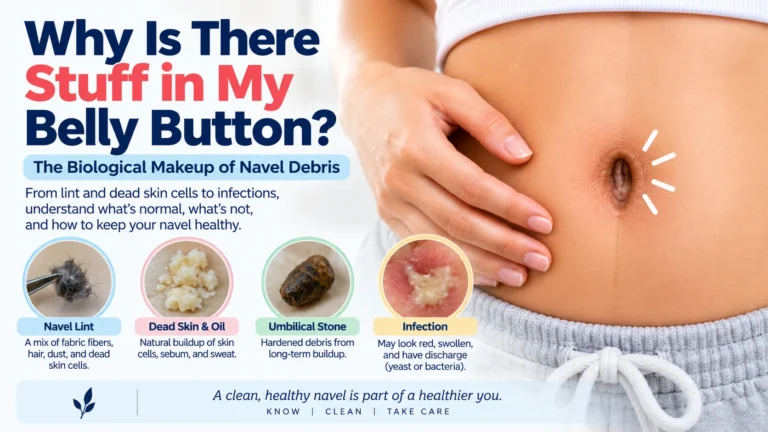
Beyond microscopic pathogens, chronic structural neglect frequently causes severe umbilical infections. When dead skin cells, trapped clothing lint, and oxidized sebum remain undisturbed deep inside a recessed “innie” navel for years, they chemically bind and calcify into a hard, dark, stone-like mass known as an omphalith, or navel stone.
While benign initially, this highly abrasive biological stone constantly grinds against the thin, delicate umbilical fascia with every torso movement. This unrelenting mechanical friction destroys the epithelial lining, triggering chronic inflammation and guaranteeing a secondary bacterial invasion. The presence of a navel stone is almost always accompanied by persistent low-grade pain, localized redness, and a chronic foul-smelling discharge that will not resolve until the calcified mass is physically extracted by a physician.
Post-Surgical and Piercing-Induced Infections
Any time the anatomical integrity of the belly button is intentionally compromised, the risk of severe bacterial infection skyrockets. A belly button piercing introduces a deep, traumatic puncture wound into highly mobile abdominal tissue. If the piercing traps sweat, suffers from constant friction from waistbands, or is touched with unwashed hands during the prolonged healing phase, it serves as a direct, open pathway for severe staphylococcal bacterial invasion.
Similarly, modern laparoscopic surgeries frequently utilize the umbilicus as the primary entry point for surgical cameras and trocars. While these incisions are small, the dark, recessed nature of the navel makes the healing surgical wound highly susceptible to harboring opportunistic bacteria if not kept meticulously clean, sterile, and dry during the postoperative recovery period.
Systemic Risk Factors: Diabetes and Obesity
While anyone can develop a navel infection, certain systemic health conditions biologically alter the environment of the umbilicus, making infections chronic and severe.
Individuals with uncontrolled Diabetes Mellitus frequently experience chronic belly button infections. Hyperglycemia (high blood sugar) alters the chemical composition of the body’s sweat, filling it with excess glucose. Because Candida yeast aggressively feeds on glucose, a diabetic patient’s navel provides an unlimited biological food source for fungal overgrowth, while simultaneously suffering from reduced immune function that impairs natural wound healing.
Furthermore, individuals with abdominal obesity frequently experience intertrigo, a severe inflammatory condition caused by deep skin folds forcefully rubbing together. This relentless daily friction physically degrades the epidermal barrier of the umbilicus. Simultaneously, the deep folds trap extreme body heat and moisture, entirely eliminating airflow and guaranteeing rapid microbial colonization, severe contact dermatitis, and recurring bacterial skin breakdown.
How to Safely Manage a Navel Infection
While you cannot alter the anatomical depth or biological structure of your navel, you can implement strict clinical hygiene protocols to eradicate the trapped microbes. Meticulously cleaning the umbilical cavity with a sterile saline wound wash effectively flushes out accumulated cellular debris, dead skin, and infectious discharge without causing the severe chemical irritation associated with harsh soaps.
After cleansing, thoroughly drying the navel with a clean, dry cotton swab or gauze is absolutely paramount. Depriving fungi and bacteria of trapped moisture immediately halts their biological replication cycle. For active clinical infections, applying a targeted over-the-counter topical antifungal cream (such as clotrimazole or miconazole for yeast) or a topical antibiotic ointment (such as mupirocin or bacitracin for bacteria) directly addresses the specific underlying pathogen.
When Should You Consult a Physician?
While a mild fungal overgrowth or minor friction irritation is a common and easily manageable symptom of trapped moisture, specific clinical red flags require immediate evaluation by your physician to rule out systemic pathogen spreading or deep-tissue necrosis.
You must seek immediate emergency medical care if the pain at your belly button is accompanied by a severe high fever, shaking chills, uncontrollable nausea, or profound lethargy. Additionally, if you develop localized redness that is rapidly spreading outward from the navel across your abdomen in red streaks, or if the lower abdominal tissue becomes rigid and agonizing to touch, you must proceed to a hospital immediately. These severe symptoms indicate spreading cellulitis, deep-tissue peritonitis, or early-stage sepsis requiring urgent intravenous antibiotic intervention and comprehensive medical stabilization.
Frequently Asked Questions About Belly Button Infections
What causes a belly button infection?
A belly button infection is primarily caused by trapped moisture, dead skin cells, and sweat that allow naturally occurring Candida yeast or Staphylococcus bacteria to aggressively multiply inside the dark, enclosed cavity of the navel.
Is a smelly belly button a sign of infection?
Yes, a distinct foul odor is often the first clinical sign of an active infection. Fungal yeast infections typically produce a musty smell, while bacterial infections create a highly offensive, rotting odor due to the rapid breakdown of trapped cellular proteins.
Can poor hygiene cause a navel infection?
Yes, poor hygiene directly causes navel infections. Failing to properly wash and completely dry the inside of a deep belly button allows opportunistic microbes to continuously feed on trapped sebum, sweat, and dead skin cells, triggering rapid microbial colonization.
What does a fungal belly button infection look like?
A fungal belly button infection, typically caused by Candida yeast, presents as a bright red, severely itchy rash that often features a thick, white, cottage-cheese-like discharge heavily coating the inner anatomical folds of the umbilicus.
How do I know if my belly button infection is bacterial?
You likely have a bacterial belly button infection if the navel area is highly swollen, feels exceptionally warm to the touch, and actively oozes thick yellow, green, or brown purulent discharge accompanied by deep, throbbing localized pain.
Can a belly button piercing cause a severe infection?
Yes, a belly button piercing introduces a deep puncture wound into highly mobile tissue. If the healing piercing traps sweat, collects debris, or suffers from chronic clothing friction, it serves as a direct pathway for severe staphylococcal bacterial invasion.
Why does my belly button leak clear fluid?
Your belly button leaks clear fluid primarily due to weeping eczema, severe contact dermatitis, or a mild fungal yeast infection irritating the epidermal barrier, causing the inflamed skin to weep clear serous fluid as a rapid immune response.
Can an infected belly button go away on its own?
A very mild fungal rash or minor friction irritation may subside if the navel is suddenly kept meticulously dry and exposed to air. However, a true bacterial infection producing yellow pus rarely resolves spontaneously and requires targeted clinical antibiotic treatment.
Does intertrigo cause belly button infections?
Yes, intertrigo causes belly button infections. When deep abdominal skin folds trap extreme body heat and moisture against the navel, the resulting chronic friction destroys the epidermal barrier, guaranteeing severe fungal or bacterial overgrowth.
Will rubbing alcohol cure a belly button infection?
No, rubbing alcohol will not cure a belly button infection. Applying harsh rubbing alcohol or hydrogen peroxide directly to the delicate, inflamed lining of the umbilicus causes severe chemical irritation, destroys healthy new cells, delays natural wound healing, and actively exacerbates the underlying dermal damage.
Can a belly button infection spread to the stomach?
Yes, an untreated bacterial belly button infection can spread beyond the superficial skin. If the localized infection aggressively breaches the deep abdominal fascia, the bacteria can trigger widespread cellulitis or penetrate deeper to cause life-threatening intra-abdominal infections.
Why do I keep getting recurring navel infections?
You keep getting recurring navel infections likely because you have a chronically damp belly button, undiagnosed or poorly managed diabetes mellitus, or you suffer from hyperhidrosis (excessive sweating) that continuously provides an optimal warm moist environment for microbes to repeatedly colonize.

Conclusion
Belly button infections are a direct consequence of the extraordinary microbial environment created by the dark, moist, and recessed anatomy of the human umbilicus. From the severe, relentless itching of a Candida yeast overgrowth to the deep, throbbing pain of a Staphylococcus bacterial invasion, the central abdomen is highly vulnerable to trapped moisture, structural debris, and the rupture of sub-dermal cysts. Utilizing sterile saline for gentle cleansing and strictly maintaining a completely dry umbilical cavity can significantly reduce this severe microbial threat. However, if your umbilical discomfort is ever accompanied by a high fever, rapidly spreading abdominal redness, or severe deep-pelvic pain, you must seek immediate clinical evaluation to ensure the localized infection has not progressed into a life-threatening systemic emergency.
Disclaimer
This blog is for informational & educational purposes only, and does not intend to substitute any professional medical advice or consultation. For any health related concerns, please consult with your physician, or call 911.