Can Your Belly Button Open? Clinical Facts vs. Medical Myths
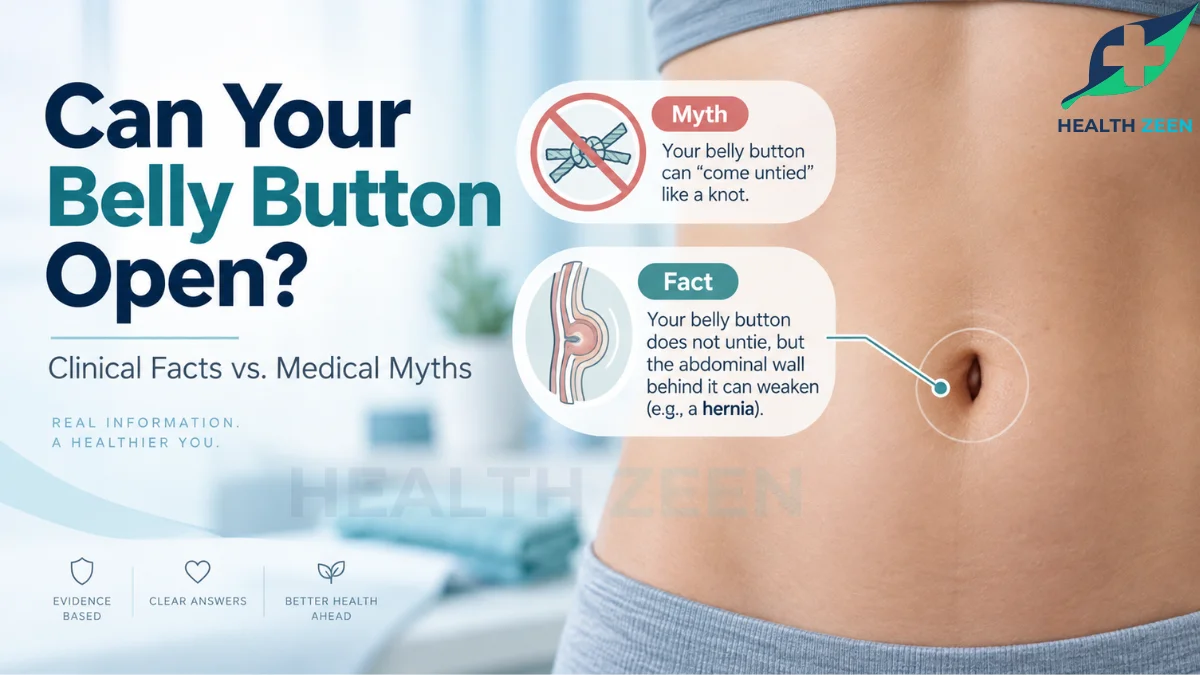
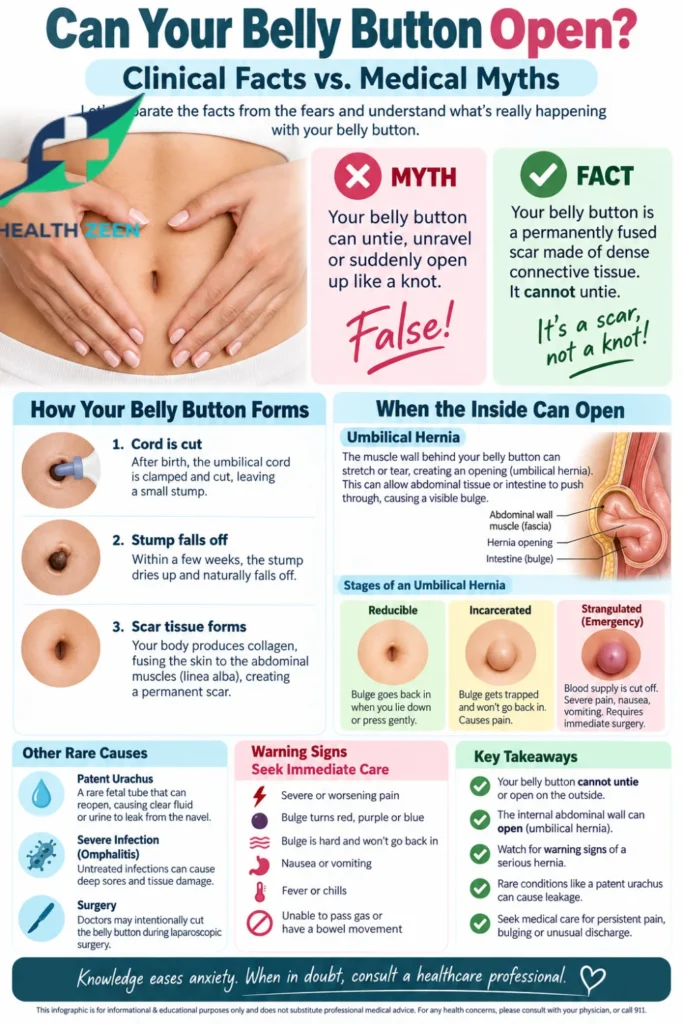
The fear that your belly button might suddenly open up, untie, or unravel is a surprisingly common anxiety among adults. To answer the question directly: no, your belly button cannot untie like a knot. The visual appearance of the umbilicus frequently tricks the human brain into thinking it is a literal knot tied at the center of the stomach. In clinical reality, the belly button is a solid, deeply fused plug of permanent scar tissue that completely sealed itself shortly after you were born.
However, from a strict anatomical and medical perspective, the internal structures directly behind your belly button can indeed open or tear. This opening does not occur on the exterior skin level as an untying knot, but rather beneath the skin within the abdominal muscle wall. When the connective tissue behind the navel stretches and splits apart, it creates a physical hole through which internal organs can protrude. Understanding the profound biological difference between your exterior umbilical scar tissue and your interior abdominal fascia is critical to separating harmless psychological fears from genuine surgical emergencies.
The Myth of the Untying Knot
To eliminate the fear of a belly button opening up, you must first understand exactly how it was formed. The umbilicus is not a knot tied by a physician.
When you were born, the doctor clamped and cut your umbilical cord, leaving a small stump attached to your abdomen. Over the next few weeks, this stump dried up and naturally fell off. What happened next beneath the surface is a masterpiece of biological healing. Your body flooded the area with specialized cells called fibroblasts. These cells rapidly laid down thick, dense collagen fibers, permanently fusing the exterior dermal skin to a tough, fibrous band of tissue running down the center of your abdomen called the linea alba.
This dense fibrous connective tissue solidified into a highly secure, permanent scar. Because it is a completely fused biological structure and not a mechanically tied string, it is physically impossible for the belly button to untie, unravel, or suddenly burst open into the outside world.
When the Abdominal Wall Opens: Umbilical Hernias
While the exterior skin of your navel is permanently sealed, the muscle wall resting directly behind it can develop a significant opening. This clinical condition is known as an umbilical hernia, and it is the most common reason a doctor will tell a patient that their belly button has opened.
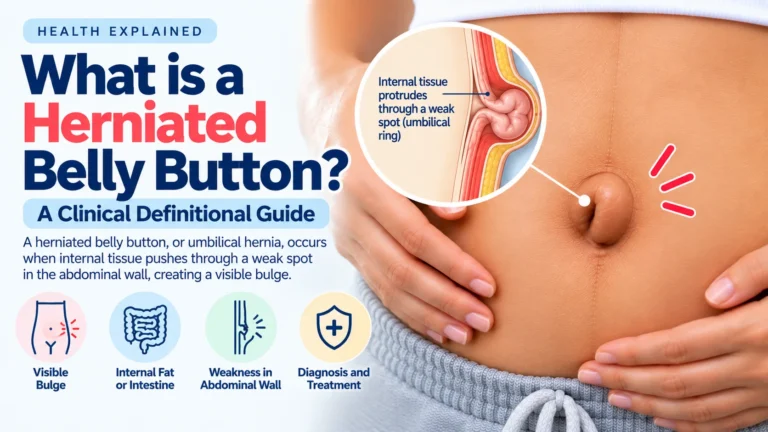
Directly behind your navel is the umbilical ring, a small opening in your abdominal muscles that allowed the umbilical cord to pass through during fetal development. In most adults, this ring closes tightly after birth. However, this specific area remains a structural weak point in the anterior abdominal wall. If you subject your body to extreme intra-abdominal pressure from chronic heavy lifting, severe persistent coughing, rapid weight gain, or multiple pregnancies, this fibrous ring can slowly stretch and tear open.
When this internal opening occurs, the peritoneal lining and sections of your small intestine are physically pushed through the hole in the muscle. Because the exterior skin of the belly button remains completely sealed, you will not see your intestines spill out. Instead, you will see a visible, fleshy bulge pushing outward from behind your navel, essentially turning an innie belly button into an outie.
Stages of an Opening Umbilical Hernia
An umbilical hernia opening does not always present an immediate medical crisis, but the condition can escalate through three distinct clinical stages.
Reducible Hernia is the earliest stage. The fascial defect is open, and tissue protrudes into the belly button, causing a visible bulge. However, when you lie flat on your back and gently press on the bulge, the tissue easily slides back through the opening and returns into the abdominal cavity.
Incarcerated Hernia occurs when the protruding intestinal tissue becomes trapped outside the muscle wall. The opening in the fascia clamps down tightly around the intestine, preventing you from pushing the bulge back inside. This stage causes localized tenderness and deep aching pain.
Strangulated Hernia is a life-threatening surgical emergency. The opening in the muscle wall becomes so tight that it completely cuts off the blood supply to the trapped section of the intestine. The tissue begins to rapidly die off, a process known as necrosis. This causes sudden, agonizing abdominal pain, severe nausea, vomiting, and requires immediate emergency surgery to save the bowel.
When an Internal Fetal Tube Reopens: Patent Urachus
There is one exceptionally rare anatomical anomaly where a biological tube physically opens behind the belly button, causing it to leak fluid directly from the inside of your body.
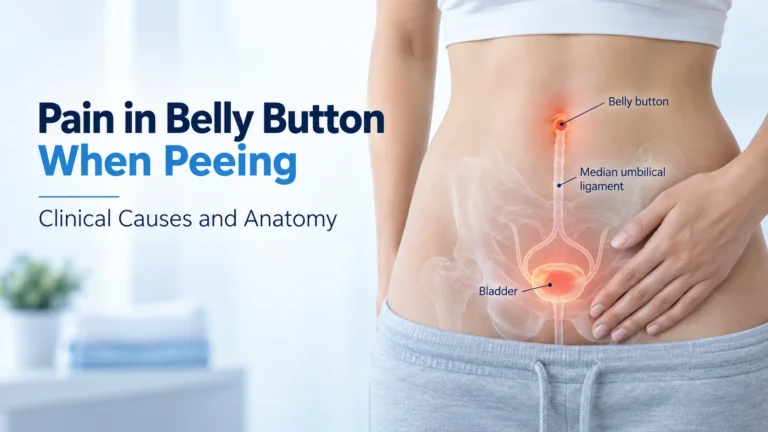
During fetal development, a small tube called the urachus connects your developing belly button to your urinary bladder. Normally, this tube completely closes, solidifies into a ligament, and permanently seals off before you are born. However, in a small percentage of adults, a section of this tube remains structurally open.
If massive inflammation or a localized infection occurs, this internal tract can burst open entirely. This condition, known as a patent urachus, creates a direct, open physiological pathway from your internal bladder to your exterior belly button. Adults with this condition will experience a sudden, unexplainable leaking of clear serous fluid or trace amounts of urine directly out of the navel, requiring surgical closure.
Beyond hernias and congenital anomalies, severe external trauma or uncontrolled infections can physically compromise the sealed skin of the umbilicus.
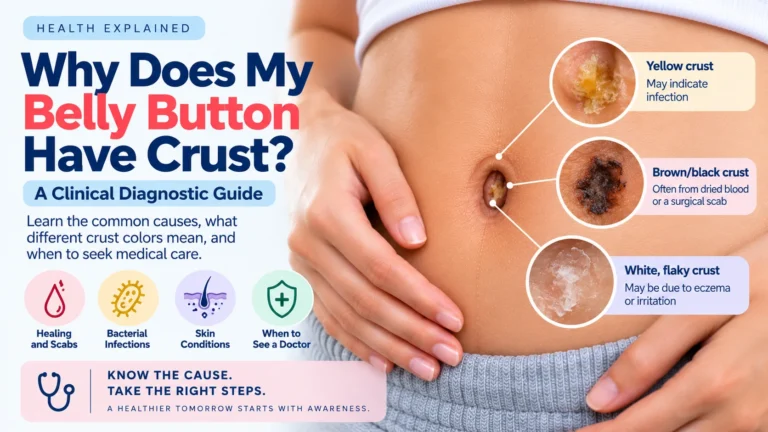
If a patient develops a severe, untreated bacterial infection deep inside an innie belly button, known as advanced omphalitis, the aggressive bacteria can rapidly destroy the healthy scar tissue. The localized tissue turns highly inflamed, becomes entirely macerated by purulent discharge, and can physically ulcerate. This ulceration creates open, bleeding sores inside the cavity that mimic the feeling of the belly button ripping open. Additionally, modern surgeons actively choose to slice open the umbilicus during laparoscopic procedures. By making an incision directly through the natural folds of the scar, surgeons can insert cameras and medical tools into the abdomen while ensuring the resulting surgical scar remains completely hidden within the navel once it heals.
When Should You Seek Immediate Medical Evaluation?
If you suspect that the structural integrity of your abdominal wall behind your belly button has been compromised, you must monitor your symptoms closely.
You must proceed to a hospital emergency room immediately if the bulge pushing through your belly button suddenly turns deep red, purple, or dark blue. Seek urgent care if the localized pain transitions from a dull ache to a sharp, agonizing stab, or if the physical protrusion becomes incredibly hard and completely unmovable when you press on it gently. The sudden onset of a high systemic fever, uncontrollable shivering, or the inability to pass gas or have a bowel movement are all critical indicators that an umbilical hernia has become strangulated and requires immediate surgical intervention.
Frequently Asked Questions
No, your exterior belly button cannot just open up, unravel, or untie. It is a permanently fused block of dense fibrous scar tissue. However, the muscle wall directly behind the belly button can tear and open up, which is medically diagnosed as an umbilical hernia.
If the muscle wall behind your belly button opens, abdominal fat or a loop of your intestine can push through the tear. You will notice a soft, fleshy bulge protruding from your navel, which may cause a dull, pulling pain when you cough, sneeze, or lift heavy objects.
This is a medical myth. The belly button is absolutely not a knot. When the umbilical cord falls off after birth, your body uses specialized cells to build thick collagen fibers, fusing the skin directly to your abdominal muscles, making it impossible to untie.
The sensation of your belly button pulling apart is typically caused by severe intra-abdominal pressure stretching the connective tissue of your abdominal wall. This is a highly common sensation during the later stages of pregnancy or when engaging in heavy, improper weightlifting.
Your intestines cannot fall out of your belly button into the outside world because your exterior skin is completely sealed. However, during an umbilical hernia, your intestines can push through the internal muscle wall and rest directly beneath the stretched skin of your navel.
An umbilical hernia becomes dangerous when the protruding tissue gets trapped and loses its blood supply. You will know it is a medical emergency if the bulge becomes agonizingly painful, completely solid, changes color to purple or blue, or if you begin vomiting uncontrollably.
While a severe bacterial infection like omphalitis will not open a hole directly into your stomach cavity, it can cause the surface skin inside the navel to severely ulcerate. This creates deep, raw, and bleeding open sores that require prescription oral antibiotics to heal safely.
If your belly button is leaking clear fluid or liquid that smells faintly of urine, you may have a patent urachus. This is a rare condition where a fetal tube connecting your bladder to your navel failed to close completely before birth and has suddenly reopened in adulthood.
Yes, doctors frequently cut open the belly button during a surgical procedure called laparoscopy. They make a small, precise incision directly through the umbilicus to insert a camera, allowing them to perform internal abdominal surgeries without leaving massive, visible scars on your stomach.
Your belly button does not tear open during pregnancy. However, the extreme outward pressure of the expanding uterus severely stretches the linea alba and the internal umbilical ring. This intense stretching frequently pushes an innie belly button flat or turns it into a temporary outie.
Conclusion
The persistent fear that your belly button can untie or randomly open is a physiological impossibility rooted in the visual resemblance of the umbilicus to a tied knot. In clinical reality, your navel is a formidable barrier constructed from dense, permanently fused fibrous scar tissue that fully integrated with your anterior abdominal wall shortly after birth. While the exterior skin cannot unravel, it is entirely possible for the fascial muscle layer hidden directly behind the scar to weaken and split open. This internal tearing, known as an umbilical hernia, allows internal tissue to push outward, creating the highly visible bulges that cause so much confusion and anxiety. By understanding the profound difference between a permanently sealed exterior scar and a vulnerable interior muscle wall, you can confidently distinguish between a harmless anatomical myth and a structural fascial defect that requires professional surgical evaluation.
Disclaimer
This blog is for informational & educational purposes only, and does not intend to substitute any professional medical advice or consultation. For any health related concerns, please consult with your physician, or call 911.