
Why Is My Belly Button Red? Causes and Treatments
A red belly button is primarily caused by intertrigo from trapped moisture, a fungal Candida yeast infection, or allergic contact dermatitis triggered by metal allergens like nickel. To resolve this localized erythema, you must keep the navel cavity meticulously dry and apply targeted treatments like antifungal or mild hydrocortisone creams, seeking immediate medical care if the redness spreads rapidly or produces purulent discharge.
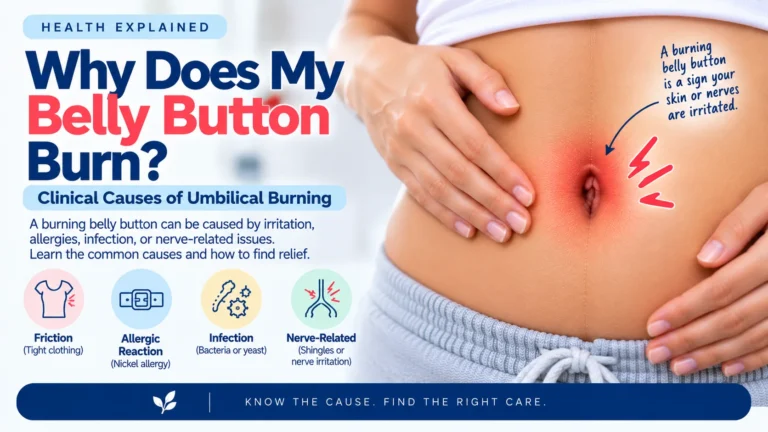
Discovering a bright red rash inside or surrounding your navel can be visually alarming. In clinical dermatology, this localized redness is known as erythema. Because the adult belly button is a deeply indented scar lacking thick, protective muscle layers, it is highly susceptible to epidermal damage. It traps sweat, dead skin cells, and heat more aggressively than any other part of the abdomen. Understanding exactly what is triggering this rapid inflammatory response is critical to stopping the severe itching and preventing a minor surface rash from escalating into a painful deep-tissue infection.
The skin making up your navel frequently turns red due to physical irritation, chemical allergens, and the rapid multiplication of opportunistic microbes that thrive in dark, enclosed spaces.
Intertrigo and Skin Maceration
Intertrigo is one of the most common causes of a bright red belly button in adults, particularly for those with deep abdominal skin folds. This inflammatory condition is driven entirely by trapped moisture and skin-to-skin friction. When bath water or daily sweat remains trapped inside an innie belly button, it waterlogs the outermost layer of the skin. This causes the tissue to physically break down, a process known as maceration. The degraded skin becomes raw, incredibly tender, and bright red due to the loss of its natural protective barrier.
Fungal Yeast Infections (Candidiasis)
The Candida albicans yeast fungus thrives exclusively in warm, dark, and highly moist environments. An improperly dried belly button provides a perfect biological incubator for this opportunistic pathogen. When the yeast multiplies out of control, it triggers an aggressive localized immune response. Cutaneous candidiasis presents as a beefy-red rash that causes intense, burning itching. This fungal redness is frequently accompanied by a distinct, foul odor and the presence of small, red satellite bumps spreading just outside the margins of the umbilicus.
Allergic Contact Dermatitis
If the redness is heavily concentrated on the outer rim of the belly button rather than deep inside the cavity, it strongly indicates allergic contact dermatitis. This occurs when your bare abdominal skin reacts negatively to an external allergen. In adults, the leading culprit is a localized nickel allergy triggered by metal belt buckles, the metal buttons on denim jeans, or body piercings. The immune system reacts to the metal by producing a raised, bright red, and highly itchy rash exactly where the irritant rubbed against the skin.
Early Bacterial Omphalitis
A red belly button frequently serves as the initial clinical warning sign of a developing bacterial infection, known as omphalitis. Before a staph or strep infection begins producing thick, foul-smelling purulent pus, it initiates massive localized inflammation. The body rushes white blood cells to the compromised navel tissue, causing the area to turn deep red, swell significantly, and become noticeably hot to the touch.
Many adults experience severe anxiety wondering if a red rash inside or around their navel is linked to a sexually transmitted disease. In standard clinical practice, an isolated red belly button is almost never the primary or sole symptom of an STD.
However, secondary syphilis is known to cause a widespread, symmetrical red rash that can cover the entire torso, including the umbilicus. The distinguishing clinical factor is that a syphilis rash typically presents as rough, reddish-brown spots that engulf the abdomen, the palms of the hands, and the soles of the feet simultaneously. If your redness is strictly confined exclusively to your belly button, it is a localized dermatological issue like intertrigo or contact dermatitis, not a sexually transmitted infection.
Medical Treatments for Umbilical Redness
Treating a red belly button requires rapidly suppressing the localized immune response, eradicating offending pathogens, and restoring a dry, healthy epidermal barrier.
For fungal yeast infections, physicians prescribe targeted topical antifungal creams, such as clotrimazole or miconazole, to safely eliminate the Candida strains causing the beefy-red rash. For allergic contact dermatitis and severe intertrigo, dermatologists frequently recommend a short course of over-the-counter hydrocortisone cream. This mild topical corticosteroid rapidly constricts the dilated capillaries, instantly reducing the bright red erythema and halting the severe localized itching. Above all, maintaining strict navel hygiene by gently drying the cavity with a clean paper towel after every shower is mandatory to prevent recurrent maceration.
When Should You Consult a Doctor?
You must consult a healthcare provider immediately if the redness inside your belly button persists for more than three to five days despite practicing strict drying techniques and using standard over-the-counter topical treatments.
Seek immediate emergency medical care if the localized redness suddenly begins rapidly spreading outward across your stomach in angry, red streaks. You must proceed to an urgent care clinic without delay if the red umbilicus becomes exceptionally hot to the touch, starts leaking thick green or yellow pus, or is accompanied by a sudden high fever and severe shivering. These critical clinical markers indicate that the surface inflammation has escalated into cellulitis, a severe and potentially life-threatening deep-tissue bacterial infection that requires immediate prescription oral or intravenous antibiotics.
Your belly button is bright red inside due to intense localized vasodilation caused by trapped moisture breaking down the skin barrier, an active fungal yeast infection, or an allergic reaction to a metal belt buckle rubbing against your abdomen.
You get rid of the redness in your belly button by determining the underlying cause. You must keep the area meticulously dry, apply antifungal cream for yeast overgrowths, or use a mild hydrocortisone cream to calm allergic contact dermatitis.
Yes, intertrigo is a leading cause of a red belly button. This inflammatory condition occurs when deep skin folds trap sweat and heat, causing severe skin-to-skin friction that physically strips away the top layer of skin, leaving it raw and bright red.
Yes, a severe fungal yeast infection specifically causes a beefy-red, intensely itchy rash inside the navel. The warm, dark cavity of an innie belly button provides the perfect environment for Candida yeast to multiply and trigger severe localized erythema.
Your belly button gets red after you shower because you are likely failing to dry the deep internal folds thoroughly. The trapped bath water aggressively macerates the delicate skin tissue over time, leading directly to chronic redness and painful irritation.
No, you must never put rubbing alcohol on a red belly button. The redness indicates that your skin barrier is already compromised and raw. Alcohol will cause excruciating burning, violently dehydrate the damaged tissue, and severely delay the natural healing process.
No, a red belly button is not a visual sign of appendicitis. Appendicitis causes severe internal visceral pain that may start behind the navel, but it does not cause the exterior skin on the surface of the abdomen to turn red.
If your belly button is red and emitting a foul odor, it strongly indicates that a fungal yeast infection or a localized bacterial colonization is actively breaking down dead skin cells and sweat trapped inside the deeply inflamed naval cavity.
Yes, uncontrolled diabetes and high blood sugar levels frequently cause a red belly button. Excess glucose is secreted through sweat, providing an unlimited food source for yeast, which triggers recurrent, severe fungal infections that keep the navel chronically red.
You should go to the doctor immediately if the redness rapidly spreads outward across your abdomen, feels extremely hot to the touch, begins weeping thick purulent pus, or is accompanied by a systemic high fever and severe localized throbbing pain.
Conclusion
Discovering that your belly button is red is a highly specific visual symptom indicating a localized breakdown of your epidermal barrier. This bright red erythema is primarily driven by the maceration of skin folds from trapped moisture, aggressive fungal yeast infections, and allergic contact dermatitis caused by external metal irritants. Because the umbilicus lacks thick protective layers, ignoring this initial redness allows opportunistic pathogens to rapidly colonize the raw tissue. You must prioritize keeping the naval cavity meticulously dry and utilize appropriate topical therapies to restore the stratum corneum. If the redness begins spreading rapidly or is accompanied by a fever and purulent discharge, you must seek immediate clinical evaluation to prevent a minor rash from progressing into a severe deep-tissue infection like cellulitis.
Disclaimer
This blog is for informational & educational purposes only, and does not intend to substitute any professional medical advice or consultation. For any health related concerns, please consult with your physician, or call 911.