Why Does Below My Belly Button Hurt? Clinical Causes of Hypogastric Pain
Experiencing pain directly below your belly button can be a deeply unsettling sensation. Unlike a minor surface scratch or a highly localized muscle ache, pain in this specific anatomical region often feels heavy, deep, and difficult to pinpoint. When a patient reports pain strictly in the lower midline of their abdomen, clinical medicine categorizes this as suprapubic or hypogastric pain. This specific classification is vital because it immediately narrows down the list of potential anatomical culprits.
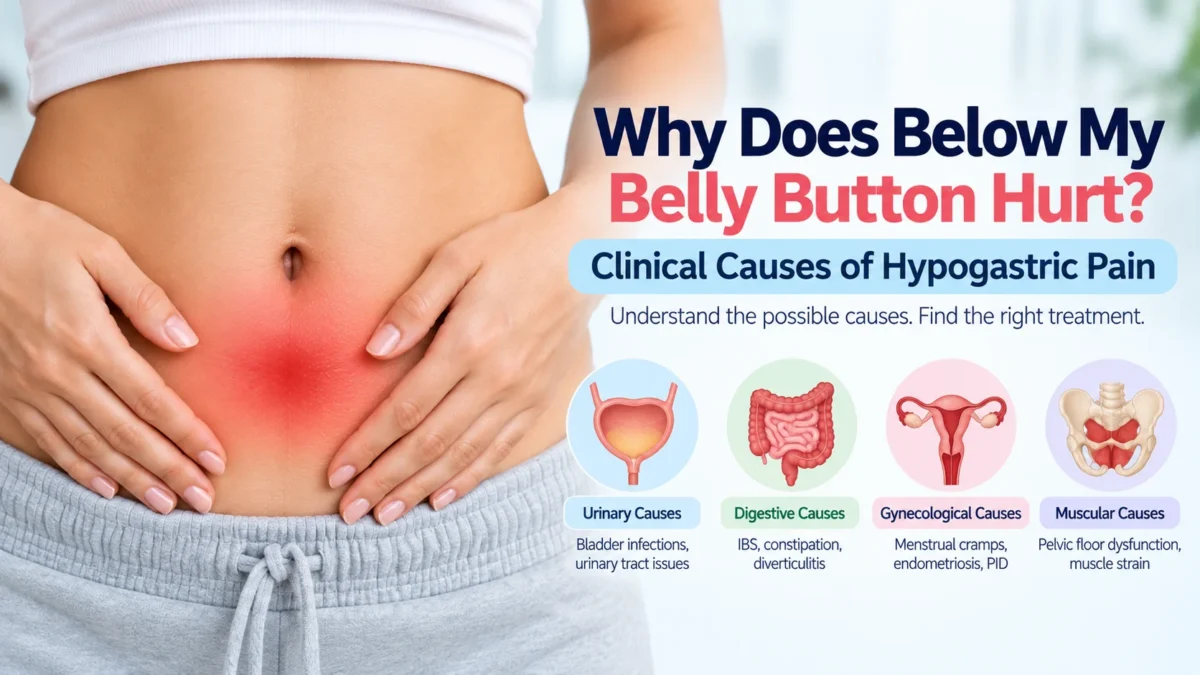
To understand why it hurts below your belly button, you must visualize the organs that reside in the hypogastric region. This area is the absolute bottom center of your abdominal cavity, resting just above your pubic bone. It houses the lower portion of your large intestine, your entire urinary bladder, and, depending on your biological sex, critical reproductive organs such as the uterus or the prostate gland. Because so many different biological systems are tightly packed into this small pelvic bowl, the pain you feel could be a symptom of trapped digestive gas, a severe urological infection, or a complex gynecological condition. By analyzing the exact nature of the pain whether it is a sharp sting, a dull ache, or a severe cramp you can accurately trace the discomfort back to its anatomical source.
Urological Causes: Bladder and Urinary Tract Distress
The most frequent cause of acute pain directly below the belly button is a sudden issue within the urinary system. Your bladder sits centrally located in the hypogastric region, securely tucked just behind the pubic bone and directly beneath the navel.
When bacteria travel up the urethra and aggressively colonize the mucosal lining of the bladder, it causes a lower urinary tract infection, clinically known as cystitis. The severe inflammation of the bladder wall triggers a deep, dull, and highly uncomfortable aching pressure below the belly button. This type of urological pain is almost always accompanied by dysuria, which is a sharp, stinging, or burning sensation precisely when you urinate. You may also feel a relentless, urgent need to empty your bladder, even when it is completely empty.
In patients who experience chronic, long-term pain below the navel without an active bacterial infection, the cause may be interstitial cystitis. This is a painful bladder syndrome where the protective lining of the bladder deteriorates, causing severe, localized pressure and stabbing pain in the lower abdomen as the bladder slowly fills with acidic urine throughout the day.
Gastrointestinal Causes: The Lower Bowel and Rectum
If your lower abdominal pain comes in sharp, colicky waves and is heavily associated with your eating habits or bathroom routines, the root cause is likely gastrointestinal. The sigmoid colon, which is the final section of your large intestine before the rectum, curves directly through the lower abdominal and pelvic cavity.
Irritable bowel syndrome is a highly common functional disorder that causes the muscles of the lower intestines to violently spasm. These spasms frequently manifest as severe, cramping pain localized just below the belly button. This pain is usually accompanied by severe abdominal bloating, trapped gas, and alternating bouts of constipation and diarrhea. A hallmark clinical sign of irritable bowel syndrome is that the lower abdominal pain typically subsides immediately after you pass gas or have a successful bowel movement.
A much more severe gastrointestinal cause is acute sigmoid diverticulitis. This occurs when small, bulging pouches in the lining of the lower large intestine become blocked by hardened stool and severely infected. While diverticulitis pain is typically felt slightly to the lower left side, severe inflammation can easily radiate to the central hypogastric region, causing a constant, agonizing ache accompanied by a high fever and nausea.
Gynecological and Reproductive Causes
For biological females, the hypogastric region contains the uterus, making reproductive health a primary suspect for pain strictly below the belly button.
The most common cause of lower midline pain in women is primary dysmenorrhea, simply known as menstrual cramps. During a menstrual cycle, the uterus releases hormone-like substances called prostaglandins, which force the uterine muscles to aggressively contract and shed the endometrial lining. These violent contractions cause a deep, dull, and throbbing pain directly below the navel that frequently radiates into the lower back and upper thighs.
However, if severe pain below the belly button occurs outside of the normal menstrual window, it requires deeper clinical investigation. Conditions like endometriosis, where tissue similar to the uterine lining grows outside the uterus and attaches to the bladder or bowels, can cause excruciating, chronic pelvic pain. Similarly, pelvic inflammatory disease, a severe bacterial infection of the female reproductive organs often triggered by untreated sexually transmitted infections, will cause a heavy, constant, and highly painful pressure in the lower abdomen, frequently accompanied by a foul-smelling vaginal discharge and a low-grade fever.
Pelvic Floor Spasms and Muscular Strain
Sometimes, the pain below your belly button has nothing to do with your internal organs and is entirely musculoskeletal. The pelvic floor is a complex hammock of muscles that supports the bladder, bowel, and reproductive organs.
If these muscles become chronically tense or undergo sudden, violent spasms, it can cause a condition known as pelvic floor dysfunction. Patients with this condition often describe the pain as a heavy, dragging, or tight sensation directly below the navel, deep within the pelvis. This muscular pain is frequently exacerbated by sitting for prolonged periods, engaging in high-impact exercises, or chronic straining due to severe constipation.
When to Seek Emergency Medical Attention
While mild gas cramps or standard menstrual pain can typically be managed safely at home with rest and over-the-counter pain relievers, certain presentations of hypogastric pain demand immediate, life-saving emergency medical evaluation.
You must proceed immediately to the nearest emergency room if the pain below your belly button is sudden, excruciating, and causes your abdominal muscles to feel rock hard and rigid to the touch. Seek urgent care if the lower abdominal pain is accompanied by a sudden high fever, uncontrollable vomiting, the inability to pass gas or have a bowel movement, or if you notice bright red blood in your urine, stool, or vomit. Furthermore, for women of childbearing age, sudden and blinding pain in the lower abdomen accompanied by dizziness or fainting must be evaluated immediately to rule out a ruptured ectopic pregnancy, which is a critical surgical emergency.
Frequently Asked Questions
The area right below your belly button, known as the hypogastric region, hurts because it houses your bladder, lower intestines, and reproductive organs. Inflammation, muscle spasms, or infections in any of these internal structures will transmit distress signals directly to the lower midline of your abdomen.
Yes, a lower urinary tract infection, or cystitis, is a leading cause of pain below the navel. When the bladder becomes severely inflamed by bacterial colonization, it triggers a deep, constant aching pressure in the lower abdomen, accompanied by a sharp burning sensation during urination.
While early appendicitis typically starts directly at the belly button, it almost always migrates sharply to the lower right side of the abdomen, not directly below the navel. If your pain is strictly in the lower midline, it is more likely related to the bladder, uterus, or lower colon.
Sharp, colicky pain below the belly button that comes in intense waves is a classic symptom of intestinal spasms. This is most commonly caused by irritable bowel syndrome, trapped digestive gas, or a mild intestinal blockage as the bowel struggles to push contents through the lower digestive tract.
Can constipation cause lower abdominal pain?
Yes, severe constipation causes the lower large intestine and the rectum to become massively engorged with hardened, impacted stool. This physical blockage stretches the intestinal walls to their limit, causing a heavy, agonizing, and constant ache directly below the belly button until the bowel is finally emptied.
Endometriosis pain in the lower abdomen is often described as a deep, crippling, and chronic ache that feels significantly more severe than standard menstrual cramps. The pain frequently worsens during menstruation, sexual intercourse, or bowel movements, depending on where the rogue tissue has attached itself.
If you feel sharp, pulling pain below your belly button specifically while you pee, it is likely tied to the median umbilical ligament, which connects the bladder to the navel. An inflamed bladder violently contracting to expel urine will pull on this ligament, causing localized lower abdominal pain.
Yes, exceptionally tight, high-waisted pants or restrictive belts place immense, continuous physical compression directly on the lower abdomen. This mechanical pressure squashes the bladder and lower intestines, which can trigger localized muscular cramping and exacerbate underlying conditions like irritable bowel syndrome or interstitial cystitis.
What is pelvic inflammatory disease and does it cause lower belly pain?
Pelvic inflammatory disease is a severe bacterial infection of the female reproductive organs. It triggers massive, widespread inflammation throughout the pelvic cavity, resulting in a heavy, constant, and highly painful pressure directly below the belly button, often accompanied by a fever and abnormal discharge.
You should rush to the emergency room if the pain below your belly button is suddenly excruciating, accompanied by a high fever, uncontrollable vomiting, bloody urine or stool, or if your lower stomach suddenly becomes visibly swollen and feels completely rigid and rock hard to the touch.
Conclusion
Pain located precisely below the belly button is a complex neurological alarm signaling distress within the densely packed pelvic bowl. Because the hypogastric region serves as the shared physical home for your urological, digestive, and reproductive systems, deciphering the pain requires careful attention to accompanying symptoms. A deep ache that burns during urination points directly toward a bladder infection, while sharp, wave-like cramps that disappear after passing gas clearly implicate the lower intestines. For women, understanding the cyclical nature of uterine pain is vital for distinguishing between normal menstrual shedding and severe conditions like endometriosis or pelvic inflammatory disease. By accurately tracking the timing, severity, and triggers of your lower abdominal pain, you can empower your physician to swiftly identify the offending anatomical system, secure an accurate clinical diagnosis, and provide the targeted medical treatment required to restore your internal pelvic harmony.
Disclaimer
This blog is for informational and educational purposes only, and does not intend to substitute any professional medical advice or consultation. For any health related concerns, please consult with your physician, or call 911.