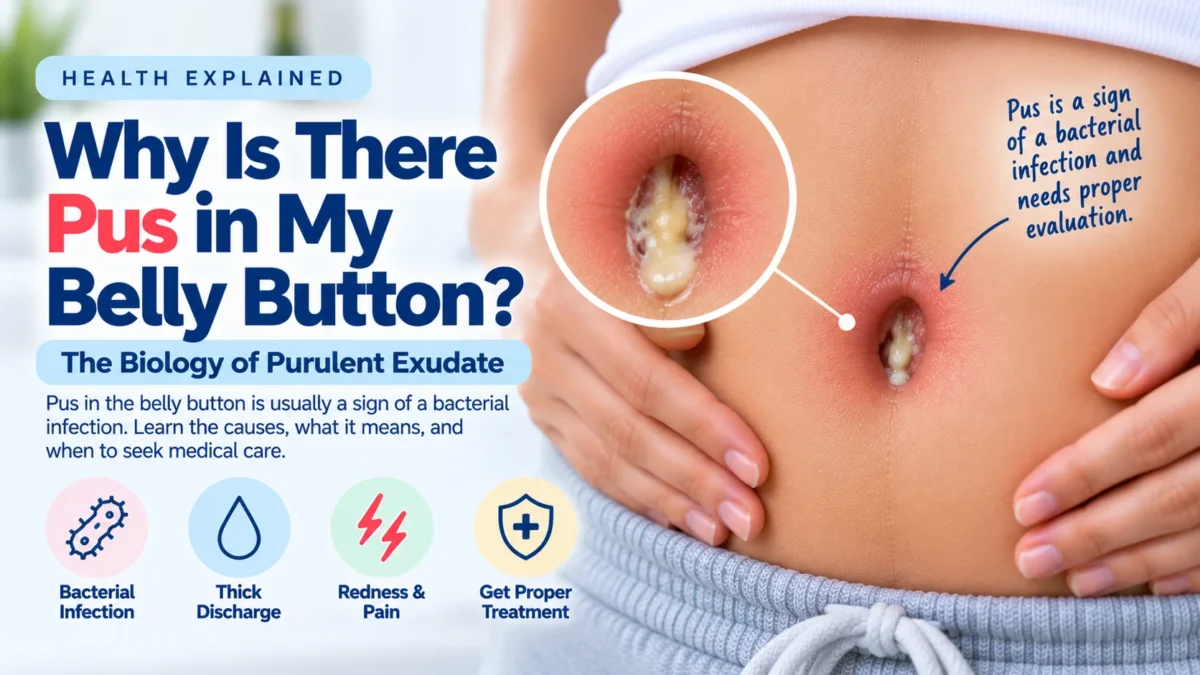
Why Is There Pus in My Belly Button? The Biology of Purulent Exudate
Discovering a thick, opaque liquid seeping from your belly button is a definitive biological signal that your immune system is actively engaged in a microscopic war. Many patients mistakenly believe that the yellowish or greenish substance trapped inside their navel is simply liquefied dirt, dissolved clothing lint, or melted body fat. In clinical dermatology, this highly viscous fluid is known as purulent exudate, commonly referred to as pus.
The presence of pus inside the umbilicus is never a natural or healthy occurrence. It is the direct physical byproduct of an aggressive bacterial invasion that has successfully breached your epidermal barrier. Because the belly button is a dark, recessed, and frequently humid anatomical cavity, it serves as the perfect biological incubator for opportunistic pathogens. To understand why your belly button is producing pus, you must look beyond the surface symptom and understand the fascinating, yet destructive, immunological processes occurring deep within the tissues of your navel.
The Biological Composition of Pus
To accurately diagnose your condition, it helps to understand what pus actually is. When aggressive surface bacteria, such as Staphylococcus aureus, enter the delicate skin of your belly button through a microscopic scratch, they begin to rapidly multiply and consume healthy tissue.
Your immune system immediately detects this tissue damage and dispatches millions of specialized white blood cells called polymorphonuclear neutrophil leukocytes directly to the umbilical region. These neutrophils aggressively attack the invading bacteria by engulfing and dissolving them, a biological process known as phagocytosis. However, once a neutrophil consumes a bacterium, the white blood cell dies.
Pus is essentially a microscopic graveyard. It is a highly concentrated mixture of liquefied necrotic skin tissue, live and dead bacteria, and millions of dead white blood cells. The heavy concentration of these dead immune cells and the specific enzymes they release are exactly what gives purulent exudate its signature thick texture and its opaque yellow, green, or rusty brown coloration.
Acute Bacterial Omphalitis
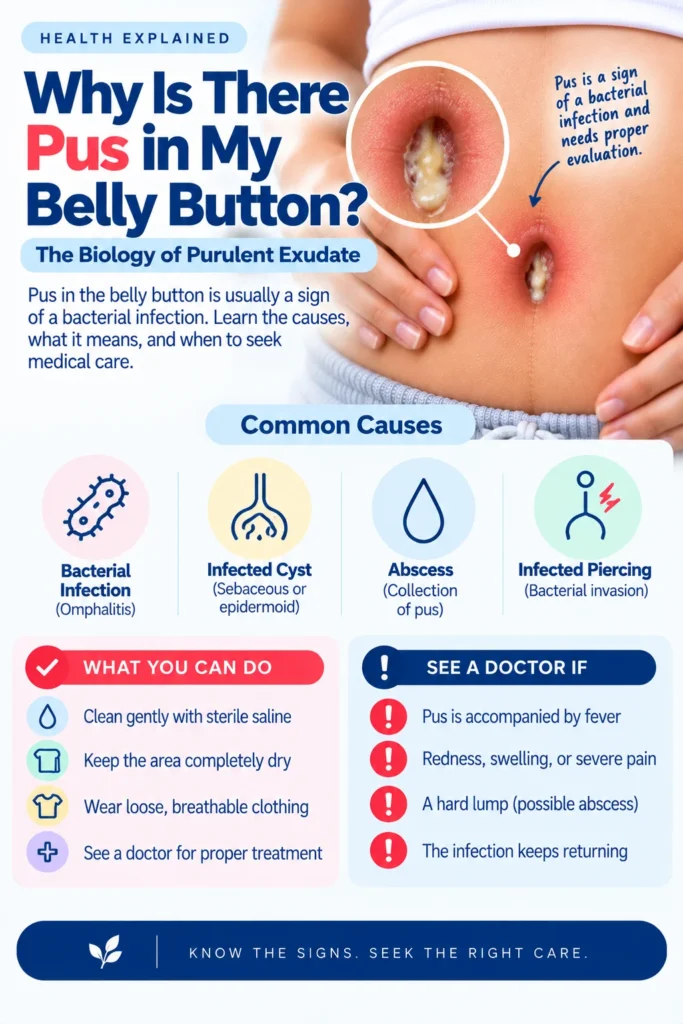
The most frequent clinical cause of pus in the adult belly button is acute bacterial omphalitis. This is a severe, localized infection of the umbilical skin and the immediate surrounding tissue.
Omphalitis usually begins with a minor mechanical injury. Aggressively picking dry skin out of your navel, scratching the area with a sharp fingernail, or experiencing a severe friction burn from a tight metal belt buckle easily tears the top layer of the epidermis. Once the skin is open, standard surface bacteria rush into the wound. Within twenty-four to forty-eight hours, the tissue inside the belly button will become highly inflamed, visibly swollen, and exquisitely tender to the touch. Because the navel is a closed cavity, the purulent exudate created by the immune response cannot easily drain away. Instead, the pus pools at the bottom of the belly button, frequently hardening into a dark, crusty barrier when exposed to the air.
Deep Umbilical Abscesses
If the bacterial infection bypasses the superficial skin layers and burrows deeply into the connective tissue behind the navel, it can trigger the formation of an umbilical abscess.
An abscess is a highly specialized defensive mechanism. When the immune system realizes it cannot immediately destroy a massive bacterial colony, it builds a dense wall of fibrous tissue entirely around the infection to prevent the pathogens from spreading into the abdominal cavity. This creates a hidden, pressurized sac of pus located just beneath the surface of the belly button.
Unlike standard omphalitis, an abscess will feel like a distinct, hard, and incredibly painful marble lodged behind the navel. As the bacteria continue to multiply inside this sealed pocket, the internal pressure builds dramatically. Eventually, the abscess will rupture, creating a microscopic tunnel to the surface of the skin and violently flooding the belly button cavity with a massive volume of thick, foul-smelling pus.
Infected Sebaceous and Epidermoid Cysts
Occasionally, the source of the pus is a preexisting structural anomaly rather than a new surface scratch. The skin lining the interior of the belly button contains sebaceous glands and hair follicles, making it susceptible to cyst formation.
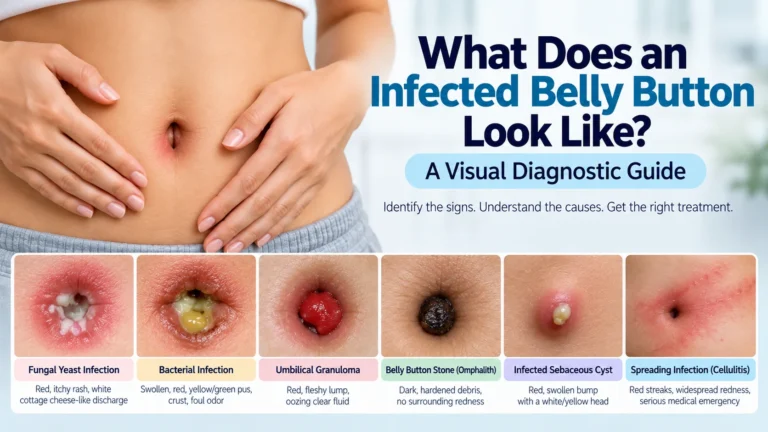
An epidermoid cyst is a slow-growing sac beneath the skin that fills with decaying keratin proteins, while a sebaceous cyst fills with trapped body oils. These cysts can sit harmlessly inside the navel for years. However, if bacteria manage to infiltrate the cyst capsule, the stagnant biological waste inside becomes massively infected. An infected cyst will rapidly swell, turn bright red, and convert the trapped keratin and oil into highly putrid pus. When the infected cyst finally bursts, it leaks a unique, chunky, grayish-yellow purulent material that emits a shockingly foul odor resembling rancid cheese.
Fungal Yeast vs. Bacterial Pus
It is critically important to differentiate between bacterial pus and fungal discharge, as treating a fungus with antibacterial ointment will make the condition significantly worse.
If the substance in your belly button is thick, bright white, clumpy like cottage cheese, and accompanied by an intensely itchy, beefy red rash, you are dealing with cutaneous candidiasis, a fungal yeast infection. Yeast discharge is not true pus, as it is not primarily composed of dead neutrophils.
Conversely, true bacterial pus is highly viscous, heavily opaque, distinctly yellow or green, and is accompanied by a severe throbbing pain rather than an itch. Furthermore, bacterial pus frequently smells deeply putrid or sour due to the sulfur gases released by anaerobic bacteria as they digest the necrotic tissue.
When to Seek Emergency Surgical Evaluation
While superficial omphalitis can often be managed with meticulous hygiene and prescription topical antibiotics, the presence of pus in the abdominal region must always be monitored for signs of systemic spreading.
You must seek immediate emergency medical care if the pus is accompanied by dark red, spreading streaks shooting across your stomach, which is a primary indicator of cellulitis. Furthermore, if you develop a high fever, uncontrollable shivering, projectile vomiting, or if the muscles of your abdomen suddenly feel rock hard and rigid to the touch, you must be evaluated immediately. These severe symptoms indicate that the bacterial infection has breached the abdominal fascia and is actively attacking your internal organs, requiring emergency intravenous antibiotics and surgical intervention.
Frequently Asked Questions
Pus turns green due to the presence of a specific enzyme called myeloperoxidase, which is produced by your white blood cells during the destruction of bacteria. Additionally, certain aggressive bacterial strains, specifically Pseudomonas aeruginosa, naturally produce a blue-green pigment as they multiply inside the wound.
You must never forcefully squeeze, pinch, or pop an infected belly button. The tissue in the umbilicus is extremely delicate. Squeezing a pocket of pus can easily rupture the internal fascial barrier, forcing the aggressive bacteria backward and deeper into your abdominal cavity.
The putrid smell is not caused by the white blood cells, but by the bacteria themselves. As anaerobic bacteria aggressively break down and digest your dead skin cells and proteins, they release highly pungent metabolic byproducts, primarily sulfur-containing gases, which cause the distinct rotting odor.
No, hydrogen peroxide is highly cytotoxic and should never be used on an actively infected belly button. It violently destroys the newly forming, healthy skin cells that are trying to heal the wound, which severely delays recovery and allows the bacterial infection to persist much longer.
It is normal for a brand new piercing to weep clear, odorless serous fluid for a few weeks. However, if the piercing is leaking thick, opaque yellow or green pus that smells foul and is accompanied by throbbing pain, the piercing tract is actively infected and requires medical attention.
If you have a deep umbilical abscess, a physician will typically perform a minor clinical procedure known as an incision and drainage. They will safely numb the area, make a tiny surgical incision to release the trapped, pressurized pus, and thoroughly flush the empty cavity with sterile saline.
Yes, if left entirely untreated, a severe bacterial infection in the belly button can eat through the connective tissue of the abdominal wall. This can lead to necrotizing fasciitis, a life-threatening flesh-eating disease, or peritonitis, a fatal inflammation of the abdominal cavity lining.
What is the difference between normal body oil and pus?
Normal body oil, or sebum, is a clear or slightly pale yellow waxy substance that keeps your skin moisturized. It is harmless. Pus is a thick, murky, opaque liquid consisting entirely of liquefied dead tissue, live bacteria, and millions of destroyed white blood cells from an active immune response.
Yes, absolute moisture desiccation is critical for healing. Bacteria require a highly humid, wet environment to survive and multiply. After gently cleaning away the pus with sterile saline, you must thoroughly dry the belly button cavity using a cool hairdryer to halt bacterial reproduction.
No, a foul odor without the presence of active liquid is usually just biological putrefaction. This happens when a massive buildup of dead keratin skin cells, trapped sweat, and natural body oils begins to slowly rot inside the deep folds of the navel without causing an active clinical infection.
Conclusion:
To successfully eliminate purulent exudate from your navel, you must respect the biological reality of the infection. The pus pooling in your belly button is the visible aftermath of a microscopic war between your immune system and an invading pathogen. Whether the bacteria capitalized on a minor scratch to cause acute omphalitis, or infiltrated a hidden epidermoid cyst to create a localized abscess, the core treatment philosophy remains the same. You must safely irrigate the necrotic debris using sterile saline, completely dry the umbilical cavity to eliminate the humid breeding ground, and consult a physician for targeted antimicrobial therapies. By supporting your immune system rather than attacking the raw tissue with cytotoxic household chemicals, you can effectively halt the bacterial colonization, stop the production of pus, and restore the healthy epidermal barrier of your abdomen.
Disclaimer
This blog is for informational and educational purposes only, and does not intend to substitute any professional medical advice or consultation. For any health related concerns, please consult with your physician, or call 911.