How to Treat a Belly Button Infection: Clinical Protocols
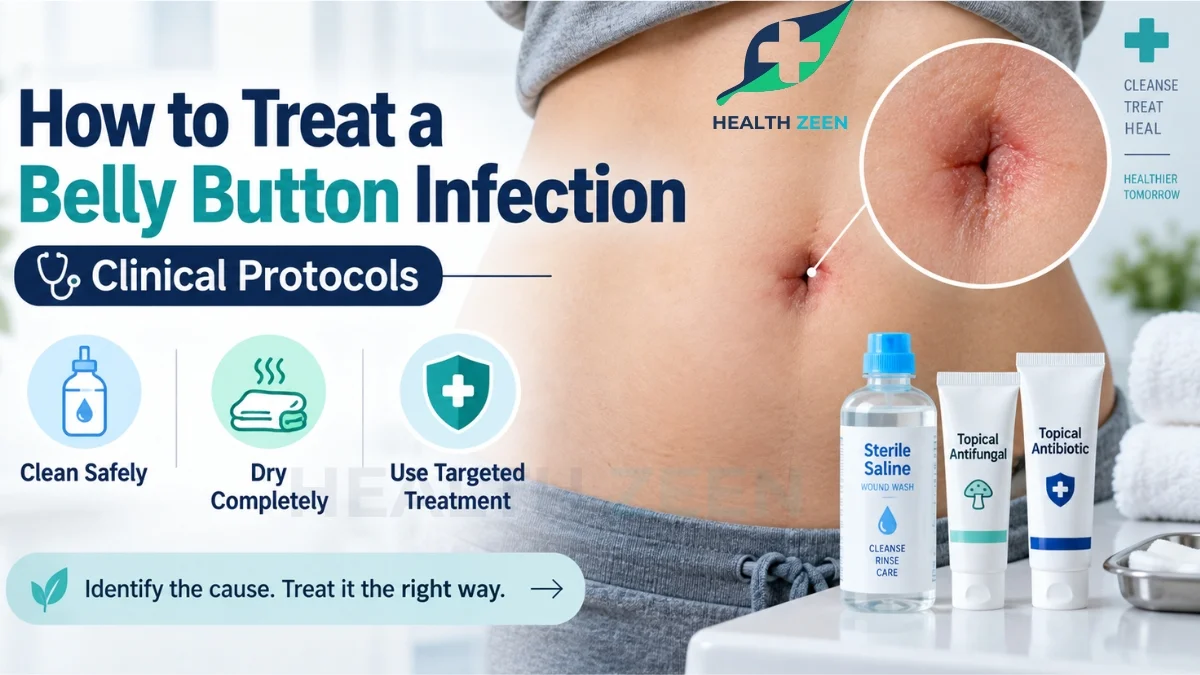
You treat a belly button infection by first using sterile saline to safely wash away the bacterial biofilm, then applying targeted topical medications based on the specific pathogen. A fungal yeast infection requires an over-the-counter antifungal cream like clotrimazole, while a bacterial infection producing foul-smelling pus requires prescription topical mupirocin or oral antibiotics to eradicate.
Attempting to treat an infected belly button without understanding the exact microscopic pathogen causing the inflammation frequently worsens the condition. The deep, overlapping folds of an adult umbilicus create a dark, damp environment that allows aggressive bacteria and opportunistic fungi to multiply rapidly. Because the skin inside the navel is exceptionally thin, utilizing the wrong treatment approach can violently irritate the epidermal barrier and drive the infection deeper into the abdominal tissue. Effectively curing umbilical omphalitis requires a strict clinical protocol involving safe debris removal, moisture control, and precise antimicrobial pharmacology.
Step 1: Identify the Specific Pathogen
Before applying any medical ointment, you must visually inspect the clinical symptoms to determine whether you are fighting a fungal overgrowth or a severe bacterial colonization. The treatments for these two distinct pathogens are completely opposite.
A fungal yeast infection, clinically known as candidiasis, presents as a bright, beefy-red rash that causes intense, burning itching. It frequently produces a thick, white, cottage-cheese-like discharge inside the navel folds. Conversely, a bacterial infection primarily causes deep, throbbing pain rather than surface itching. A bacterial colonization causes the navel tissue to become highly swollen, exceptionally warm to the touch, and leak thick yellow, green, or brown purulent exudate accompanied by a distinct rotting odor.
Step 2: Safe Biofilm Disruption and Debridement
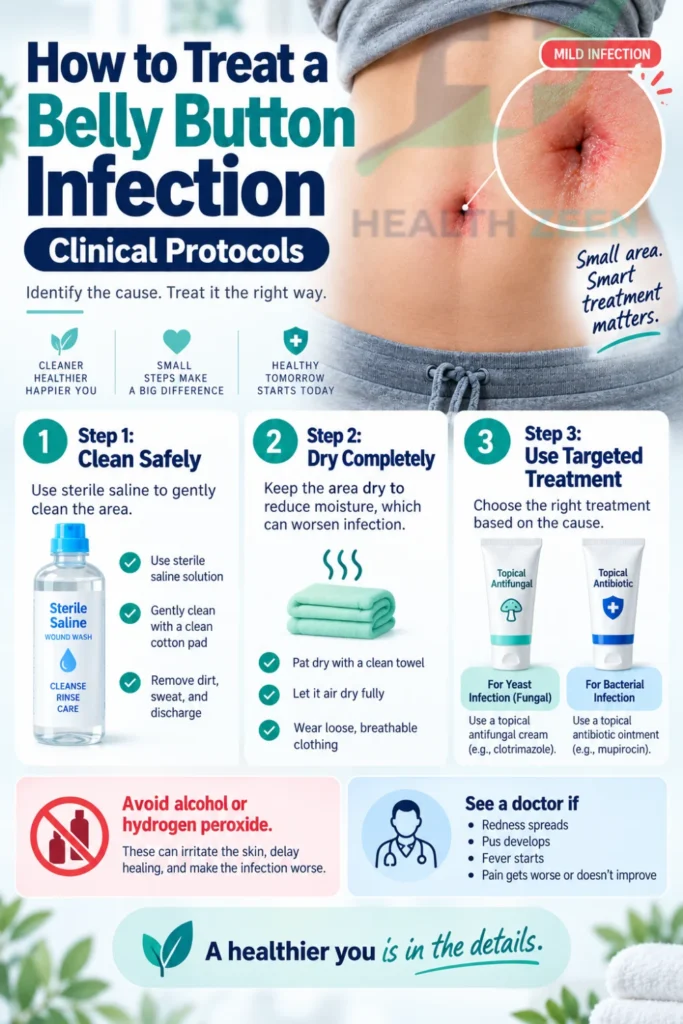
You must safely clean the infected cavity before applying any medication. Bacteria construct a slimy protective shield called a biofilm over the infected skin. If you apply ointment directly over this shield, the medication will never reach the actual pathogens.
You must gently flush the belly button with a sterile normal saline solution. Saline safely loosens hardened crusts, trapped lint, and breaks down the bacterial biofilm without damaging the delicate underlying skin. After flushing the cavity, use a soft, sterile cotton swab to gently sweep away the loosened debris. You must immediately pat the navel completely dry with a clean paper towel. Leaving the cavity damp will instantly fuel further fungal or bacterial replication.
What Not to Use: Avoid Cytotoxic Agents
One of the most common treatment mistakes adults make is pouring aggressive chemical disinfectants directly into an infected belly button.
You must never use rubbing alcohol, hydrogen peroxide, or harsh iodine solutions to treat an umbilical infection. In clinical dermatology, these liquids are classified as cytotoxic agents. While they do kill bacteria, they also violently destroy your own healthy white blood cells, aggressively strip away the remaining moisture barrier, and cause microscopic chemical burns. Applying alcohol to an infected navel severely delays the natural cellular healing process and causes excruciating, unnecessary pain.
Targeted Medical Treatments
Once the belly button is properly cleaned and completely dried, you must apply the correct targeted antimicrobial therapy based on the underlying pathogen.
Treating Fungal Yeast Infections
If the symptoms point to a Candida fungal overgrowth, you must apply a thin layer of an over-the-counter topical antifungal medication. Dermatologists frequently recommend creams containing clotrimazole or miconazole. You should apply the antifungal cream twice daily to the bright red rash. The medication aggressively attacks the fungal cell membranes, stopping the intense itching and resolving the localized erythema within one to two weeks.
Treating Bacterial Infections
Bacterial omphalitis requires immediate clinical intervention. For localized, moderate bacterial infections, a physician will prescribe a powerful topical antibiotic ointment, such as mupirocin. This specific ointment penetrates deep into the epidermal tissue to eradicate aggressive staphylococcus colonies. If the bacterial infection is producing high volumes of green pus or has caused the surrounding abdominal skin to become hard and swollen, the doctor will prescribe a seven to ten-day course of broad-spectrum oral antibiotics, such as cephalexin or clindamycin, to clear the infection from the inside out.
If your belly button infection is being caused by a dark, hard mass lodged deep inside the cavity, you are dealing with an infected omphalith, commonly known as a navel stone.
You cannot treat an infected navel stone with antibiotic creams alone, because the dense, calcified mass of dead skin and sebum will continue to harbor bacteria. Furthermore, you must never attempt to forcefully pry the hard stone out with tweezers, as this will tear the inflamed skin and cause heavy bleeding. A dermatologist will treat this specific issue by first applying a clinical softening agent to the mass. Once the stone is pliable, the doctor will use sterile forceps to safely extract the debris, followed immediately by a localized antibiotic wash to heal the raw tissue left behind.
When to Seek Emergency Medical Care
You must monitor the infection closely during the first forty-eight hours of treatment. If the localized inflammation begins spreading, you must escalate your medical care immediately.
Seek emergency medical treatment if the redness starts spreading outward from the belly button across your stomach in distinct, hot streaks. You must proceed to an urgent care clinic without delay if you develop a sudden systemic high fever, severe uncontrollable shivering, nausea, or if the abdominal pain becomes so severe that you cannot stand up straight. These critical clinical markers indicate that the surface infection has breached the abdominal fascia and evolved into cellulitis, a life-threatening deep-tissue infection requiring immediate intravenous antibiotics.
Frequently Asked Questions About Infection Treatment
You get rid of a belly button infection fast by first identifying if it is bacterial or fungal, gently washing the cavity with sterile saline, drying it completely, and applying the correct targeted prescription antibiotic or over-the-counter antifungal cream twice daily.
The best cream depends entirely on the pathogen. For a fungal yeast infection, clotrimazole or miconazole antifungal creams are the best choice. For a bacterial infection producing green pus, prescription mupirocin antibiotic ointment is the clinical gold standard.
You should generally avoid putting Neosporin on an infected belly button. Many adults have a mild topical allergy to neomycin, an active ingredient in Neosporin, which can trigger severe contact dermatitis and drastically worsen the redness and localized swelling.
No, you must never clean an infected belly button with hydrogen peroxide. Hydrogen peroxide is highly cytotoxic, meaning it actively destroys the healthy new skin cells your body is trying to produce, severely delaying the overall healing process.
You should dry your belly button by gently pressing a clean, dry paper towel into the cavity to absorb all the moisture. Avoid using cloth bath towels on an active infection, as they frequently harbor hidden bacteria and can reinfect the raw tissue.
You should only put a sterile gauze bandage over an infected belly button if it is actively leaking large amounts of purulent pus to protect your clothing. Otherwise, leaving it exposed to the air helps physically dehydrate the environment and suppresses fungal multiplication.
When treated daily with a targeted topical antifungal cream and strict drying protocols, a standard fungal belly button infection typically takes between seven and fourteen days to completely clear up and restore a healthy epidermal barrier.
Yes, a prescribed course of oral antibiotics will rapidly cure a severe bacterial belly button infection. Oral antibiotics travel through your bloodstream to attack the pathogens from within, making them highly effective against infections that have penetrated deep into the tissue.
While warm salt water or sterile saline is excellent for safely flushing out debris and softening hardened crusts without damaging the skin, it is not a cure. You still require specific antimicrobial medications to actually eradicate the remaining aggressive pathogens.
If you leave a bacterial belly button infection untreated, the pathogens will rapidly eat through the thin epidermal barrier and invade the deep subcutaneous fat of your abdomen. This causes severe, rapid-spreading cellulitis that frequently requires emergency hospitalization.
Conclusion
Effectively treating a belly button infection requires a strategic clinical approach that prioritizes precise pathogen identification and safe wound debridement over aggressive chemical scrubbing. Because the umbilicus is a highly sensitive, enclosed cavity, pouring cytotoxic agents like rubbing alcohol into the navel severely damages the delicate stratum corneum and prolongs painful inflammation. You must utilize sterile saline to break down bacterial biofilms, ensure the cavity remains meticulously dry, and apply targeted pharmacological therapies such as clotrimazole for fungal yeast or mupirocin for bacterial colonizations. If the localized redness begins spreading rapidly across your abdomen or triggers a systemic fever, you must abandon topical home care and seek immediate professional medical evaluation to acquire life-saving oral antibiotics.
Disclaimer
This blog is for informational & educational purposes only, and does not intend to substitute any professional medical advice or consultation. For any health related concerns, please consult with your physician, or call 911.