
Can Your Belly Button Get Infected? Clinical Mechanisms
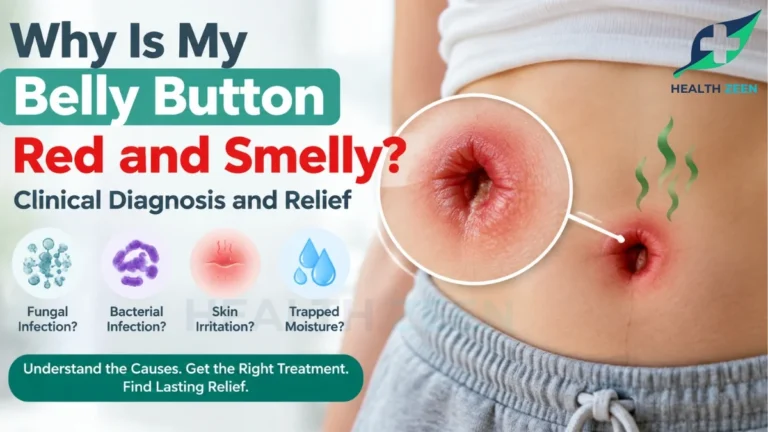
Yes, your belly button can easily get infected. In fact, due to its unique anatomical structure, the adult umbilicus is one of the most highly susceptible areas on the human body for developing localized bacterial and fungal infections. The deep, enclosed cavity naturally traps moisture, dead skin cells, and daily sweat, creating an ideal microenvironment for opportunistic pathogens to multiply rapidly and overwhelm your natural skin flora.
Understanding exactly how and why a belly button gets infected requires looking past simple hygiene. Many adults assume that only a dirty navel can develop an infection, but clinical dermatology paints a different picture. Your skin is constantly covered in millions of microscopic bacteria and fungi that typically cause no harm. However, when the delicate skin inside the umbilicus becomes physically compromised by trapped moisture or aggressive scratching, these harmless microbes transform into aggressive pathogens. Exploring the biological mechanics of how this epidermal barrier breaks down is critical for preventing recurrent umbilical infections.
The Anatomy of Umbilical Vulnerability
To understand why the belly button gets infected so frequently, you must first understand its structural anatomy. The umbilicus is not a standard patch of skin; it is a permanent central scar left over from the detachment of the umbilical cord at birth.
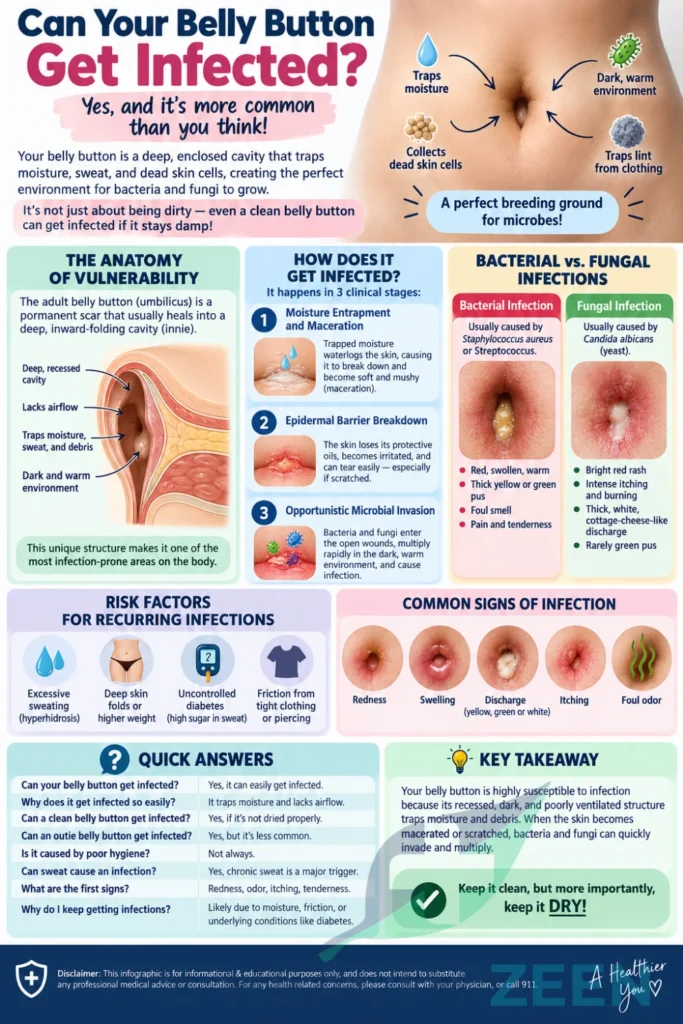
For the vast majority of adults, this scar heals into an inward-folding cavity, commonly known as an innie. This deeply recessed anatomical structure acts as a biological funnel. Because it is physically indented, it lacks natural airflow and is completely shielded from light. Any sweat produced by the surrounding abdominal glands, along with bath water, lint from clothing, and naturally shedding keratin cells, inevitably rolls down and becomes physically trapped inside this dark, cavernous space. This precise combination of darkness, trapped body heat, and stagnant moisture forms the perfect biological incubator for microbial life.
An infection does not simply appear out of nowhere. It is the direct result of a microscopic battle occurring on the surface of your skin. The transition from a healthy belly button to an infected one happens in three distinct clinical stages.
Stage 1: Moisture Entrapment and Maceration
The process begins when water or sweat becomes permanently trapped inside the overlapping skin folds of the navel. Because the moisture cannot evaporate into the air, it slowly waterlogs the stratum corneum, which is the tough, protective outer layer of your skin. Over several days, this constant dampness causes the skin to physically break down and turn white and mushy, a dermatological process known as maceration.
Stage 2: Epidermal Barrier Breakdown
Once the skin is severely macerated, it loses its structural integrity. The natural protective oils are stripped away, and the tissue becomes raw, highly irritated, and prone to microscopic tearing. In many cases, the trapped moisture causes mild itching, prompting the adult to aggressively scratch the inside of the navel. This fingernail trauma creates open, microscopic wounds directly in the delicate tissue.
Stage 3: Opportunistic Microbial Invasion
Your skin is naturally populated by a microbiome of harmless bacteria and yeast. However, once the epidermal barrier is broken through maceration or scratching, these microbes become opportunistic. They instantly invade the open microscopic wounds. Because the dark, warm environment allows them to multiply exponentially, they quickly overwhelm the local immune response, resulting in a full-blown clinical infection.
Bacterial vs. Fungal Infections
The specific type of pathogen that invades the compromised tissue dictates how the infection will visually manifest and progress. Belly buttons are generally susceptible to two entirely different classifications of microbes.
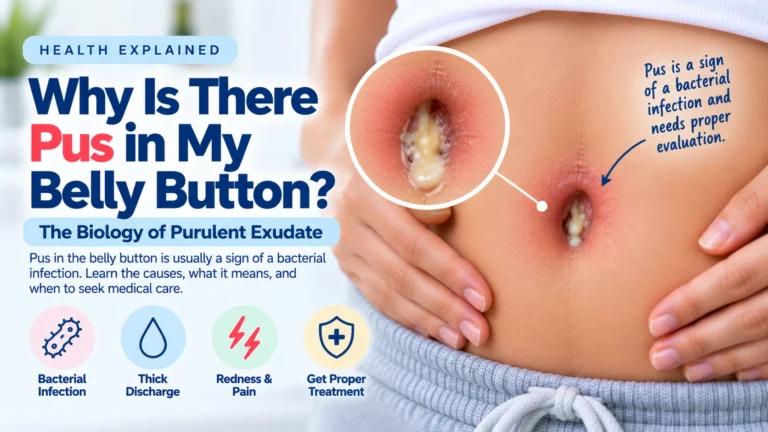
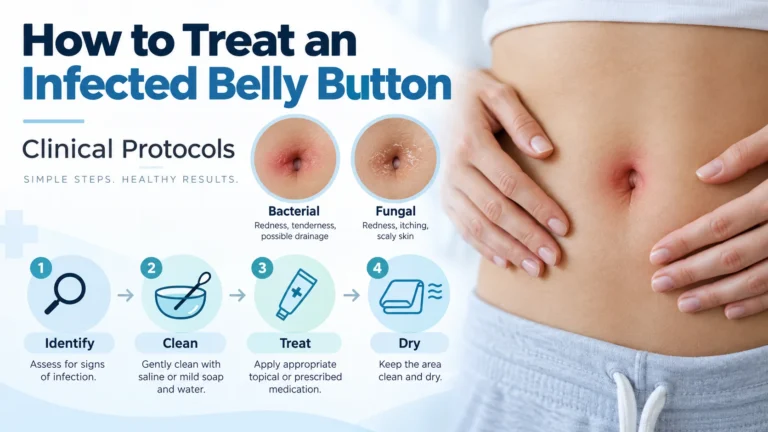
Bacterial colonizations are primarily driven by Staphylococcus aureus and Streptococcus strains. When these aggressive bacteria invade the navel, they trigger massive localized inflammation. The immune system rushes white blood cells to the area, causing the belly button to become highly swollen, exceptionally warm to the touch, and leak thick, foul-smelling yellow or green purulent pus.
Conversely, fungal infections are almost exclusively caused by an overgrowth of Candida albicans, a type of yeast. Fungi thrive in heavily damp environments. When yeast overtakes the umbilical cavity, it causes cutaneous candidiasis. Unlike a bacterial infection, a fungal invasion rarely produces green pus; instead, it creates a bright, beefy-red rash that triggers intense, burning itching and secretes a thick, white, cottage-cheese-like discharge.
Risk Factors for Recurrent Infections
While anyone can develop an infected umbilicus, certain adults possess specific physiological risk factors that make their epidermal barrier significantly more vulnerable to pathogen invasion.
Adults who suffer from hyperhidrosis, a condition causing excessive daily sweating, are at a severely elevated risk because their navel cavity is chronically damp. Similarly, individuals with deep, overlapping abdominal skin folds or significant abdominal weight experience intense skin-to-skin friction, which rapidly accelerates the maceration process. Furthermore, patients with uncontrolled diabetes possess high levels of glucose in their sweat. This sugary moisture provides an unlimited biological food source for Candida yeast, frequently leading to chronic, recurring fungal infections that are incredibly difficult to eradicate.
Frequently Asked Questions
Yes, your belly button can easily get infected. Its recessed, inward-folding anatomical structure makes it highly susceptible to trapping moisture and debris, which breaks down the skin and allows normal surface bacteria to invade the tissue.
Your belly button gets infected easily because it lacks natural airflow. When daily sweat or bath water becomes trapped in this dark, enclosed space, it severely weakens the outer layer of skin, creating the perfect breeding ground for opportunistic pathogens.
A belly button gets infected when the protective epidermal barrier is compromised. This typically happens when trapped moisture macerates the skin, or when you accidentally scratch the delicate tissue with a fingernail, allowing microscopic bacteria to enter the wound.
Yes, even a meticulously clean belly button can get infected if you fail to dry it properly. Scrubbing the navel too harshly with soap can strip away protective body oils, and leaving the cavity wet after a shower rapidly triggers fungal yeast overgrowths.
The very first clinical signs of an impending infection include sudden, localized redness inside the cavity, an unexplained foul odor, and persistent itching or tenderness when you gently press on the surrounding abdominal tissue.
While it is significantly less common because outies do not trap moisture as easily as innies, an outie belly button can still get infected if the skin is aggressively scratched, rubbed raw by tight clothing, or pierced with non-sterile jewelry.
Not always. While failing to wash away accumulated dead skin and sweat certainly increases the risk, many infections are caused by simply leaving the navel damp after bathing, or due to underlying conditions like uncontrolled diabetes.
Yes, chronic sweat accumulation is a leading trigger for infections. Sweat physically waterlogs the delicate skin cells and alters the natural pH of the umbilicus, allowing harmful bacteria to multiply faster than the body can fight them off.
Harmless bacteria naturally live in your belly button every day. However, if aggressive bacteria like Staphylococcus enter a microscopic scratch or tear in the navel tissue, they will multiply rapidly, causing swelling, deep pain, and purulent discharge.
You likely keep getting recurring infections because you are not keeping the cavity strictly dry after bathing, or you have a deep abdominal skin fold that creates constant friction and moisture entrapment, allowing pathogens to continually recolonize.
Conclusion
Your belly button is highly susceptible to infection not because it is inherently dirty, but because its unique anatomical structure inherently works against the natural defenses of your skin. The recessed, dark, and poorly ventilated cavity of an adult umbilicus acts as a biological trap for moisture, dead keratin cells, and daily sweat. When this moisture is allowed to stagnate, it aggressively macerates the delicate stratum corneum, compromising the physical barrier that protects your internal tissue. Once this epidermal shield is broken through dampness or accidental scratching, opportunistic bacteria and fungal yeast rapidly invade the raw tissue. Recognizing the biological mechanics of how an infection begins highlights the critical importance of keeping the umbilical cavity not just clean, but meticulously dry.
Disclaimer
This blog is for informational & educational purposes only, and does not intend to substitute any professional medical advice or consultation. For any health related concerns, please consult with your physician, or call 911.