
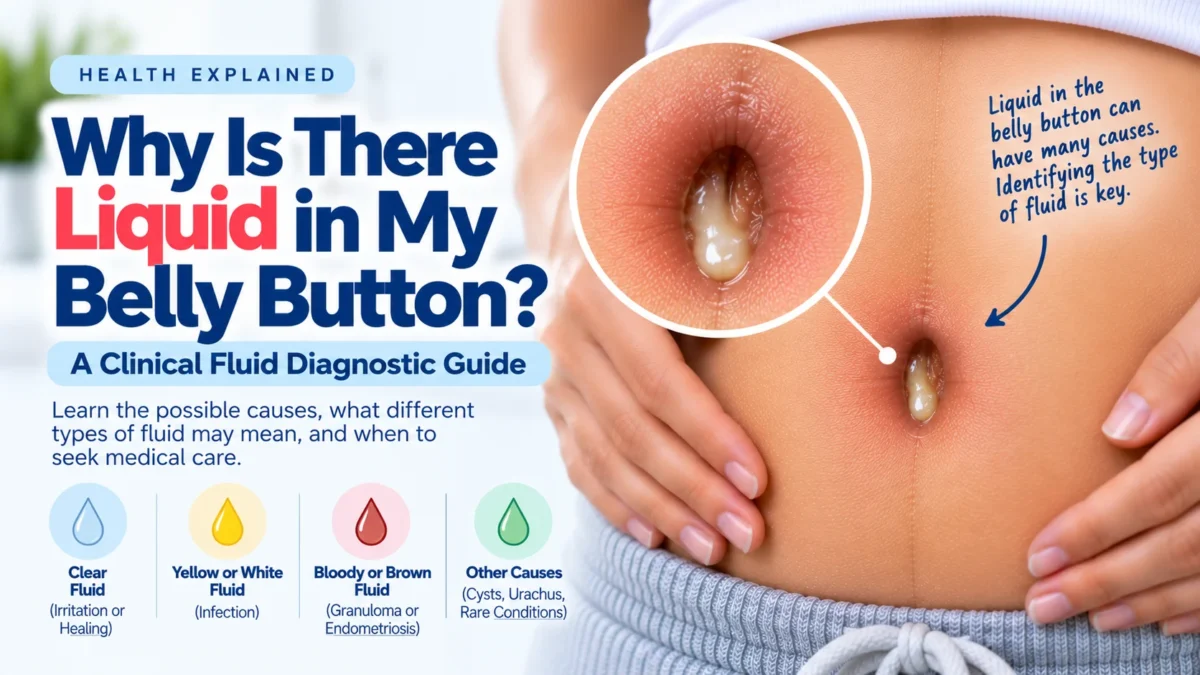
Why Is There Liquid in My Belly Button? A Clinical Fluid Diagnostic Guide
Discovering a pool of unidentified liquid trapped inside your belly button can be a highly confusing and alarming physiological event. The human umbilicus is a uniquely recessed anatomical basin. Because it sits at the absolute center of the abdomen, it naturally acts as a funnel, capturing and holding onto anything that enters it. However, when you find actual liquid pooling inside this cavity, it is rarely just trapped shower water.
In clinical dermatology and internal medicine, the sudden presence of liquid inside the navel indicates that a biological barrier has been breached. Your skin is meant to be a dry, waterproof shield. When liquid begins to weep, leak, or accumulate inside the umbilical scar, it means your body is either actively fighting an invading pathogen, attempting to heal a raw structural wound, or draining a hidden internal cavity. Because the belly button is situated directly over complex abdominal connective tissue and lingering fetal tracts, the liquid could be coming from the surface skin, or it could be migrating from deep within your pelvis. To accurately determine why there is liquid in your belly button, you must carefully analyze the specific color, thickness, and odor of the fluid itself.
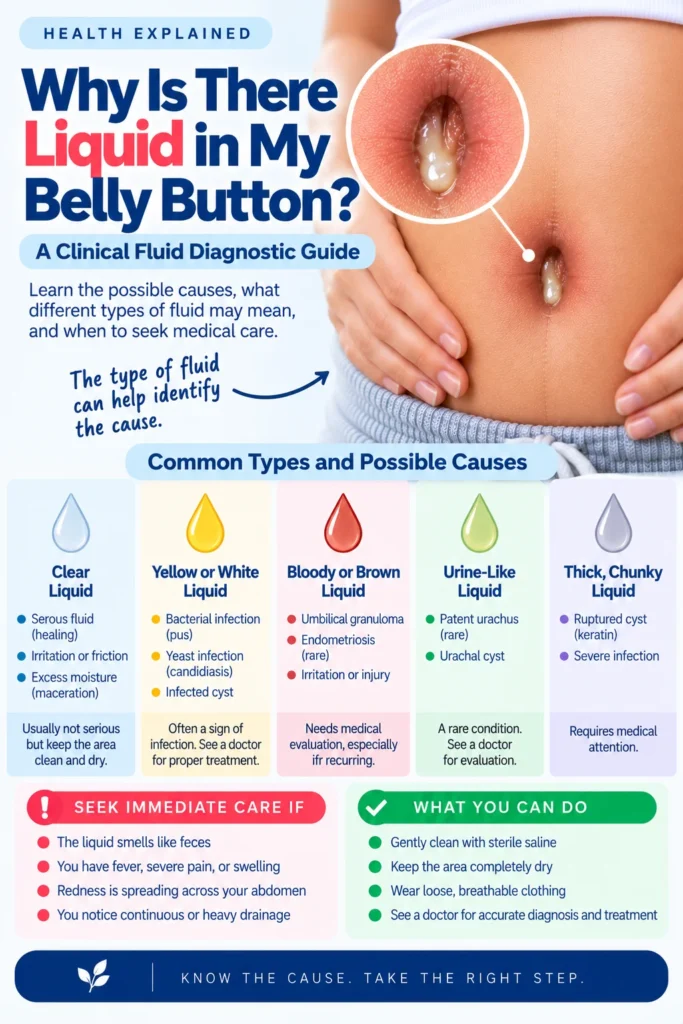
Clear and Watery Liquid: Serous Fluid and Maceration
If the liquid inside your belly button is perfectly clear, relatively thin, and does not have a distinctly foul or putrid odor, you are likely looking at serous fluid.
Serous fluid is a completely natural, protein-rich liquid produced by your body to heal and protect raw, damaged tissue. The delicate skin inside the navel is incredibly thin and easily scratched by rough washcloths, long fingernails, or the constant friction of a heavy metal belt buckle. When this epidermal layer is slightly torn or severely irritated by trapped moisture, a condition known as skin maceration, the raw tissue immediately begins to weep clear serous fluid. This liquid pools in the bottom of the belly button and eventually dries into a brittle, amber-colored crust. While serous fluid is not inherently dangerous, leaving it trapped inside the dark, enclosed navel creates a highly humid environment that can easily attract secondary bacterial infections.
Thick, White or Yellow Liquid: Purulent Pus and Yeast
When the liquid inside your belly button is thick, highly opaque, and visibly yellow, green, or bright white, you have transitioned from a simple scratch to an active microbial infection.
If the liquid is bright white, clumpy, and heavily resembles the texture of cottage cheese, it is the result of cutaneous candidiasis, a severe fungal yeast infection. This white liquid is composed of massive yeast colonies and destroyed immune cells, and it is almost always accompanied by a deeply red, highly itchy rash spreading outward from the navel.
Conversely, if the liquid is viscous, murky yellow or green, and emits a highly putrid, foul odor, it is purulent exudate, commonly known as pus. This thick liquid indicates a severe bacterial infection called omphalitis, usually caused by Staphylococcus aureus. The putrid yellow liquid is essentially liquefied dead tissue and billions of multiplying bacteria. This condition requires immediate medical evaluation and targeted topical antibiotics to prevent the infection from burrowing deeper into your abdominal fascia.
Pale Yellow, Urine-Scented Liquid: Patent Urachus
In rare clinical scenarios, the liquid pooling in your belly button may actually be human urine. If the liquid is thin, pale yellow, and carries the distinct, sharp scent of ammonia, the root cause is a congenital urological anomaly.
Before you were born, a tiny fetal tube called the urachus connected your developing urinary bladder directly to your belly button, allowing waste to exit into the umbilical cord. Usually, this tube collapses and solidifies into a permanent ligament shortly before birth. However, in a very small percentage of the adult population, the tube fails to close completely. This anatomical failure is clinically known as a patent urachus. If the tract remains entirely open, the bladder can physically leak trace amounts of urine straight up the tube and directly out of the belly button. Alternatively, if only a small pocket of the tube remains open, it forms an urachal cyst, which can become infected and leak a mixture of foul-smelling pus and serous fluid into the navel.
Bloody or Brown Liquid: Endometriosis and Granulomas
Finding liquid that is rusty brown, pink-tinged, or bright red indicates the presence of active bleeding mixing with serous or purulent fluid.
The most common cause of bloody liquid in the navel is an umbilical granuloma. A granuloma is a tiny, benign overgrowth of fleshy, cherry-red healing tissue that sometimes forms after a minor navel infection fails to heal smoothly. Because this tiny lump of tissue has no protective skin layer, it constantly weeps trace amounts of blood and clear serous fluid, which pools in the belly button and oxidizes into a dark brown liquid.
A much rarer, but highly significant cause of bloody umbilical liquid in biological females is primary umbilical endometriosis. This occurs when endometrial tissue, which normally lines the inside of the uterus, inexplicably grows directly inside the belly button scar. This rogue tissue continues to respond to monthly hormonal cycles. Consequently, during a woman’s menstrual period, the tissue inside the belly button will swell, cause localized pain, and actually bleed or weep dark brown liquid synchronously with her menstrual cycle.
Ruptured Cysts: Gray and Chunky Liquid
If the liquid suddenly appearing in your belly button is exceptionally thick, grayish-white, and features a chunky, paste-like consistency accompanied by an incredibly rancid odor, you are likely dealing with a ruptured epidermoid or sebaceous cyst.
These cysts are small, enclosed sacs located just beneath the surface of the skin that slowly fill with decaying keratin proteins and natural body oils. When a cyst is located on the interior wall of the navel, it can remain hidden for years. However, if the cyst becomes highly inflamed or is accidentally squeezed, the sac will rupture, rapidly flooding the belly button cavity with a thick, foul-smelling, decaying liquid. While highly alarming, this liquid is essentially trapped biological waste rather than a dangerous, spreading bacterial infection.
When to Seek Emergency Medical Attention
While many instances of umbilical liquid can be managed with careful clinical hygiene or simple topical treatments, certain types of fluid drainage require an immediate, high-level medical response.
You must proceed to the emergency room immediately if the liquid in your belly button has a distinct, overwhelming fecal odor, or if you actually see microscopic traces of stool. This presentation indicates a life-threatening structural failure known as an enterocutaneous fistula, where a deep tunnel has formed connecting your intestines directly to your navel. Furthermore, seek urgent care if the liquid is accompanied by a rapidly spreading, fiery red streak across your stomach, extreme localized swelling, a high fever, or uncontrollable vomiting, as these are primary red flags for a systemic abdominal infection that requires intravenous antibiotics and immediate surgical evaluation.
Frequently Asked Questions
Clear, watery liquid in your belly button is serous fluid. Your body naturally produces this protein-rich healing liquid whenever the delicate skin inside the navel is scratched, irritated by tight clothing, or suffering from a mild friction burn. It typically dries into a light, amber-colored crust.
If the liquid possesses a foul, putrid, or sour malodor, it indicates the presence of anaerobic bacteria. A foul-smelling liquid is usually purulent pus from a severe bacterial infection, or decaying keratin that has suddenly leaked from a ruptured epidermoid cyst hidden beneath the skin.
Yes, a severe fungal yeast infection, known as cutaneous candidiasis, will cause the belly button to weep a highly distinct liquid. The fluid is typically thick, bright white, heavily clumpy like cottage cheese, smells somewhat sweet or yeasty, and is accompanied by an intensely itchy red rash.
If the liquid is pale yellow and smells distinctly like ammonia or urine, you likely have a patent urachus. This is a rare congenital condition where the fetal tube connecting your bladder to your belly button failed to close before birth, allowing actual urine to leak out of your navel.
To stop the liquid, you must treat the underlying cause. Gently irrigate the navel with warm sterile saline, carefully dry the area completely with a cool hairdryer, and consult a physician. You will likely need a prescription topical antibiotic or antifungal cream to destroy the colonizing pathogens.
It is normal for tap water to temporarily pool in a deep navel after a shower, but it is not normal for the liquid to remain there. If you do not thoroughly dry the navel, the trapped tap water will cause skin maceration, breaking down the tissue and eventually leading to weeping serous fluid.
Brown liquid is usually a mixture of clear serous fluid and oxidized blood. This frequently occurs if you aggressively scratch the inside of your navel, or if you have a weeping umbilical granuloma. The trace amounts of blood mix with the fluid and turn a rusty brown color as it hits the air.
Yes, in a rare condition called umbilical endometriosis, uterine tissue grows inside the navel. During a menstrual cycle, this rogue tissue responds to hormones, causing the belly button to swell, ache, and weep a bloody or dark brown liquid that perfectly syncs with the patient's period.
No, you must never pour harsh rubbing alcohol into a weeping belly button. Alcohol is severely cytotoxic and will instantly destroy the healthy cells trying to heal the raw tissue. It causes agonizing pain and significantly delays the healing process, making the underlying infection much worse.
You must see a doctor immediately if the liquid is thick yellow or green pus, smells like feces, is accompanied by a high fever, severe abdominal pain, or a spreading red rash. These symptoms indicate a deep bacterial infection or a dangerous internal structural fistula that requires urgent care.
Conclusion
The sudden pooling of liquid inside your belly button is a clear biological signal that the anatomical integrity of your umbilicus has been compromised. Because the navel acts as a central hub connecting superficial skin layers to complex internal fascial structures, the liquid must be evaluated closely to determine its exact origin. Whether it is harmless, clear serous fluid weeping from a minor surface scratch, thick purulent pus indicating a rapidly multiplying bacterial colony, or the shocking presence of urine draining from an ancient congenital tract, identifying the specific visual and olfactory characteristics of the fluid is the crucial first step. By resisting the dangerous urge to aggressively scrub the raw tissue with cytotoxic chemicals, prioritizing absolute moisture desiccation, and seeking swift medical evaluation for any foul-smelling or discolored drainage, you can effectively treat the underlying pathology and permanently restore the dry, waterproof barrier of your navel.
Disclaimer
This blog is for informational and educational purposes only, and does not intend to substitute any professional medical advice or consultation. For any health related concerns, please consult with your physician, or call 911.