
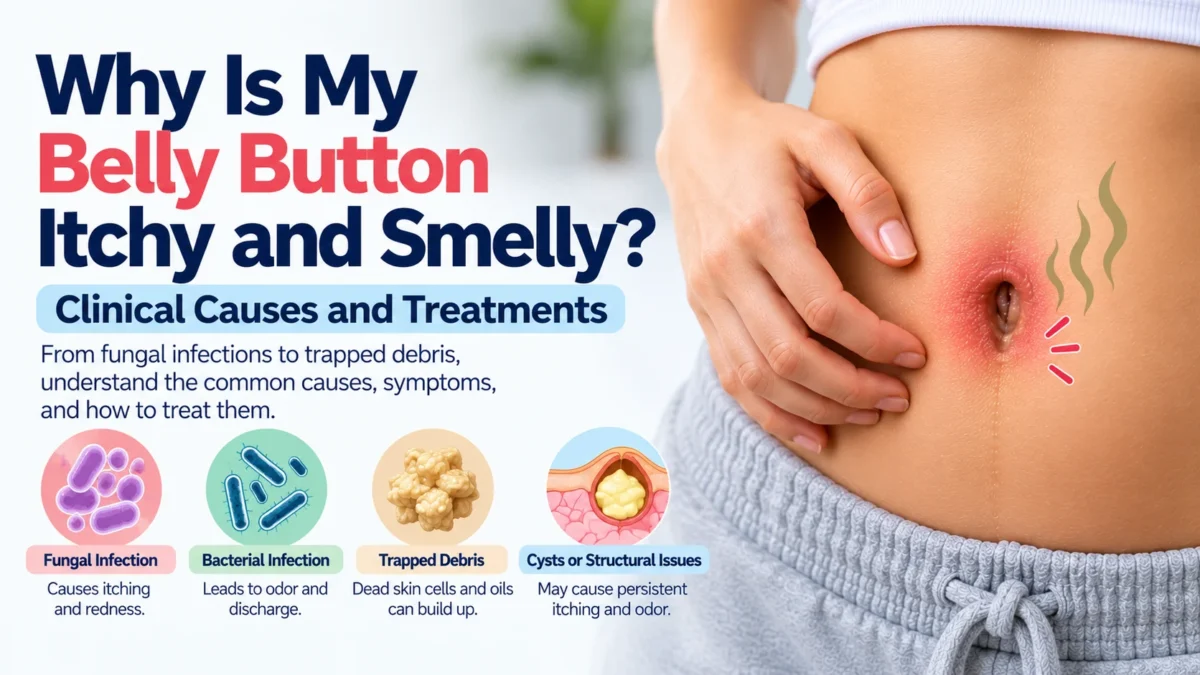
Why Is My Belly Button Itchy and Smelly? Clinical Causes and Treatments
Experiencing an intensely itchy belly button is frustrating, but when that intense itching is simultaneously accompanied by a distinct, foul-smelling odor, it transitions from a minor annoyance into a clear clinical symptom. The umbilicus is a highly unique anatomical structure. Because it is a deep, recessed cavity surrounded by overlapping folds of skin, it naturally traps heat, moisture, and biological waste.
When a patient presents with a belly button that is both extremely pruritic and emitting a putrid malodor, clinical dermatology rarely views it as a simple hygiene issue. Instead, this specific combination of symptoms is the classic hallmark of a polymicrobial environment, meaning multiple biological processes or microscopic pathogens are actively working together to break down your epidermal skin barrier. To effectively treat this uncomfortable condition, you must understand the microscopic synergy between fungal organisms that trigger the itch and the anaerobic bacteria responsible for the smell, as well as the biological role of trapped decaying tissue.
The Microbial Synergy: Fungal Yeast and Anaerobic Bacteria
The most prevalent clinical cause of a belly button that is both itchy and smelly is a polymicrobial co-infection, specifically a simultaneous overgrowth of Candida albicans yeast and common surface bacteria.
Fungi thrive in the dark, warm, and humid environment of the navel. When Candida yeast begins to multiply aggressively, it causes a condition known as cutaneous candidiasis. The primary, overwhelming symptom of a fungal yeast infection is severe, relentless itching accompanied by a beefy red rash. As you scratch the itchy yeast infection, your fingernails create microscopic tears in the delicate umbilical skin.
This is where the secondary symptom emerges. The microscopic tears allow anaerobic surface bacteria, such as Staphylococcus aureus, to bypass your protective skin barrier and enter the raw tissue. While the yeast is responsible for the aggressive itching, the multiplying bacteria begin to feed on the damaged skin cells and the serous fluid weeping from your scratches. As these bacteria digest the biological material, they release sulfur-containing gases as a metabolic byproduct. This chemical process is exactly what produces the foul, putrid, or cheese-like smell emanating from your itchy belly button.
Biological Putrefaction: Trapped Sebum and Keratin
If your belly button is itchy and smelly, but you do not have a bright red fungal rash, the cause may be purely mechanical and biological rather than infectious.
The human epidermis constantly undergoes desquamation, meaning you shed millions of microscopic dead keratin skin cells every day. Inside the deep folds of a highly recessed navel, these dead cells become permanently trapped. Over time, these decaying skin cells mix heavily with sebum, the natural, waxy oil produced by your sebaceous glands.
When a massive accumulation of dead tissue and natural body oil is left undisturbed in the navel for weeks or months, it begins to slowly rot, a process known as biological putrefaction. The natural, non-infectious bacteria living in your belly button consume this decaying paste, which creates a highly pungent, sour, or dirty sock odor. Simultaneously, the sheer physical presence of this dense, compacted biological waste sitting against the delicate lining of the navel creates severe mechanical friction. This continuous rubbing irritates the nerve endings, triggering a deep, persistent itch as your skin tries to signal the presence of a foreign object.
Weeping Eczema and Secondary Infections
Patients suffering from chronic inflammatory skin conditions, such as atopic dermatitis or umbilical eczema, frequently experience a sudden onset of itching and foul odors in their navel.
Eczema causes the skin inside the belly button to become severely dry, intensely itchy, and highly flaky. The pruritus associated with umbilical eczema is often so severe that patients scratch the area in their sleep, completely stripping away the top layer of the epidermis. Once the skin is raw, it begins to weep a clear, sticky, protein-rich healing fluid.
If this sticky exudate is not properly cleaned, it pools in the bottom of the belly button and begins to stagnate. Stagnant serous fluid is a perfect biological breeding ground. Opportunistic bacteria quickly colonize the weeping fluid, breaking down the proteins and releasing a distinctly sweet, yet putrid odor. In this scenario, the underlying autoimmune eczema causes the relentless itching, while the secondary bacterial colonization of the weeping fluid causes the smell.
Infected Epidermoid and Urachal Cysts
Occasionally, the source of the itch and the odor is not located on the surface of the skin, but rather hidden just beneath it in the form of an infected cyst.
An epidermoid cyst is a small, enclosed sac beneath the skin that slowly fills with foul-smelling, wet keratin. If an epidermoid cyst forms on the interior wall of the navel and becomes mildly inflamed, it stretches the surrounding tissue, causing a deep, localized itching sensation. If the cyst suddenly ruptures or slowly leaks into the belly button cavity, it releases a thick, yellowish material that smells remarkably similar to rancid cheese.
Similarly, a rare congenital abnormality known as an urachal cyst can form on the internal ligament connecting your bladder to your navel. If this hidden cyst becomes infected, the inflammation radiates outward, causing the surface skin of the belly button to itch and burn. In severe cases, the infected urachal cyst can form a microscopic tunnel, known as a fistula, and drain highly putrid, murky fluid directly out of the belly button.
Because an itchy and smelly belly button is usually a combined microbial issue, standard soap and water are rarely enough to eradicate the problem completely.
If you have a thick white discharge and a red rash, you must utilize an over-the-counter topical antifungal cream containing clotrimazole or miconazole to kill the yeast responsible for the itch. You must also keep the belly button completely dry, as yeast cannot survive without high humidity. After showering, use a cotton swab to gently dab the inside of the navel until absolutely no moisture remains.
If the discharge is yellow or green and the smell is overwhelmingly putrid, you are dealing with a dominant bacterial infection. You must visit a physician to obtain a clinical-grade topical antibiotic ointment like mupirocin. Never mix antifungal and antibacterial creams without explicit instructions from a dermatologist, as this can severely disrupt your local skin microbiome.
Frequently Asked Questions
An itchy and smelly belly button is usually the result of a polymicrobial infection. Fungal yeast overgrowths cause severe inflammation and intense itching, while secondary anaerobic bacteria enter the scratched, raw skin and release sulfur gases as they multiply, creating a foul odor.
Yes, a massive buildup of dead keratin skin cells, trapped clothing lint, and natural waxy sebum can eventually putrefy inside the navel. Normal surface bacteria feed on this decaying biological waste, producing a sour smell, while the physical mass rubs against the tissue, triggering mechanical itching.
A purely fungal yeast infection in the belly button typically smells distinctly sweet, somewhat like baking bread or rising yeast. However, if the smell is putrid, rotten, or resembles dirty socks, it means aggressive bacteria have joined the yeast infection.
A smell resembling rancid cheese accompanied by itching is a classic sign of an epidermoid cyst or severe sebaceous buildup. The smell is caused by heavily oxidized, wet keratin and trapped body oils slowly breaking down in the deepest, most oxygen-deprived folds of your navel.
To stop the itching and smell, you must identify the pathogen. Wash the area gently with a mild antibacterial soap, dry it completely using a clean cotton swab, and apply a targeted antifungal cream if you suspect yeast. Never aggressively scratch the navel, as this worsens bacterial colonization.
Eczema directly causes intense itching and raw, weeping skin, but it does not inherently smell. The smell occurs when the clear, sticky serous fluid weeping from the scratched eczema pools inside the navel and becomes secondarily infected by common surface bacteria.
No, you should never pour harsh rubbing alcohol into a highly itchy and inflamed belly button. Alcohol will severely burn the compromised tissue, dry out the skin, and completely destroy the protective epidermal barrier, ultimately making the underlying infection much worse.
While deep innie belly buttons are more prone to trapping moisture and dead skin, a highly noticeable, foul odor is never clinically normal. A persistent bad smell indicates poor hygiene practices, trapped necrotic debris, or an active microbial infection that requires attention.
Yes, excessive sweating, especially after a workout or during hot weather, creates a highly humid environment inside the navel. This moisture breaks down the skin barrier, allowing naturally occurring yeast and bacteria to rapidly multiply, leading directly to intense pruritus and malodor.
You should consult a physician immediately if the itching and smell are accompanied by thick yellow or green pus, extreme localized swelling, a rapidly spreading red rash, or if you develop a fever, as these indicate a severe infection requiring prescription antibiotics.
Conclusion
An itchy and smelly belly button is a highly specific clinical presentation that clearly signals a breakdown in your umbilical skin barrier. When the intense, unrelenting pruritus of a fungal yeast overgrowth collides with the foul, putrid off-gassing of anaerobic bacteria, the resulting polymicrobial infection requires targeted intervention. Whether the root cause is a hidden epidermoid cyst leaking oxidized keratin, a severe buildup of decaying sebaceous material, or a weeping eczema flare-up complicated by secondary bacterial colonization, ignoring the symptoms will only allow the pathogens to multiply deeper into the tissue. By resisting the urge to scratch the delicate skin, practicing meticulous drying techniques after every shower, and applying the appropriate clinical-grade antimicrobial treatments, you can rapidly eradicate the offending organisms, eliminate the putrid odor, and permanently soothe the inflammatory itch.
Disclaimer
This blog is for informational and educational purposes only, and does not intend to substitute any professional medical advice or consultation. For any health related concerns, please consult with your physician, or call 911.