Pain Below Belly Button When Pressed: Clinical Causes
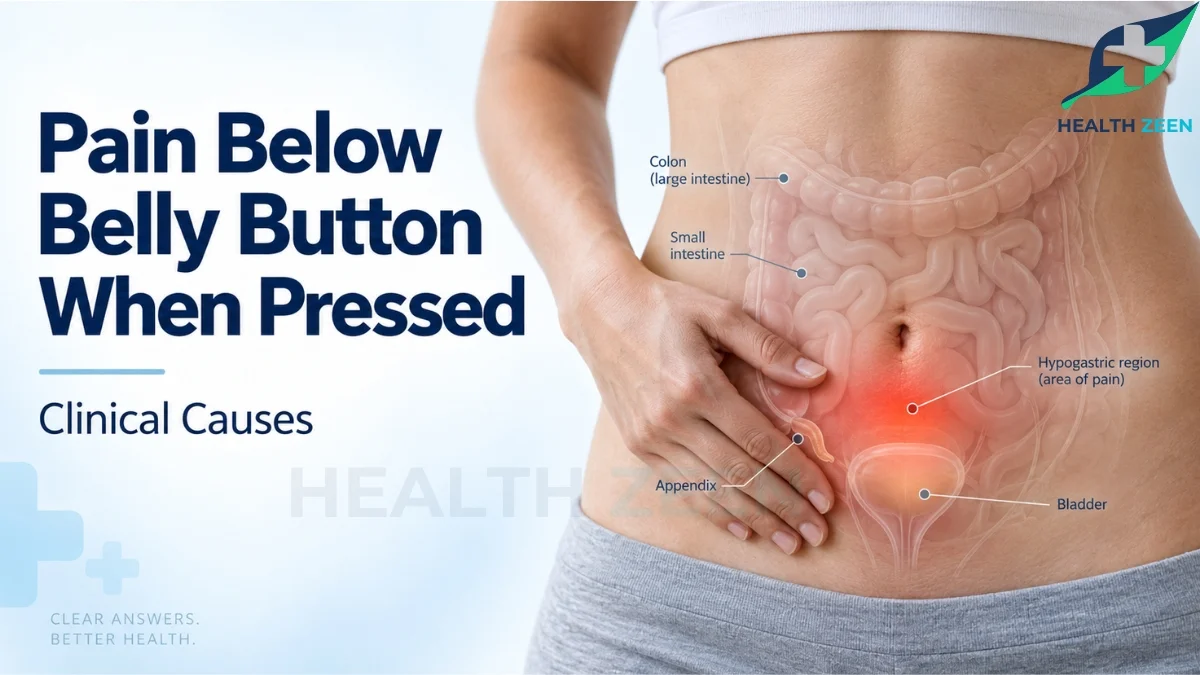
Experiencing pain below your belly button when pressed is a specific clinical symptom indicating inflammation in the hypogastric region of your abdomen. When you apply physical pressure to this area and feel sharp or aching pain, doctors refer to this as localized tenderness. This tenderness strongly suggests that the underlying organs, such as your bladder, lower colon, or reproductive organs, are actively inflamed, infected, or structurally compromised.
In medical diagnostics, the exact type of pain you feel when pressing on your lower stomach provides critical clues. There is a significant clinical difference between a dull ache that occurs while pushing down, and a sudden, agonizing shock of pain that strikes the moment you release the pressure. Understanding the anatomy of your lower abdomen and the biological mechanisms behind palpation pain is essential for differentiating between harmless trapped digestive gas and a life-threatening medical emergency like acute appendicitis.
The Anatomy of the Hypogastric Region
To understand why pressing below your navel causes pain, you must visualize the organs resting directly beneath the surface of your skin in that specific area.
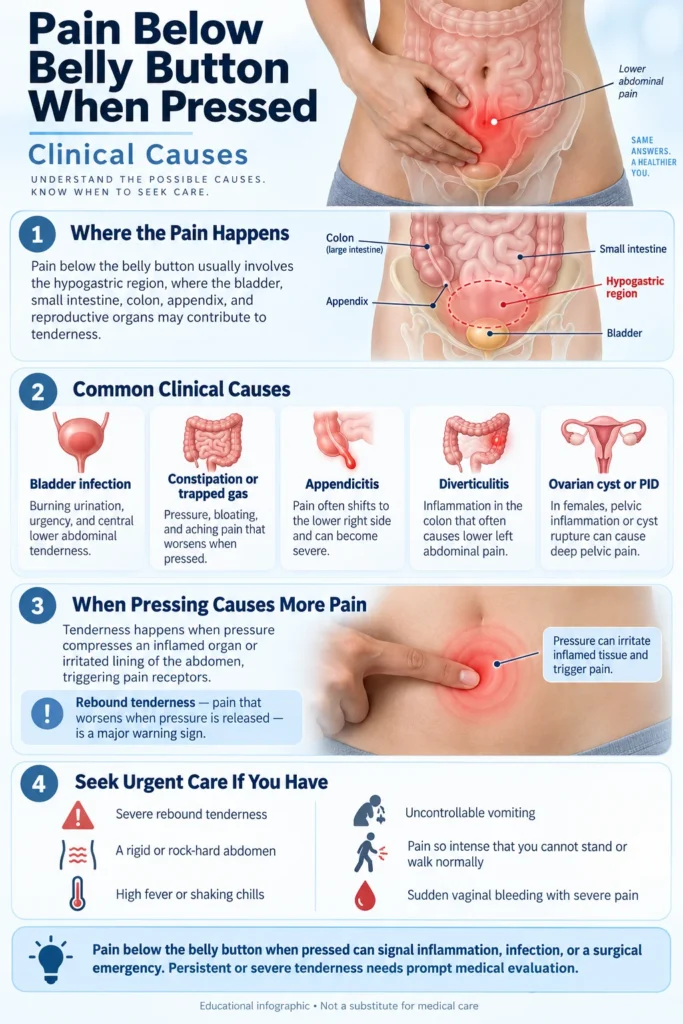
The medical term for the area located centrally beneath the belly button is the hypogastric region. In a normal adult, this specific pelvic cavity houses several critical structures. Directly in the center lies the urinary bladder and sections of the small intestine. Slightly to the lower right sits the cecum and the appendix, while the lower left contains the descending sigmoid colon. In adult females, this region also contains the uterus, fallopian tubes, and ovaries. Because these organs are packed tightly together, any swelling or infection in one organ will cause it to press against the highly sensitive inner lining of the abdominal cavity, known as the peritoneum.
Why Does Pressing Cause Pain?
When an internal organ is healthy, it is soft, pliable, and does not register pain when you gently push on your stomach. However, when an organ becomes infected or inflamed, it swells and its external membrane becomes hypersensitive.
When you press your fingers directly below your belly button, you are physically squishing the inflamed organ against the surrounding pelvic bones or adjacent structures. This manual compression forcefully stimulates the localized pain receptors, instantly sending a sharp distress signal to your brain. This specific reaction to physical pressure is classified clinically as abdominal tenderness.
Gastrointestinal Causes of Lower Abdominal Tenderness
The most common causes of pain when pushing below the navel originate within the digestive tract, particularly in the lower sections of the large and small intestines.
Diverticulitis
Diverticulitis occurs when small, bulging pouches lining the lower sections of the colon become severely inflamed or infected with bacteria. This condition frequently causes intense, highly localized pain just below and slightly to the left of the belly button. When you press on this specific lower left quadrant, the inflamed intestinal pouches are compressed, triggering a sharp, stabbing pain accompanied by severe localized bloating and changes in bowel habits.
Severe Trapped Gas and Constipation
While less severe than an infection, trapped intestinal gas or chronic constipation can cause extreme tenderness. When hard stool or trapped methane gas severely stretches the walls of the lower colon, the intestinal tissue becomes highly tense. Pressing on the lower abdomen physically squeezes these over-stretched intestinal walls, causing a deep, aching pressure that temporarily worsens upon palpation.
Urological Causes of Hypogastric Pain
Because the urinary bladder sits directly behind the pubic bone exactly below the belly button, urological infections are a primary culprit for central hypogastric tenderness.
Cystitis (Bladder Infection)
Cystitis is a bacterial infection of the urinary bladder. As aggressive bacteria multiply, the inner lining of the bladder becomes raw, swollen, and highly irritated. When a patient with cystitis presses firmly on the lower central abdomen, they will feel a sharp, burning pain directly over the bladder. This tenderness is almost always accompanied by a frequent, urgent need to urinate and a severe burning sensation during urination.
Gynecological Causes in Adult Females
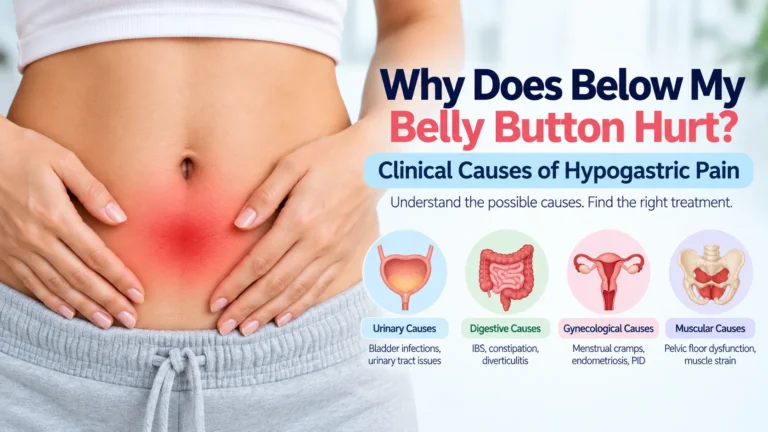
For adult females, the reproductive organs are located directly in the lower pelvic cavity, making gynecological issues a leading cause of palpation pain below the navel.
Pelvic Inflammatory Disease (PID)
Pelvic inflammatory disease is a severe bacterial infection of the female reproductive organs, often originating from untreated sexually transmitted infections. PID causes massive inflammation of the uterus and fallopian tubes. Pressing anywhere below the belly button will trigger a deep, throbbing pain, frequently accompanied by an unusual vaginal discharge and systemic fever.
Ruptured Ovarian Cysts
Ovarian cysts are fluid-filled sacs that develop on the surface of the ovaries. If a large cyst suddenly ruptures, it spills irritating fluid directly into the lower pelvic cavity. This causes sudden, agonizing pain localized to the lower left or right side below the navel, and the entire lower abdomen becomes incredibly tender to even the lightest physical touch.
The Danger of Rebound Tenderness: Appendicitis
When evaluating pain below the belly button, you must check for a critical clinical sign known as rebound tenderness, which is a massive red flag for acute appendicitis.
To check for rebound tenderness, a doctor will press their fingers deeply into the lower right side of the abdomen, below the navel. The inward pressure may cause mild pain. However, when the doctor suddenly removes their hand, releasing the pressure instantly, the patient experiences an excruciating, explosive shock of pain. This occurs because the inflamed appendix and the irritated peritoneal lining snap back into place. If you experience severe rebound tenderness, you must assume it is appendicitis until proven otherwise.
When Should You Seek Emergency Care?
While mild tenderness from trapped gas will resolve on its own, localized pain upon palpation can frequently signal a surgical emergency.
You must proceed immediately to a hospital emergency room if the pain below your belly button is accompanied by severe rebound tenderness, as described above. Additionally, seek urgent care if the lower abdomen feels completely rigid or rock-hard to the touch, if you develop a sudden high fever with uncontrollable shivering, if you are actively vomiting blood, or if the pain is so agonizing that you cannot stand up straight or walk naturally. These symptoms indicate a potentially ruptured organ or severe systemic infection.
Frequently Asked Questions
It hurts below your belly button when you press on it because you are physically compressing an inflamed internal organ, such as an infected bladder, a swollen lower colon, or an inflamed appendix, against the highly sensitive lining of your abdominal wall.
Is it normal for your lower stomach to hurt when pressed?
No, it is not normal for your lower stomach to hurt when pressed. A healthy abdomen should feel soft and painless upon gentle palpation. Localized tenderness always indicates some level of internal inflammation, structural tension, or active infection.
The primary organ situated directly below the belly button in the central hypogastric region is the urinary bladder, accompanied by loops of the small intestine. In adult females, the uterus is also located in this deep pelvic space.
How do I know if lower abdominal pain is serious?
Lower abdominal pain is serious if it is sharp, sudden, and accompanied by a high fever, uncontrollable vomiting, inability to pass gas, or if your stomach muscles become completely rigid and rock-hard to the touch, preventing you from pressing inward at all.
What is rebound tenderness in the lower abdomen?
Rebound tenderness is a clinical symptom where pressing deeply into the stomach causes mild discomfort, but suddenly releasing the pressure causes an explosive, agonizing shock of pain. It is a primary diagnostic indicator of peritonitis or a ruptured appendix.
Yes, a bladder infection, or cystitis, frequently causes a dull, aching pain directly below the belly button in the center of the lower abdomen. Pressing on this specific area will make the pain feel noticeably sharper and increase the urge to urinate.
Why does my lower left side hurt when I press on it?
Pain located specifically in the lower left side when pressed is most commonly associated with diverticulitis, a condition where the small pouches of the descending colon become infected. It can also be caused by severe trapped gas or an ovarian cyst in females.
Does appendicitis hurt when you press on it?
Yes, acute appendicitis causes severe pain when you press on the lower right side of your abdomen, located diagonally below your belly button. The pain is typically worst the exact moment you quickly release the physical pressure.
Can constipation cause lower stomach pain when pressed?
Yes, severe constipation can cause lower stomach pain when pressed. When a large volume of hard stool backs up in the descending colon, it stretches the intestinal walls tightly. Pressing on the area increases this mechanical tension, causing a dull, aching tenderness.
You should go to the ER immediately if the pain is unbearable, if you experience sharp rebound tenderness, if you are unable to keep any liquids down due to vomiting, or if the pain is accompanied by sudden vaginal bleeding or a systemic fever.
Conclusion
Experiencing pain below your belly button when pressed is a clear biological signal that a structure within your hypogastric region is inflamed. Because the lower pelvic cavity is densely packed with your urinary, digestive, and reproductive systems, this localized tenderness can stem from a wide variety of causes, ranging from the mild discomfort of trapped colon gas to the severe, burning irritation of a bacterial bladder infection. The defining clinical factor is the nature of the pain during palpation. While a dull ache often points to gastrointestinal tension or cystitis, sudden, agonizing rebound tenderness is a classic warning sign of a rupturing appendix or severe pelvic inflammatory disease. If your lower abdomen becomes rigid, or the tenderness is accompanied by a systemic fever, you must seek immediate professional medical evaluation to prevent life-threatening complications.
Disclaimer
This blog is for informational & educational purposes only, and does not intend to substitute any professional medical advice or consultation. For any health related concerns, please consult with your physician, or call 911.