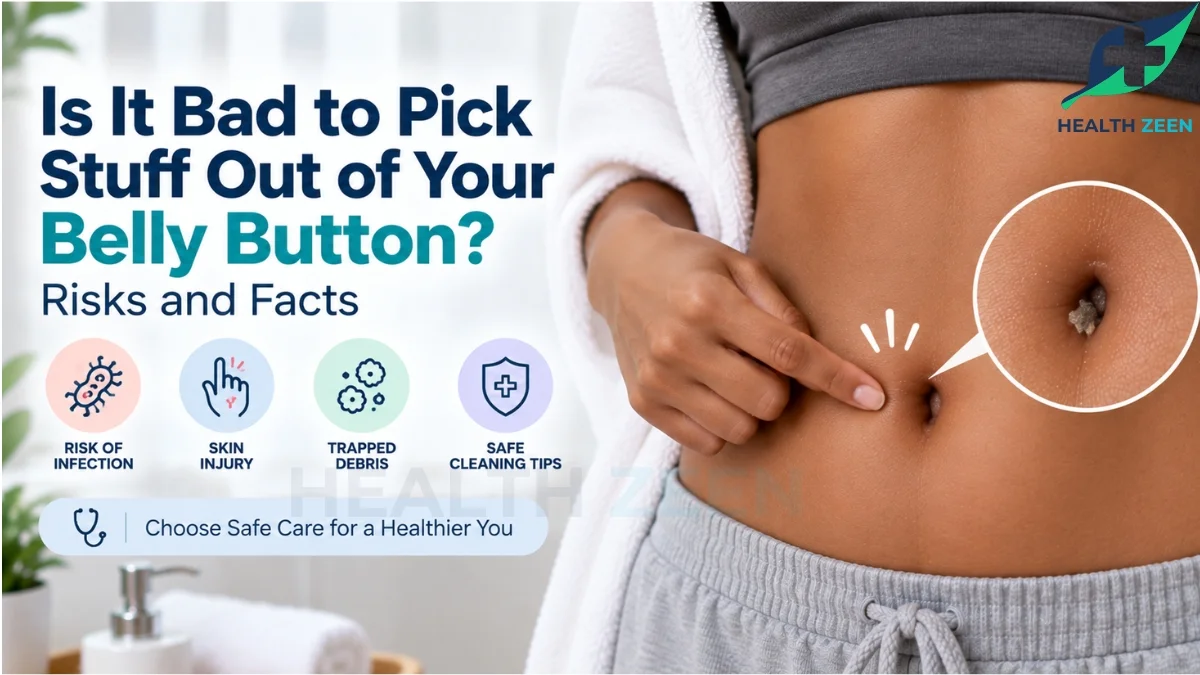
Is It Bad to Pick Stuff Out of Your Belly Button? Risks and Facts
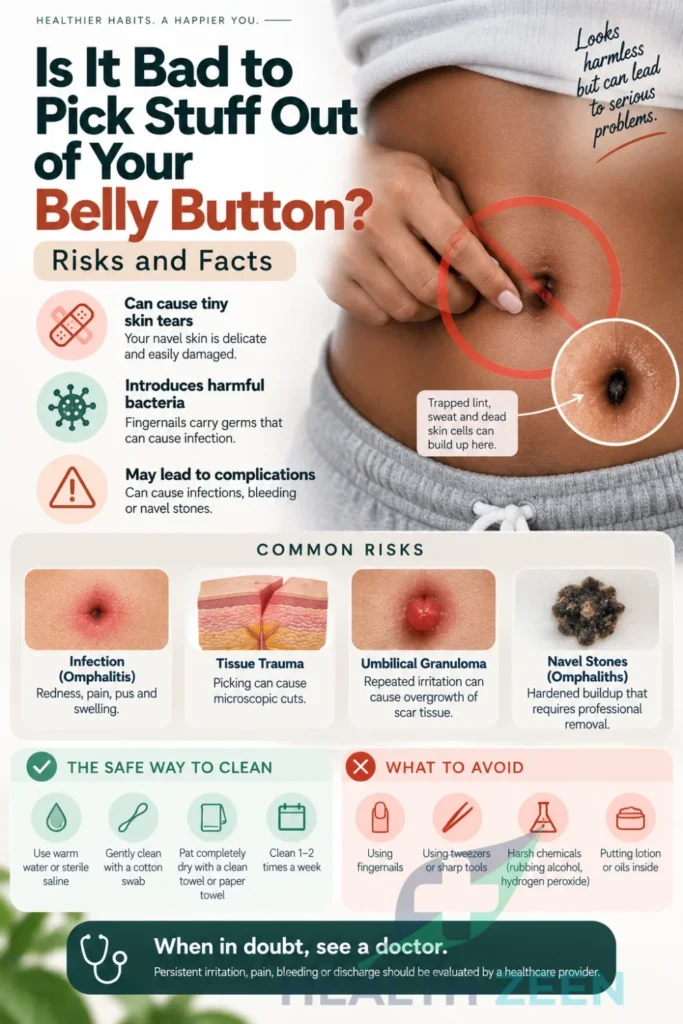
Yes, picking your belly button with sharp fingernails is medically dangerous because it creates microscopic skin lacerations and introduces aggressive bacteria from your hands directly into the delicate tissue. This physical trauma frequently triggers severe localized infections like omphalitis, which is why you must always use a sterile cotton swab and warm saline to safely dislodge umbilical debris instead of manual extraction.
Many individuals develop a subconscious habit of picking at the lint, dried sweat, and crusty buildup trapped inside their navel cavity. While maintaining umbilical hygiene is necessary, using your fingernails or sharp tools to scrape out dirt crosses the line from hygiene into dangerous physical trauma. The umbilicus is the thinnest section of the entire abdominal wall and possesses a highly sensitive network of underlying nerve endings. You must understand why aggressive manual extraction compromises the delicate epidermal barrier and frequently transforms a minor buildup of dead skin cells into a severe, rapidly spreading bacterial infection requiring medical intervention.
It is medically bad to pick your belly button because the physical act of scratching actively lacerates the thin skin tissue and forcefully introduces microscopic pathogens from your hands deep into the open wound.
Microscopic Lacerations and Tissue Trauma
The skin lining the inside of your navel is significantly thinner and more fragile than the skin on your arms or legs. When you aggressively dig into an “innie” belly button with your fingernails to remove trapped lint, you inadvertently create microscopic tears across the stratum corneum, the skin’s outermost protective layer. The American Academy of Dermatology (AAD) warns that physically excoriating or aggressively picking at thin skin folds instantly destroys the moisture barrier, leaving the raw tissue highly inflamed, painful to the touch, and prone to bleeding.
Introducing Fingernail Pathogens
Human fingernails harbor immense colonies of dangerous bacteria, particularly Staphylococcus aureus and Streptococcus species. When you pick your belly button, you directly transfer these virulent pathogens from your hands straight into the microscopic skin tears you just created inside the navel. This direct bacterial inoculation frequently triggers a severe localized infection known as omphalitis. According to the Centers for Disease Control and Prevention (CDC), Staph infections rapidly multiply in open skin wounds, causing severe localized swelling, extreme redness, and the continuous leaking of thick, foul-smelling yellow pus.
Risk of Umbilical Granulomas
Chronic picking and continuous physical irritation of the navel can stimulate the body to form an umbilical granuloma. When the delicate tissue is constantly damaged and repeatedly tries to heal, it occasionally overproduces raw, vascular scar tissue. This results in a small, red, bead-like lump inside the belly button that constantly weeps clear fluid and bleeds profusely every time you accidentally touch it.
Patients frequently begin picking at their belly buttons when they discover a dark, rock-hard substance lodged deep inside the cavity. This hard substance is clinically known as an omphalith, or a navel stone.
An omphalith develops when oxidized dead skin cells, daily sweat, trapped clothing lint, and sebum tightly compress together inside a deep navel over the course of several months or years. Over time, this mixture dehydrates and calcifies into a dense, solid mass that adheres strongly to the surrounding skin. According to the StatPearls Clinical Database (NCBI), these hardened navel stones frequently harbor anaerobic bacteria and cause chronic localized inflammation, mimicking the appearance of a dangerous skin melanoma.
You should never attempt to pick, pull, or forcefully pry an omphalith out of your belly button with your fingers, tweezers, or bobby pins.
Because navel stones accumulate slowly over a long period, the delicate skin inside the umbilicus naturally heals and forms tightly around the hardened mass. The stone essentially becomes tethered to the underlying epidermis. If you forcefully rip the hard stone out, you will violently tear the attached skin tissue away with it. This aggressive manual extraction guarantees significant umbilical bleeding, intense throbbing pain, and a highly elevated risk of developing a severe secondary bacterial infection. Navel stones require safe, professional extraction by a dermatologist utilizing sterile clinical forceps and localized softening agents.
How to Safely Remove Debris Instead of Picking
You must replace the dangerous habit of picking with a sterile, gentle cleaning protocol to safely maintain proper umbilical hygiene without causing physical trauma.
- Spray a sterile wound-wash saline solution or warm water directly into the navel cavity to naturally soften any hardened dirt, lint, or crusty buildup.
- Allow the liquid to sit inside the folds for two to three minutes to break down the hardened sebum.
- Gently insert a clean cotton swab (Q-tip) into the cavity and swirl it in a soft, circular motion. The swab will safely grab the loosened debris without scraping the delicate epidermal walls.
- Never use sharp tools, metal tweezers, or long fingernails to scrape the bottom of the navel.
- Immediately pat the belly button completely dry with a clean paper towel to prevent trapped moisture from fueling a secondary fungal yeast infection.
When Should You Consult a Doctor?
You must consult a healthcare provider immediately if you have already picked your belly button and are now experiencing signs of a severe localized infection.
Seek immediate clinical evaluation if your navel is continuously leaking thick white or green purulent discharge, emitting a rotting odor, or actively bleeding. You must proceed to an urgent care clinic without delay if you develop a sudden high fever, experience sharp abdominal pain radiating from the navel, or notice bright red streaks spreading outward across your stomach. These clinical markers indicate that the bacteria introduced by your fingernails have actively breached the superficial skin layers and are risking systemic bloodstream infiltration.
Yes, it is psychologically normal to want to pick your belly button when you feel trapped lint or a hard crust, as humans have a natural grooming instinct. However, satisfying this urge with sharp fingernails is medically dangerous and leads directly to tissue lacerations.
Yes, picking your belly button frequently causes severe infections. Your fingernails introduce aggressive Staph bacteria into the microscopic skin tears created by scratching, leading directly to painful omphalitis and purulent discharge.
If you accidentally cut inside your belly button while picking, you immediately compromise the abdominal skin barrier. You must wash the area with sterile saline, keep it completely dry, and monitor it closely for spreading redness or foul-smelling pus indicating bacterial infiltration.
It hurts your stomach when you pick your belly button because the umbilicus is structurally connected to a highly sensitive network of deep parietal nerves. Digging into the navel aggressively stimulates these nerves, sending sharp, shooting pain signals directly into your lower abdomen.
No, you cannot pull your intestines out through your belly button by picking at the surface skin. While the abdominal wall is thin at the umbilicus, a thick layer of tough fascia and muscle safely protects your internal organs from surface scratching.
No, it is highly unsafe to use metal tweezers, bobby pins, or scissors to pick stuff out of your belly button. Sharp metal instruments easily puncture the fragile umbilical tissue, causing heavy bleeding and deep puncture wound infections.
Your belly button smells after you pick it because your fingernails introduced new bacteria into the raw, irritated skin. These bacteria rapidly multiply in the inflammatory fluid weeping from the scratches, generating a sharp, rotting odor.
The hard black thing in your belly button is an omphalith, commonly known as a navel stone. It is a dense, calcified mass of oxidized dead skin cells, sebum, and lint that has accumulated and hardened over several years.
Doctors safely remove navel stones by first applying a specialized clinical softening agent or warm saline compress to loosen the mass. Once softened, the dermatologist gently extracts the stone using sterile medical forceps without tearing the surrounding epidermal tissue.
You stop the habit of picking your belly button by keeping the area meticulously clean using safe cotton swabs, keeping your fingernails trimmed extremely short, and placing a small sterile bandage over the navel to create a physical barrier against subconscious scratching.
Conclusion
Picking stuff out of your belly button is a medically dangerous habit that severely compromises the structural integrity of your abdominal skin barrier. While removing daily lint and dead skin is necessary for proper hygiene, utilizing sharp fingernails or metal tweezers actively creates microscopic lacerations that invite aggressive bacterial pathogens deep into the dermal layers. Attempting to forcefully pry out hardened navel stones guarantees severe tissue tearing and heavy localized bleeding. You must abandon aggressive manual extraction entirely and transition to using sterile saline and soft cotton swabs to safely dislodge umbilical debris without risking painful, foul-smelling abdominal infections.
Disclaimer
This blog is for informational & educational purposes only, and does not intend to substitute any professional medical advice or consultation. For any health related concerns, please consult with your physician, or call 911.