
How to Clean Your Belly Button: A Step-by-Step Medical Guide
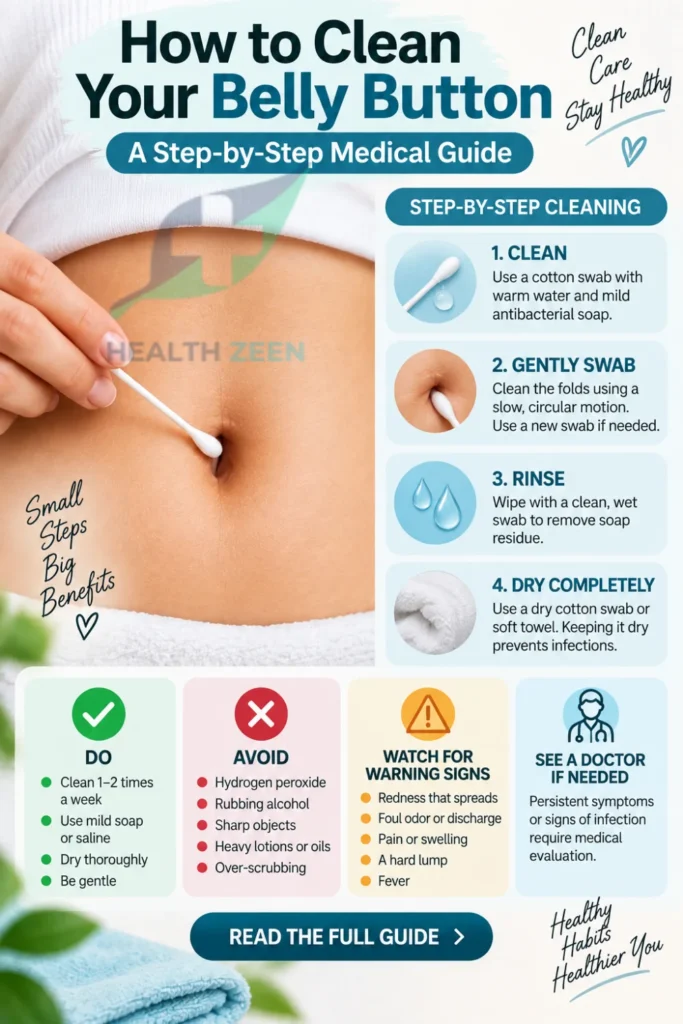
You should clean your belly button one to two times a week using a cotton swab dipped in warm water and mild antibacterial soap to gently remove trapped lint, sebum, and dead skin cells. Always dry the navel cavity completely afterward, as trapped moisture fuels severe bacterial and fungal infections. Avoid using harsh chemicals like hydrogen peroxide or thick lotions inside the umbilicus.
Patients frequently ask if they need a special routine to maintain proper umbilical hygiene. The human umbilicus acts as a natural trap for dead skin cells, daily sweat, clothing lint, and body lotions. According to a landmark biodiversity study published by the National Institutes of Health (NIH), the average human belly button harbors over 67 distinct strains of bacteria. When you neglect this specific anatomical area during your regular shower routine, this trapped organic debris rapidly oxidizes and rots. You must implement a structured cleaning protocol to prevent chronic foul odors, severe yeast overgrowths, and the formation of hardened navel stones.
Yes, you should actively clean your belly button to prevent microbial accumulation and dermatological infections. While the rest of your body receives adequate soap and water runoff during a standard shower, the anatomical folds of the umbilicus prevent natural rinsing. Failing to physically dislodge trapped lint, sebum, and keratin creates an ideal dark, damp microenvironment for opportunistic pathogens like Staphylococcus and Candida to multiply rapidly.
An “innie” belly button features deep, overlapping skin folds that trap moisture and dirt highly effectively. You must actively penetrate these deep folds using specific, gentle tools to remove cellular debris without scratching the highly sensitive internal skin tissue.
- Prepare the Cleaning Solution: Moisten a clean cotton swab (Q-tip) with warm water and a single drop of mild, fragrance-free antibacterial soap. Alternatively, you can use a sterile saline solution.
- Swab the Cavity: Gently insert the moistened cotton swab into the navel cavity. Swab the internal skin folds using a slow, circular motion to dislodge trapped lint and hardened sebum.
- Replace Soiled Swabs: Discard the cotton swab immediately once it becomes visibly dirty. Use a fresh, moistened swab to continue cleaning until the cotton tip comes out completely clean.
- Rinse Thoroughly: Dip a new cotton swab in plain warm water to wipe away all residual soap from the internal cavity. Leftover soap residue causes severe drying and localized skin irritation.
- Dry Completely: Use a dry cotton swab or a clean, soft towel to pat the inside of the navel completely dry. The Centers for Disease Control and Prevention (CDC) emphasizes that maintaining dry skin folds is the absolute most critical step in preventing localized fungal infections.
An “outie” belly button protrudes outward, making it significantly easier to clean because it lacks deep folds that hide dirt and lint. You can easily integrate this cleaning process directly into your daily shower routine.
- Lather the Area: Apply a mild, unscented soap to a soft washcloth during your regular shower.
- Wash Gently: Gently wash the protruding umbilical tissue and the immediate surrounding abdominal skin. Avoid aggressive scrubbing, which causes micro-tears in the delicate epidermal layer.
- Rinse the Soap: Stand under the showerhead to rinse away all soap residue completely with warm running water.
- Towel Dry: Pat the belly button completely dry with a clean bath towel as soon as you step out of the shower.
A belly button piercing requires strict clinical hygiene to prevent surgical site infections and jewelry rejection. You must treat a new or healing navel piercing as an open wound rather than normal skin.
- Use Sterile Saline Only: Spray a sterile, wound-wash saline solution directly onto the piercing entrance and exit holes twice a day.
- Remove Crusting Gently: Allow the saline solution to soften any hardened lymph fluid (crusties) around the metallic jewelry. Gently wipe the softened crust away using a sterile non-woven gauze pad.
- Avoid Soap and Alcohol: Keep regular body wash, harsh antibacterial soaps, rubbing alcohol, and hydrogen peroxide entirely away from a healing piercing. These harsh chemicals destroy healthy regenerating cells and severely delay the wound healing process.
- Dry with Paper Towels: Gently pat the piercing dry using a disposable paper towel. Standard cloth towels harbor dormant bacteria and easily snag on the jewelry, causing severe tissue trauma.
Failing to clean your belly button regularly directly triggers three specific dermatological and bacterial conditions.
When sebum, keratin, and trapped cellular debris accumulate over several months or years, they harden into a dense, dark mass known as an omphalith. These navel stones act as a foreign body, causing chronic localized inflammation, foul odors, and severe pain requiring professional medical extraction.
Bacterial Infections (Omphalitis)
Trapped moisture and dirt fuel rapid bacterial colonization. According to the StatPearls Clinical Database (NCBI), an active umbilical infection (omphalitis) presents with purulent discharge, intense abdominal pain, and spreading redness, requiring immediate topical or oral antibiotics.
Yeast Infections (Candidiasis)
The Candida fungus thrives exclusively in warm, damp, unwashed skin folds. A dirty belly button frequently develops a severe yeast infection characterized by an intense red rash, severe itching, and a thick, white, cottage-cheese-like discharge.
You must strictly avoid specific chemicals and physical practices when cleaning your belly button to preserve the skin’s natural moisture barrier and prevent localized physical trauma.
- Hydrogen Peroxide and Rubbing Alcohol: Medical professionals strongly advise against using hydrogen peroxide or isopropyl alcohol for routine navel cleaning. These highly astringent liquids dry out the delicate umbilical tissue, causing microscopic cracks that invite severe bacterial colonization.
- Sharp Cleaning Tools: Never use tweezers, bobby pins, or sharp fingernails to scrape dirt out of your belly button. Sharp objects easily lacerate the thin abdominal skin, leading directly to localized bloodborne infections.
- Heavy Lotions and Creams: Do not apply thick body lotions, moisturizing creams, or heavy cosmetic oils inside the naval cavity. The American Academy of Dermatology (AAD) warns that occlusive products trap excess moisture inside skin folds, creating a primary breeding ground for recurrent yeast infections.
When Should You Consult a Doctor?
You must consult a healthcare provider or a board-certified dermatologist immediately if you observe specific signs of a severe clinical infection despite maintaining proper hygiene. Seek professional medical care if you experience:
- Thick white, yellow, or green purulent discharge leaking from the cavity.
- Severe erythema (redness) spreading rapidly across the surrounding abdominal skin.
- Intense, localized itching or throbbing pain behind the navel.
- A hardened, painful lump forming directly beneath the umbilical skin.
You should clean your belly button one to two times a week. Daily aggressive cleaning severely dries out the sensitive umbilical skin, while neglecting it for weeks leads to severe dirt accumulation and bacterial overgrowth.
Yes, it is entirely safe to use Q-tips (cotton swabs) to clean your belly button. Cotton swabs effectively reach deep inside the overlapping folds of an "innie" navel without scratching or damaging the delicate internal tissue.
The hard black stuff inside your belly button is an omphalith (navel stone). This clinical condition occurs when oxidized dead skin cells, trapped sweat, sebum, and clothing lint compress into a solid, hardened mass over an extended period.
No, you should not use rubbing alcohol to clean a smelly belly button. While it temporarily kills surface bacteria, isopropyl alcohol severely dehydrates the umbilical skin, causing microscopic tears that drastically increase your risk of recurrent infections.
Yes, a single drop of baby oil helps clean hard dirt by actively breaking down and softening hardened sebum and stubborn lint. However, you must thoroughly wash the oil away with soap and water afterward to prevent dangerous moisture trapping.
No, you must never use hydrogen peroxide on a belly button piercing. Hydrogen peroxide violently destroys new, healthy regenerating tissue, which significantly prolongs the healing process and actively increases the risk of hypertrophic scarring.
No, you should never put lotion inside your belly button after cleaning. Lotions and moisturizers create a damp, occlusive seal over the navel cavity, providing the exact warm environment that Candida yeast pathogens require to rapidly multiply.
Your belly button smells immediately after a shower because you failed to dry the internal cavity thoroughly. Trapped water mixes with lingering microscopic bacteria, instantly generating a sharp, foul odor within the damp skin folds.
Your belly button bleeds when you clean it due to aggressive scrubbing, the use of sharp fingernails, or an underlying ruptured epidermal cyst. Stop cleaning immediately and consult a doctor to prevent a localized bloodborne infection.
If you never clean your belly button, trapped sweat, keratin, and lint will continuously compress into a solid, foul-smelling navel stone. This chronic accumulation ultimately triggers severe bacterial infections, intense localized pain, and chronic purulent discharge requiring clinical extraction.
Conclusion
Cleaning your belly button is a critical, fundamental aspect of daily personal hygiene that actively prevents chronic malodor and severe dermatological infections. You must proactively clean an “innie” navel weekly using a cotton swab, warm water, and mild antibacterial soap to safely dislodge trapped lint and hardened sebum. Always prioritize thorough towel drying, as trapped moisture serves as the primary catalyst for severe yeast and bacterial overgrowth within the abdominal skin folds. If you experience persistent foul smells, purulent discharge, or spreading redness despite practicing these proper cleaning techniques, you must seek immediate clinical evaluation from a medical provider to treat an underlying umbilical infection.
Disclaimer
This blog is for informational & educational purposes only, and does not intend to substitute any professional medical advice or consultation. For any health related concerns, please consult with your physician, or call 911.