What Does It Mean When Your Belly Button Is Red? Clinical Causes of Erythema
Looking down at your stomach and noticing that your belly button has suddenly turned bright red can trigger immediate anxiety. Because the umbilicus is a delicate, recessed scar that sits directly over your internal abdominal organs, many people instantly assume that a red navel indicates a severe internal medical emergency or a dangerous infection. However, in clinical dermatology, localized redness is simply the body’s standard inflammatory response to a wide variety of external and internal triggers.
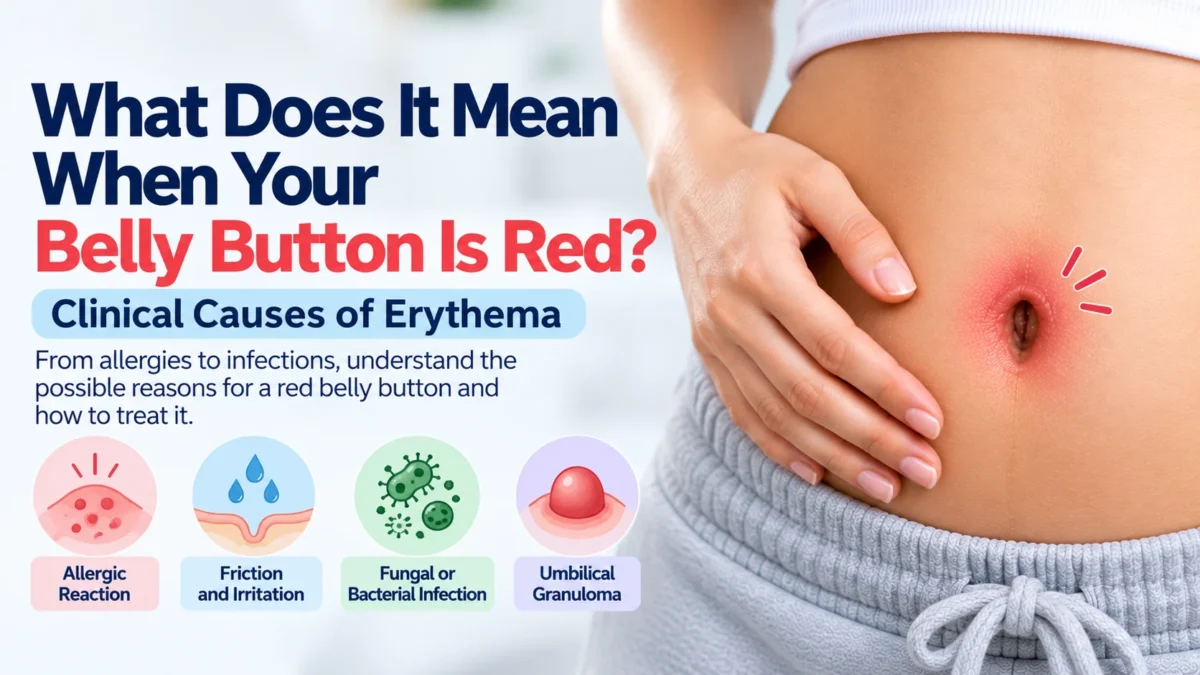
When your belly button is red, a symptom clinically referred to as umbilical erythema, it simply means that increased blood flow has rushed to the surface of the skin. This vascular response is designed to deliver white blood cells and healing nutrients to an area of tissue that is currently under distress. To accurately determine exactly what it means when your belly button is red, you must carefully evaluate whether the redness is accompanied by severe itching, a foul-smelling discharge, or localized swelling. By distinguishing between a harmless metallic allergy, the mechanical friction of tight clothing, and an active microbial invasion, you can safely identify the root cause of your umbilical irritation.
Allergic Contact Dermatitis and the Nickel Allergy
The most common, yet frequently overlooked, cause of a bright red belly button is a localized allergic reaction known as allergic contact dermatitis. The skin inside and immediately surrounding the umbilical scar is exceptionally thin and highly sensitive to external allergens.
The leading culprit for umbilical contact dermatitis is an allergy to nickel. Many everyday clothing items, specifically the metal buttons on denim jeans, the clasps on high-waisted trousers, and the buckles on leather belts, contain significant amounts of nickel. When this metallic hardware rests directly against the bare skin of your navel throughout the day, your immune system may identify the metal as a hostile invader. This triggers a localized allergic response, turning the belly button bright, angry red. A nickel allergy rash typically feels intensely itchy, may develop tiny, raised hives, and restricts its redness exclusively to the exact physical area where the metal touched the skin.
Mechanical Friction and Intertrigo
Sometimes, a red belly button has nothing to do with allergies or pathogens, but is entirely the result of mechanical damage. The umbilicus is a natural anatomical fold. If you carry excess abdominal weight, or if you wear highly restrictive, synthetic clothing during intense physical exercise, the skin inside the navel constantly rubs against itself and the damp fabric.
This continuous physical rubbing breaks down the delicate epidermal barrier, creating a severe friction burn. In clinical terms, an inflammatory rash occurring within deep skin folds due to friction and trapped moisture is called intertrigo. A belly button suffering from intertrigo will appear deeply red, raw, and highly irritated. It will typically feel like a sharp, burning scrape rather than an itch, and the redness will quickly subside once you remove the tight clothing, clean the area, and allow the raw tissue to completely dry.
Cutaneous Candidiasis: The Fungal Yeast Infection
Because the belly button cavity is dark, recessed, and frequently traps sweat and dead skin cells, it creates the perfect biological environment for fungi to rapidly multiply. If the redness in your navel is spreading outward and is accompanied by a severe, unrelenting itch, you are likely dealing with cutaneous candidiasis, a fungal yeast infection.
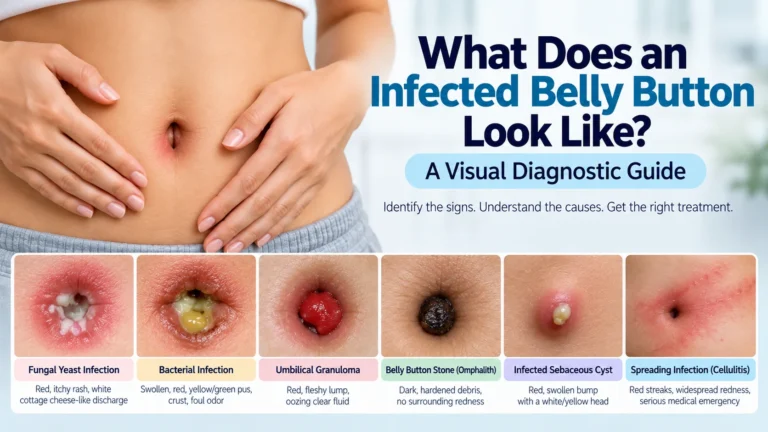
When Candida yeast overgrows inside the umbilicus, it causes a highly distinct visual presentation. The belly button will turn a vibrant, beefy red color. Unlike the confined rash of contact dermatitis, a fungal rash often features slightly raised, defined borders that spread onto the normal stomach skin. You will frequently see satellite lesions, which are tiny, individual red dots scattered just outside the main rash. Furthermore, a fungal yeast infection usually produces a thick, white, clumpy discharge that visually resembles cottage cheese and emits a distinct, sweet or yeasty odor.
Bacterial Omphalitis
If your belly button is a deep, dark crimson red and the surrounding skin is highly swollen, stretched tight, and distinctly shiny, the redness is likely indicating an active bacterial infection, clinically known as omphalitis.
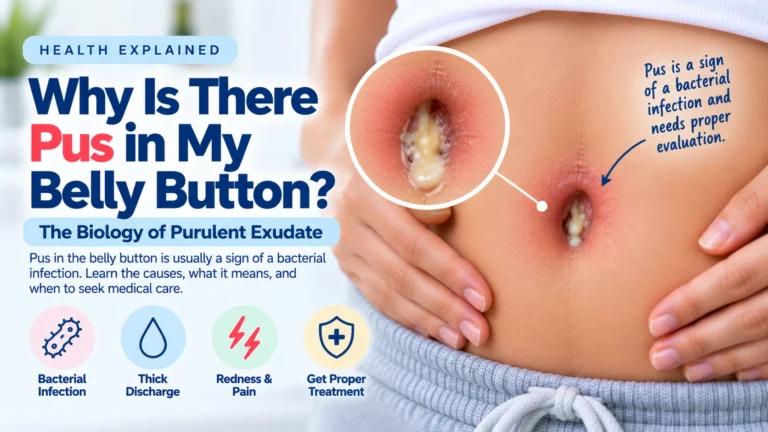
Bacteria such as Staphylococcus aureus can easily enter the navel through a microscopic scratch caused by a fingernail or a harsh washcloth. Once the bacteria breach the skin barrier, they trigger a massive, aggressive immune response. The redness associated with a bacterial infection is usually accompanied by severe, throbbing pain. The most definitive clinical sign of omphalitis is the presence of purulent exudate. The red navel will constantly weep a thick, opaque, foul-smelling liquid pus that is typically yellow, murky green, or rusty brown, which hardens into a crust around the edges of the scar.
Umbilical Granulomas
If the redness is not a flat rash on the skin, but rather a distinct, bright red, fleshy lump resting deep inside the navel, you are looking at an umbilical granuloma.
A granuloma is a benign overgrowth of raw, vascular healing tissue that occasionally forms after a minor umbilical infection fails to heal correctly. It essentially looks like a tiny, wet, cherry-red bead resting inside the cavity. Because it lacks a normal top layer of skin, it constantly weeps a clear, watery serous fluid or trace amounts of bright red blood when irritated. While visually alarming, an adult umbilical granuloma is completely harmless and can be easily treated by a physician using silver nitrate to chemically shrink the tissue.
When to Seek Emergency Medical Attention
While the vast majority of red belly buttons are caused by minor allergies, friction, or localized surface infections, there are critical clinical warning signs that indicate a highly dangerous, spreading condition.
You must seek immediate emergency medical care if the redness begins to rapidly spread outward from the navel in the form of dark red streaks shooting across your stomach. This is the primary visual indicator of cellulitis, a severe, life-threatening infection of the deep abdominal tissue. Furthermore, if your red belly button is accompanied by a high fever, uncontrollable shivering, projectile vomiting, or if the red tissue suddenly turns dark purple or black, you require immediate emergency intervention, as these symptoms indicate a systemic infection or dying, necrotic tissue.
Frequently Asked Questions
When your belly button is red, it indicates umbilical erythema, meaning increased blood flow has rushed to the area due to localized inflammation. This is most commonly caused by an allergic reaction to a metal belt buckle, mechanical friction from tight clothing, or a superficial yeast or bacterial infection.
If the inside of your navel is bright red and intensely itchy, you likely have cutaneous candidiasis, which is a fungal yeast infection. Yeast thrives in the dark, damp environment of the umbilicus, causing a beefy red rash, extreme itching, and often a thick, white, clumpy discharge.
Yes, a red rash caused by a metal belt buckle or the metal button on denim jeans is incredibly common. This is called allergic contact dermatitis. Many people have a mild allergy to nickel, and when this metal rubs against the sensitive umbilical skin, it triggers a localized, itchy, red immune response.
Yes, it is entirely normal. During an intense workout, sweat pools inside the navel while tight, synthetic athletic clothing continuously rubs against the skin. This combination of moisture and severe mechanical friction causes a temporary, red friction burn known clinically as intertrigo.
You can identify a bacterial infection, or omphalitis, by looking at the surrounding tissue and discharge. If the red skin is highly swollen, stretched tight, shiny, very painful to the touch, and actively leaking a thick, foul-smelling yellow or green pus, it is a bacterial infection requiring clinical treatment.
A bright red, fleshy, bead-like lump inside the navel is usually an umbilical granuloma. This is a harmless overgrowth of raw healing tissue that forms after a minor irritation. It often looks wet and may weep clear fluid or trace amounts of blood if scratched.
You should only apply antibiotic ointment if you are certain the redness is caused by bacteria. If the redness is caused by a fungal yeast infection or a nickel allergy, applying a thick, greasy antibiotic ointment will trap moisture and potentially make the underlying condition significantly worse.
Red, peeling skin around the navel is a classic sign of a healing skin irritation. Whether you recently recovered from a mild yeast infection, or you experienced a severe friction burn from tight clothing, the damaged upper layer of the epidermis will naturally peel and flake off as new skin forms underneath.
While emotional stress does not directly turn the belly button red, severe stress can weaken your immune system and trigger underlying dermatological conditions. Stress can cause eczema or psoriasis flare ups, which can manifest as dry, red, flaky patches in and around the umbilical fold.
You must see a doctor immediately if the redness rapidly spreads outward in streaks, if the area is extremely swollen and hot to the touch, if you develop a high fever, or if the red skin begins to turn dark purple or black, as these indicate a severe, life-threatening medical emergency.
Conclusion
A red belly button is the body’s natural visual alarm system, indicating that the highly sensitive epidermal tissue of the umbilicus is currently battling an inflammatory trigger. By carefully analyzing the specific nature of the redness, you can easily demystify the cause. An intensely itchy, localized rash directly beneath your jean button points straight to a nickel allergy, while a beefy red rash accompanied by white, clumpy discharge loudly signals a fungal yeast overgrowth. Whether you are dealing with the mechanical friction burn of intertrigo after a long workout or the aggressive swelling of a bacterial infection, understanding the root cause is the first step toward relief. By keeping the area meticulously clean, completely dry, and identifying the correct underlying trigger, you can swiftly calm the inflammatory response, eliminate the redness, and restore the healthy skin barrier of your navel.
Disclaimer
This blog is for informational and educational purposes only, and does not intend to substitute any professional medical advice or consultation. For any health related concerns, please consult with your physician, or call 911.