
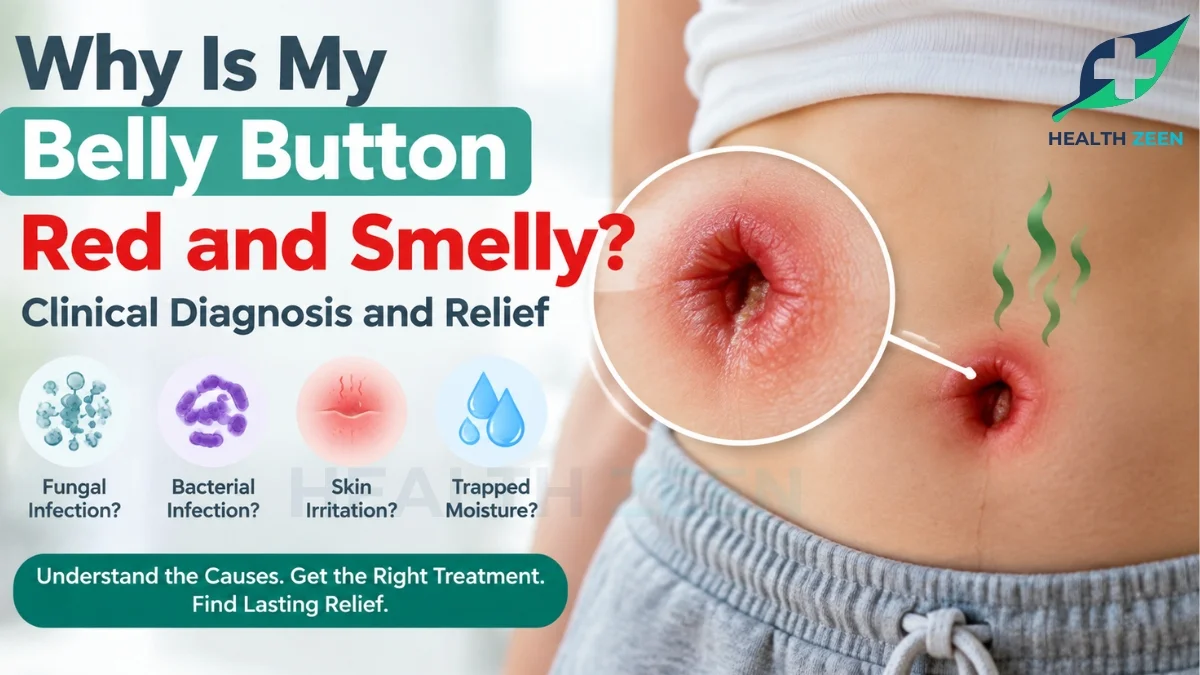
Why Is My Belly Button Red and Smelly? Clinical Diagnosis and Relief
Discovering that your belly button is both bright red and emitting a foul odor is a highly specific clinical presentation that requires immediate attention. In medical dermatology, the combination of localized umbilical erythema, which is the severe redness, and malodor, which is the foul smell, almost exclusively points to an active, multiplying microbial infection. While a red navel alone can simply be the result of physical friction, and a smelly navel alone can be caused by trapped dead skin cells, the simultaneous presence of both symptoms indicates that the epidermal barrier of your skin has completely broken down, allowing opportunistic pathogens to actively consume the compromised tissue.
Because the adult umbilicus is a deep, inward-folding scar that receives virtually no natural airflow or sunlight, it traps daily sweat, shedding keratin cells, and bath water with incredible efficiency. This creates a biological incubator that is dark, warm, and highly moist. To safely and effectively eliminate the redness and the odor, you must understand the exact biological mechanics occurring inside this cavity. Differentiating between the exact type of smell and the specific visual pattern of the redness is critical, as a fungal yeast overgrowth requires an entirely different medical treatment protocol than a polymicrobial bacterial infection.
The Biological Mechanics of Redness and Odor
To properly treat this condition, it is essential to understand the underlying physiological processes that are causing your body to react this way. The redness and the smell are not coincidental; they are the direct results of two distinct biological mechanisms happening simultaneously.
The redness is caused by massive localized vasodilation. When opportunistic bacteria or fungi invade the delicate skin inside the navel, your immune system detects the threat immediately. To fight the invasion, the body rapidly expands the microscopic blood vessels beneath the surface of the skin to deliver thousands of white blood cells to the compromised area. This intense rush of blood causes the umbilical tissue to swell, feel noticeably warm to the touch, and turn a bright, angry red.
The foul odor, on the other hand, is the direct byproduct of microbial metabolism. As the invading bacteria or yeast multiply, they actively feed on the trapped dead skin cells, stale sweat, and natural body oils pooling inside your navel. As these microbes digest this biological debris, they excrete highly odorous metabolic waste gases. The exact scent of this off-gassing provides the strongest clinical clue as to which specific type of microbe is attacking your skin.
Fungal Yeast Infections (Cutaneous Candidiasis)
The most frequent culprit behind a red and smelly belly button in adults is an aggressive fungal overgrowth known clinically as cutaneous candidiasis. This occurs when Candida albicans, a type of naturally occurring yeast on the human skin, multiplies out of control due to excessive trapped moisture.
When a yeast infection takes hold in the umbilicus, the redness it produces is highly distinct. Dermatologists refer to it as a beefy red rash. The interior of the belly button becomes a deep, raw, and shiny red. Crucially, this primary red patch is often surrounded by smaller, individual red dots spreading just outside the margins of the navel, which are clinically known as satellite lesions.
The smell associated with a fungal yeast infection is also highly characteristic. Because it is a fungal metabolic process, the odor is rarely described as rotting or putrid. Instead, a yeast infection typically emits a sweet, musty, or highly pungent yeasty odor, remarkably similar to the smell of rising bread dough, old beer, or damp, moldy clothing. This red rash and musty smell are almost always accompanied by an intense, burning itch and a thick, white, cottage-cheese-like discharge collecting deep within the folds of the scar.
Bacterial Omphalitis (Staph and Strep Infections)
If the odor coming from your belly button is exceptionally foul, mimicking the scent of rotting meat, old garbage, or feces, you are likely dealing with a severe bacterial infection known as omphalitis.
Unlike a fungal infection, a bacterial invasion is typically driven by aggressive strains of Staphylococcus aureus or Streptococcus. These bacteria frequently enter the deep naval tissue through microscopic scratches caused by fingernails or extreme friction from tight clothing. The redness associated with a bacterial infection looks much angrier than a yeast infection. The skin becomes highly inflamed, extremely tender to the slightest physical pressure, and the redness may begin to form streaks radiating outward across the surrounding abdominal stomach tissue.
Bacterial omphalitis rapidly destroys the localized tissue, resulting in the production of thick, highly purulent discharge. This pus is typically yellow, green, or dark brown, and it is the primary source of the putrid, rotting odor. A bacterial infection of this magnitude is a serious clinical issue that often causes the entire central abdomen to throb with a deep, persistent aching pain.
Severe Intertrigo with Secondary Complications
In many adult cases, the root cause of the redness and smell begins with a non-infectious inflammatory condition called intertrigo, which eventually escalates into a secondary infection.
Intertrigo occurs when deep abdominal skin folds trap moisture and cause severe skin-to-skin friction. This constant rubbing physically strips away the stratum corneum, which is the protective outer layer of the skin. The raw, unprotected tissue turns bright red and begins to weep a clear, watery serous fluid. Initially, this condition may only smell faintly of stale sweat. However, because the raw tissue is completely unprotected, opportunistic bacteria and yeast quickly colonize the weeping wounds. Within forty-eight hours, simple friction transforms into a complex, foul-smelling secondary microbial infection requiring immediate medical intervention.
While any adult can develop this uncomfortable condition, specific physiological and lifestyle factors drastically increase the likelihood of the umbilical barrier failing.
Individuals who struggle with uncontrolled diabetes are at a significantly heightened risk. High blood sugar levels frequently result in excess glucose being secreted directly through abdominal sweat. This sugary moisture provides an unlimited, high-energy food source for Candida yeast, causing massive, recurrent fungal outbreaks. Additionally, adults who suffer from hyperhidrosis, which causes excessive daily sweating, constantly flood the navel cavity with moisture, preventing the skin from ever drying out completely. Finally, poor post-shower hygiene, specifically the failure to manually dry the deep interior of an innie belly button with a towel, is the single most common catalyst for trapping the moisture necessary for microbes to thrive.
Clinical Treatment Protocols and Relief
Resolving a red and smelly belly button requires a targeted medical approach designed to eradicate the specific invading pathogen while simultaneously restoring the dry, natural environment of the umbilical cavity.
For a fungal yeast infection, the standard clinical treatment involves applying a topical over the counter antifungal cream, such as clotrimazole or miconazole, directly into the navel cavity twice daily. These powerful antifungal agents aggressively destroy the cell walls of the Candida yeast, rapidly neutralizing the musty odor and calming the beefy red inflammation within a few days.
If the symptoms point toward a bacterial infection, characterized by a putrid smell and green pus, you must consult a physician. A doctor will typically prescribe a strong topical antibiotic ointment, such as mupirocin, or a course of oral antibiotics to systemically eradicate the aggressive staphylococcus bacteria.
Under no circumstances should you ever pour harsh household chemicals like hydrogen peroxide or rubbing alcohol into a red and smelly belly button. Because the bright red skin is already severely compromised and raw, these highly cytotoxic liquids will cause excruciating pain, violently burn the healthy new skin cells attempting to heal the area, and significantly delay the overall recovery process.
Strict Hygiene and Prevention Strategies
Once the active infection is neutralized by medication, preventing the redness and odor from returning requires a permanent shift in how you maintain your abdominal hygiene.
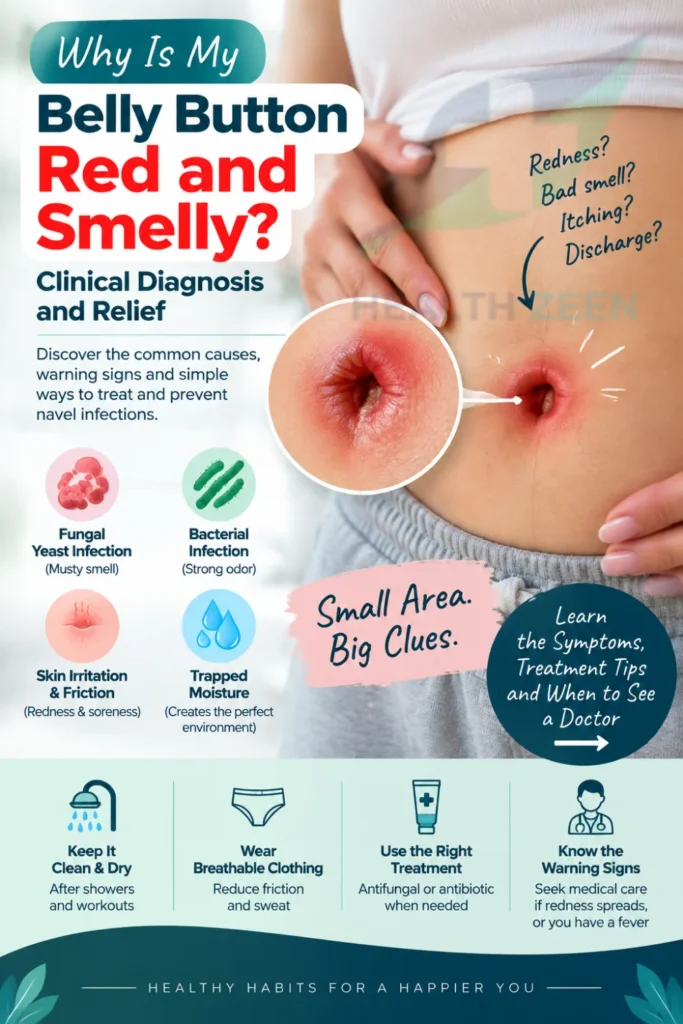
The interior of your belly button must be kept meticulously dry at all times. After taking a shower or heavily sweating during exercise, you cannot rely on air drying. Take a clean, dry paper towel and gently press it deep into the folds of the navel to absorb every single drop of hidden moisture. Avoid using shared cloth bath towels for this task, as they frequently harbor microscopic mold spores that can easily be transferred directly into the susceptible cavity. Furthermore, switching to loose fitting, highly breathable cotton clothing will drastically reduce the trapped heat and mechanical friction that breaks down the epidermal barrier.
When Should You Seek Immediate Medical Attention?
While most mild fungal and bacterial umbilical infections can be managed safely at home or with a routine doctor’s visit, certain clinical red flags require immediate emergency evaluation to prevent life-threatening complications.
You must proceed to an urgent care clinic or hospital emergency room immediately if the localized redness suddenly begins to spread rapidly outward across your stomach in angry, distinct red streaks. This visual phenomenon is a primary indicator of cellulitis, a severe deep tissue infection that is actively spreading into your lymphatic system. Additionally, seek emergency care if the red and smelly belly button is accompanied by a sudden systemic high fever, uncontrollable shivering, extreme nausea, or if the skin surrounding the umbilicus becomes completely rock hard and agonizing to touch.
Frequently Asked Questions
Your belly button is red and smelly because the delicate skin inside the cavity has broken down from trapped moisture, allowing opportunistic bacteria or fungal yeast to invade the tissue. The redness is caused by immune inflammation, and the smell is the metabolic waste gas produced by the multiplying microbes.
You can differentiate them by the smell and the visual symptoms. A yeast infection typically smells sweet, musty, or like stale bread, and presents as a beefy red rash with white, cottage cheese like discharge. A bacterial infection smells putrid, like rotting meat, and produces thick yellow or green pus.
The fastest way to cure it is to identify the pathogen. Wash the area gently with mild soap, dry it completely with a clean paper towel, and apply an over the counter antifungal cream for yeast, or consult a doctor for prescription antibiotic ointment if you suspect a bacterial infection.
No, it is never normal for your belly button to smell like feces. A fecal or putrid rotting odor is a massive clinical warning sign that you have developed a severe bacterial infection, likely caused by trapped sweat, dead skin, and anaerobic bacteria metabolizing the debris.
Your belly button gets red and smelly after working out because intense exercise floods the deep umbilical cavity with heavy sweat. If you do not manually dry the inside of the navel after your post workout shower, this trapped moisture rapidly triggers painful chafing and fungal overgrowth.
You must never use hydrogen peroxide on a red and infected belly button. The intense redness indicates that your skin barrier is completely raw. Hydrogen peroxide will violently burn the damaged tissue, cause agonizing pain, and destroy the white blood cells trying to heal the infection.
Yes, uncontrolled diabetes is a major risk factor. Excess blood glucose is excreted through your sweat, which provides a massive, sugary food source for Candida yeast. This frequently leads to chronic, severe, and highly odorous fungal infections inside the navel.
To clean a deep innie belly button, gently use a cotton swab dipped in warm, sterile saline or mild antibacterial soap to wipe away the trapped debris. Never scrub aggressively. Most importantly, use a dry cotton swab or paper towel to remove all remaining moisture immediately afterward.
Yes, wearing tight, non-breathable pants, especially denim or synthetic athletic wear, creates severe mechanical friction against the abdomen while simultaneously trapping extreme body heat and sweat. This combination rapidly breaks down the skin and accelerates foul smelling microbial infections.
You should go to the doctor immediately if the redness begins spreading rapidly across your stomach in streaks, if the pain becomes deep and throbbing, if you see thick green pus, or if you develop a sudden fever, as these are critical signs of spreading cellulitis.
Conclusion
A red and smelly belly button is a clear biological alarm indicating that the protective epidermal barrier inside your navel has failed, resulting in an active microbial infection. The deep, enclosed anatomy of the adult umbilicus makes it highly susceptible to trapping the excessive moisture, dead keratin cells, and daily sweat required for opportunistic pathogens to thrive. By closely observing the specific type of odor and the visual presentation of the redness, you can accurately distinguish between a highly itchy, musty fungal yeast overgrowth and a painful, putrid bacterial invasion. Addressing this uncomfortable condition requires an immediate clinical response utilizing targeted topical treatments, such as antifungals or antibiotics, paired with a lifelong commitment to keeping the naval cavity meticulously dry. If you ever notice the redness rapidly spreading outward or experience a sudden fever, you must seek urgent medical care to halt the progression of a severe deep tissue infection.
Disclaimer
This blog is for informational & educational purposes only, and does not intend to substitute any professional medical advice or consultation. For any health related concerns, please consult with your physician, or call 911.