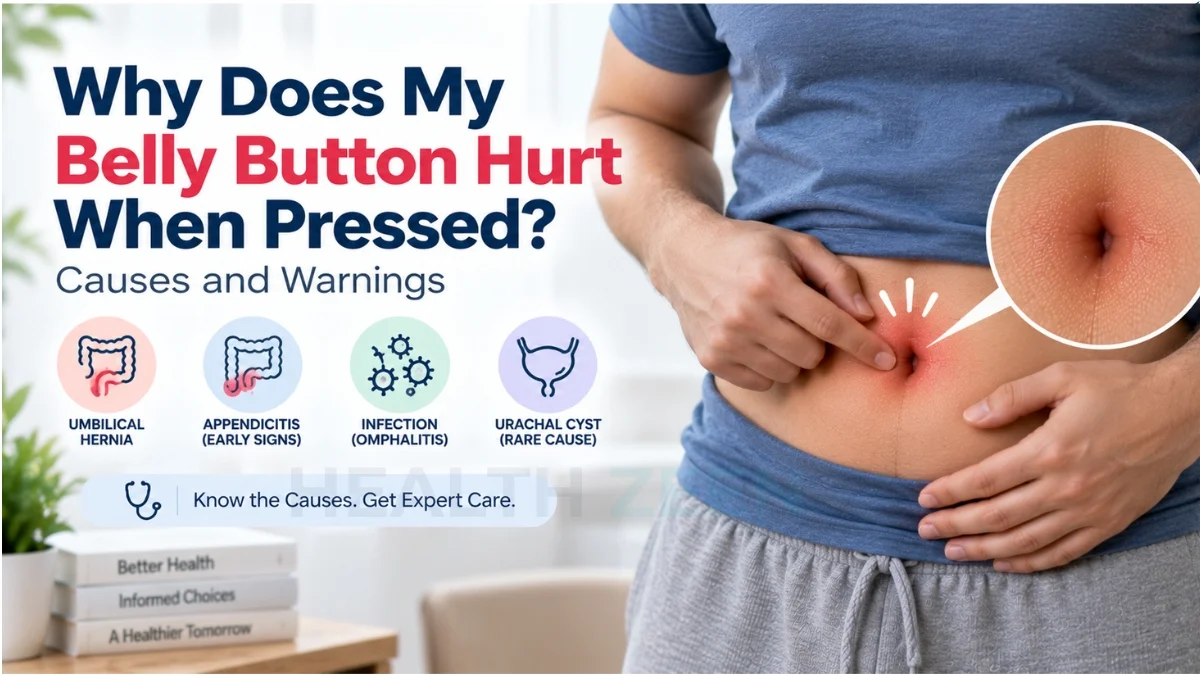
Why Does My Belly Button Hurt When Pressed? Causes and Warnings
Pain when pressing the belly button is a critical diagnostic symptom primarily caused by an underlying umbilical hernia, localized bacterial infection (omphalitis), or the early stages of acute appendicitis. If pressing the navel causes a sharp spike in pain upon releasing the pressure (rebound tenderness), or if the pain migrates to the lower right abdomen, it indicates a severe medical emergency requiring immediate clinical evaluation.
Experiencing a sharp, localized pain exclusively when you apply direct tactile pressure to your belly button is a critical diagnostic symptom. In clinical medicine, this is referred to as point tenderness. The umbilicus sits directly over the thinnest section of the anterior abdominal wall and acts as a central convergence point for multiple underlying nerve networks. When you push your finger into your navel, you are physically compressing the epidermal tissue against the delicate parietal peritoneum and the underlying gastrointestinal tract. Understanding why this specific mechanical compression triggers a sharp pain response is essential for differentiating between a minor superficial skin irritation and a severe internal surgical emergency.
To understand why pressing your belly button hurts, you must understand the complex internal wiring of the abdominal nervous system. The skin surrounding the umbilicus and the internal peritoneal lining directly behind it are innervated by the tenth thoracic spinal nerve, clinically known as the T10 dermatome.
Because internal abdominal organs like the appendix and the small intestine lack precise pain receptors, they utilize the T10 nerve pathway to send distress signals to the brain when they become inflamed. The brain frequently misinterprets this vague internal organ distress as localized pain originating directly at the surface of the belly button. Therefore, pressing on the navel not only tests the surface skin but also mechanically stimulates this shared nerve pathway, triggering referred pain from deeper internal organs.
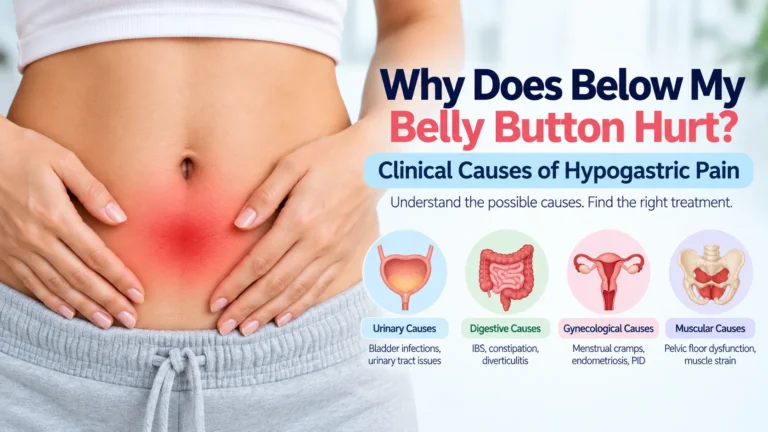
Direct point tenderness at the umbilicus is primarily driven by structural abdominal wall defects, severe localized bacterial colonizations, and migrating gastrointestinal inflammation.
Adult Umbilical Hernias
An adult umbilical hernia is the most frequent structural cause of pain when pressing the belly button. This condition develops when intense intra-abdominal pressure forces a small section of intestinal fat to push through a weakened fibrous ring in the abdominal fascia. If this herniated tissue becomes trapped within the tight fascial opening, it forms a small, hidden bulge. When you press directly on your belly button, you mechanically squeeze this trapped, inflamed tissue against the tough abdominal muscle, triggering immediate, sharp, and localized pain.
Early Acute Appendicitis
Pain when pressing the belly button is the classic, hallmark initial symptom of early acute appendicitis. According to the National Institutes of Health (NIH), before appendicitis pain migrates to the lower right quadrant of the abdomen, it begins as a deep, aching visceral pain directly behind the umbilicus. Pressing on the belly button during the first few hours of an appendix infection aggressively stimulates the inflamed visceral peritoneum, causing a sharp spike in localized discomfort that progressively worsens over the next 24 hours.
Localized Umbilical Infections (Omphalitis)
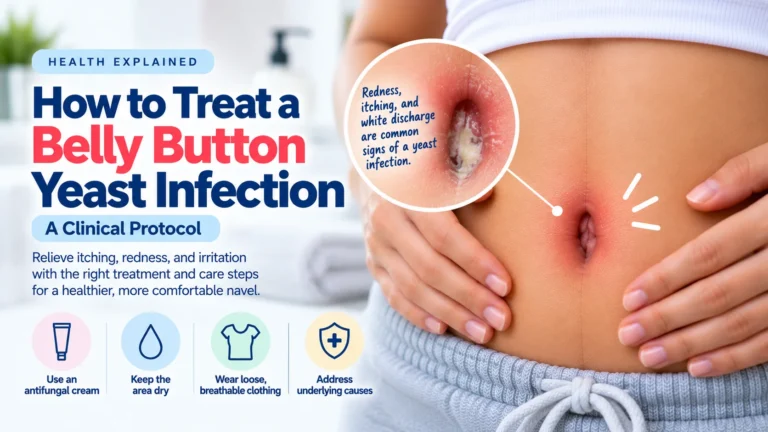
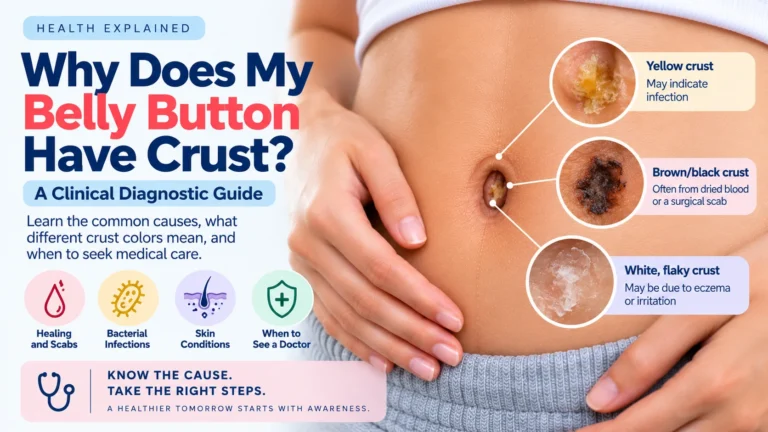
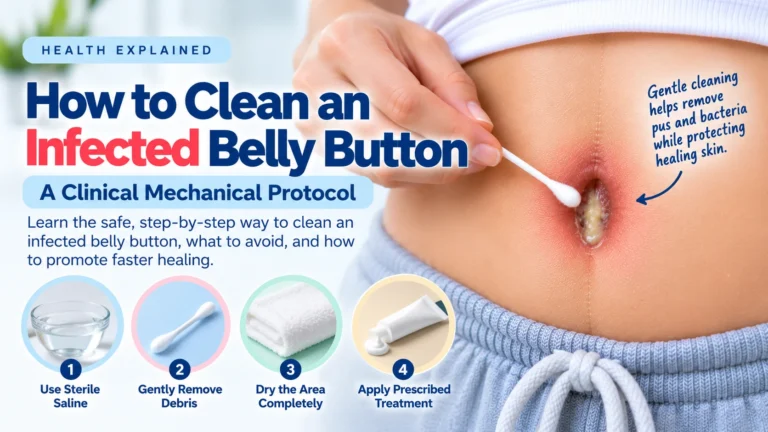
The deep, dark folds of the naval cavity are highly susceptible to severe bacterial colonizations, leading to a condition known as omphalitis. If opportunistic Staphylococcus bacteria infiltrate microscopic cuts inside the umbilicus, the surrounding tissue becomes highly inflamed, swollen, and filled with purulent fluid. Pressing on an infected belly button compresses this inflamed, highly sensitive epidermal tissue, resulting in acute throbbing pain accompanied by a foul-smelling discharge.
Urachal Cysts
During fetal development, a tube called the urachus connects the bladder to the navel. In adults, this tube typically solidifies into a solid fibrous ligament. However, if a small hollow remnant remains, it can develop into a urachal cyst. The StatPearls Clinical Database indicates that an infected adult urachal cyst sits deep immediately behind the umbilicus. Applying downward pressure on the stomach compresses this hidden, fluid-filled cyst, sending sharp pain radiating from the navel straight downward into the pelvic region.
Rebound Tenderness vs. Direct Pressure Pain
Medical professionals rely heavily on a specific palpation technique called rebound tenderness to diagnose the severity of abdominal pain. You must understand the difference between direct pressure pain and rebound tenderness to gauge your clinical risk.
Direct pressure pain occurs the moment you push your finger into your belly button. This typically indicates a superficial issue like a hernia or a localized skin infection. Rebound tenderness occurs when you press deeply into the abdomen, hold it for a second, and then suddenly let go. If the pain is significantly sharper and more agonizing the exact moment you release the pressure, it is a critical clinical red flag. Rebound tenderness strongly indicates widespread inflammation of the peritoneal cavity (peritonitis), frequently caused by a ruptured appendix or a burst internal cyst requiring emergency surgery.
How Doctors Diagnose Palpation Pain
Physicians utilize a combination of dynamic physical examinations and high-resolution imaging to determine the exact cause of localized umbilical point tenderness.
During a clinical assessment, the doctor will carefully palpate the entire abdomen, noting exactly where the tactile pressure elicits the strongest pain response. They will instruct you to cough or bear down while they press the navel to feel for hidden umbilical hernias sliding through the fascia. If the physician suspects acute appendicitis or an infected urachal cyst based on the pain pattern, they will immediately order an abdominal CT scan with intravenous contrast to visualize the internal organs and confirm the presence of deep tissue inflammation.
When Should You Consult a Doctor?
You must consult a healthcare provider immediately if the pain when pressing your belly button persists for more than 24 hours or if the localized tenderness begins migrating toward the lower right side of your stomach.
Seek immediate emergency medical care if pressing the navel induces extreme rebound tenderness. Furthermore, if the tactile pain is accompanied by a sudden high fever, severe nausea, uncontrollable vomiting, an inability to pass gas, or a hardened red bulge protruding from the umbilicus, you must proceed to an emergency department without delay. These critical symptoms indicate a strangulated hernia or a ruptured appendix, both of which are life-threatening surgical emergencies.
Frequently Asked Questions About Point Tenderness
Your belly button hurts only when you push on it because the tactile pressure mechanically compresses inflamed underlying tissue, such as a hidden umbilical hernia, an infected urachal cyst, or an irritated parietal peritoneum membrane.
No, it is never physiologically normal for a healthy belly button to hurt when pressed. Any localized pain upon palpation indicates a structural defect in the abdominal wall, an active bacterial infection, or underlying gastrointestinal inflammation.
Yes, pressing your belly button can help detect early acute appendicitis. The initial visceral pain of an inflamed appendix originates directly behind the umbilicus before migrating to the lower right abdomen, making the navel highly tender to early tactile pressure.
You can identify a hernia if pressing the belly button reveals a soft, tender lump that seems to disappear when you lie down flat but protrudes and hurts significantly more when you stand up, cough, or lift a heavy object.
While stomach ulcers primarily cause burning pain in the upper epigastric region below the rib cage, severe referred pain from a perforated internal ulcer can occasionally make the central abdominal fascia and the navel highly tender to the touch.
The skin inside your belly button hurts when you touch it due to localized dermatological inflammation. This is typically caused by aggressive scratching, an allergic reaction to a metal belt buckle, or an active bacterial infection producing purulent discharge.
A severe bladder infection or a localized urinary tract infection can cause referred pain that radiates upward along the median umbilical ligament, making the lower half of the belly button and the pelvic region highly tender to deep physical pressure.
No, you must never massage or forcefully press on a belly button that hurts. Aggressive tactile manipulation can severely worsen a localized bacterial infection, rupture a hidden internal cyst, or cause a trapped umbilical hernia to strangulate.
Rebound tenderness means you experience a sharp, agonizing spike in pain the exact moment you release pressure from the belly button. This is a critical medical emergency sign indicating severe inflammation of the internal abdominal lining, known as peritonitis.
You should go to the emergency room immediately if the pain when pressing your belly button is accompanied by a high fever, severe vomiting, an inability to stand up straight, or a sudden migration of the sharp pain to the lower right side of your abdomen.
Conclusion
Experiencing sharp, localized pain when you press on your belly button is a critical diagnostic indicator of an underlying structural or internal inflammatory issue. Unlike generalized stomach cramps, direct point tenderness at the umbilicus points strictly toward mechanical compression of inflamed tissue, such as an adult umbilical hernia, an infected deep-tissue urachal cyst, or the initial visceral stages of acute appendicitis. You must carefully monitor the pain to determine if it exhibits rebound tenderness or begins migrating across your abdomen. If the tactile pain severely limits your mobility, causes sudden nausea, or radiates to the lower right quadrant, you must seek immediate clinical evaluation from a medical provider to rule out life-threatening surgical emergencies.
Disclaimer
This blog is for informational & educational purposes only, and does not intend to substitute any professional medical advice or consultation. For any health related concerns, please consult with your physician, or call 911.