How to Treat a Belly Button Yeast Infection: A Clinical Protocol
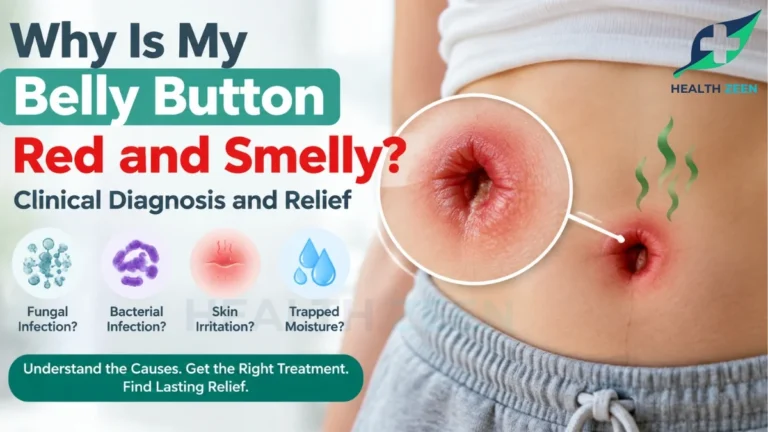
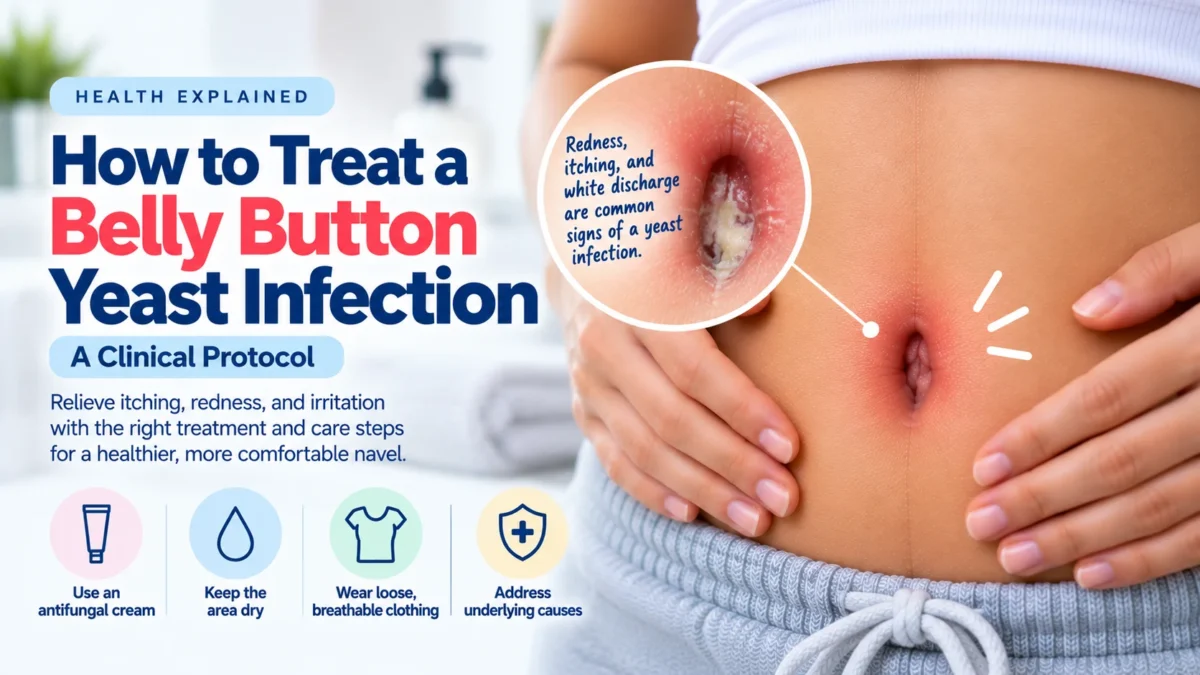
Developing a yeast infection inside your belly button is an intensely uncomfortable and frustrating experience. Unlike a standard bacterial skin infection that causes a localized, throbbing pain, an umbilical yeast infection is characterized by an overwhelming, relentless itch, a beefy red rash, and a thick, clumpy white discharge. Clinically known as cutaneous candidiasis, this condition occurs when the naturally occurring Candida yeast on your skin suddenly multiplies out of control within the dark, humid folds of the navel.
To successfully treat a belly button yeast infection, you must approach the problem with a targeted clinical strategy. Many patients instinctively reach for standard first aid creams or harsh household cleaning chemicals, which inevitably makes the fungal overgrowth significantly worse. Yeast is a highly resilient microscopic fungus that thrives in warm, wet environments and heavily exploits damaged skin barriers. Therefore, effectively eradicating the infection requires a dual approach: applying specific pharmacological agents designed to destroy the fungal cell wall, and physically modifying the microclimate of your belly button to make biological survival impossible for the yeast.
The Danger of Antibacterial Misdiagnosis
The most critical mistake patients make when attempting to treat an itchy navel is applying an over the counter antibacterial ointment, such as triple antibiotic cream.
Your skin is home to a delicate microbiome where harmless bacteria and trace amounts of yeast live in a competitive balance. If you mistakenly apply an antibacterial ointment to a fungal yeast infection, the antibiotic will rapidly slaughter all the beneficial surface bacteria in your belly button. Without the good bacteria to compete for resources, the Candida yeast is left completely unchecked, allowing it to multiply exponentially. If your belly button is intensely itchy, bright red, and producing a cottage cheese like discharge, you must strictly avoid all antibacterial products and focus entirely on antifungal therapies.
Step 1: Pharmacological Eradication Using Azoles
The cornerstone of treating a belly button yeast infection is the application of a topical antifungal medication. For localized cutaneous candidiasis, dermatologists highly recommend over the counter azole antifungals, specifically clotrimazole or miconazole.
Azole antifungals work through a highly specific pharmacological mechanism. They directly interfere with the yeast cell’s ability to synthesize ergosterol, a vital lipid compound that holds the fungal cell membrane together. When the yeast cannot produce ergosterol, its cell membrane becomes highly unstable and physically ruptures, causing the fungus to die.
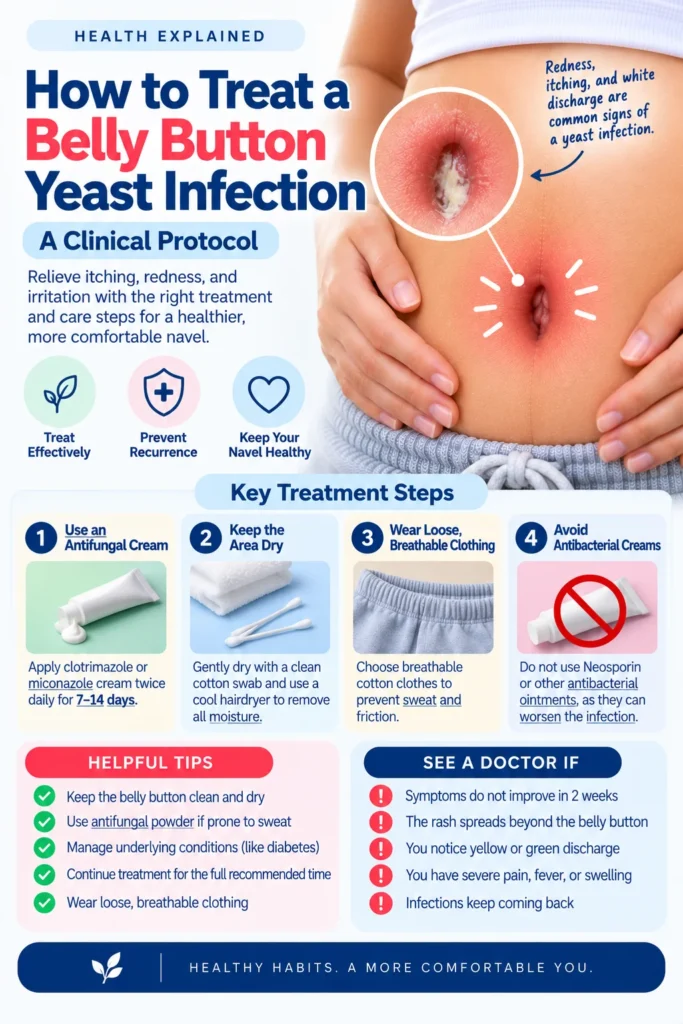
To apply the treatment, first ensure the navel is completely clean and dry. Using a clean cotton swab, apply a very thin, translucent layer of clotrimazole or miconazole cream directly into the deep folds of the belly button twice daily. You must apply the cream sparingly. Packing the cavity with a thick glob of cream will trap body heat and moisture, inadvertently creating the exact humid environment the yeast needs to survive. You must continue applying the antifungal cream for a full seven to fourteen days, even if the severe itching stops within the first forty eight hours, to ensure every microscopic fungal spore is entirely eradicated.
Step 2: Absolute Moisture Desiccation
Fungal yeast is biologically incapable of reproducing without a heavy presence of water. Even the most powerful clinical antifungal creams will fail if you allow your belly button to remain constantly damp.
To permanently cure the infection, you must practice absolute moisture desiccation. After taking a shower, you cannot simply pat your stomach with a towel. The deep, recessed anatomy of the umbilicus easily traps microscopic drops of tap water. Instead, use a completely dry cotton swab to gently absorb any hidden water deep inside the cavity. Following this, use a hairdryer set to the lowest, coolest setting. Hold the hairdryer a few inches away from your stomach and direct the cool air into the navel for sixty seconds. This process ensures that all trapped moisture is entirely evaporated. Furthermore, during the treatment period, you must wear loose, breathable cotton clothing to prevent sweat from pooling inside the navel.
Step 3: Managing Severe Inflammation and Maceration
In severe cases of umbilical candidiasis, the intense itching causes patients to scratch the delicate skin until it is completely raw and weeping clear fluid. This severe tissue damage is clinically known as skin maceration.
If the skin inside your navel is heavily macerated and weeping, applying a standard antifungal cream might initially cause an intense burning sensation. In these highly inflamed scenarios, a physician may prescribe a combination cream containing both clotrimazole and a mild topical corticosteroid, such as hydrocortisone. The steroid rapidly suppresses the localized immune response, instantly stopping the relentless itch and reducing the beefy redness, while the clotrimazole works to kill the underlying yeast. However, steroid creams must only be used for a few days under strict medical supervision, as prolonged steroid use can severely thin the umbilical skin.
Addressing Underlying Metabolic Triggers
If you suffer from chronic, recurring belly button yeast infections despite using proper antifungal creams, you must evaluate underlying metabolic and structural triggers.
Candida yeast aggressively feeds on glucose. Individuals with poorly managed diabetes frequently experience elevated blood sugar levels, which translates to high sugar content in their sweat. When sugary sweat pools in the navel, it provides an unlimited food source for the yeast. Achieving strict glycemic control is paramount for preventing recurrent fungal infections.
Additionally, patients undergoing rapid weight loss, particularly those utilizing GLP-1 medications, often develop significant overlapping abdominal skin folds. These heavy folds permanently cover the belly button, sealing off oxygen and trapping sweat against the skin. For these individuals, utilizing an antifungal drying powder containing miconazole nitrate, rather than a cream, can simultaneously kill the yeast while absorbing excess sweat trapped within the deep abdominal folds.
When to Seek Oral Antifungal Therapy
While topical creams successfully cure the vast majority of umbilical yeast infections, certain presentations require a systemic approach.
If the beefy red rash rapidly spreads out of the belly button and extensively covers your entire abdomen, or if the topical creams fail to produce any improvement after fourteen days of meticulous use, you must consult a physician. In cases of highly resistant Candida strains or deep follicular fungal involvement, a doctor will prescribe a systemic oral antifungal medication, such as fluconazole. A single oral dose of fluconazole circulates through your bloodstream to attack the fungal cell walls from the inside out, rapidly clearing severe or highly stubborn infections.
Frequently Asked Questions
The most effective over the counter treatments are topical azole antifungals, specifically clotrimazole or miconazole creams. These medications directly attack the fungal cell wall, preventing the yeast from reproducing and rapidly clearing the intense itching and redness.
No, you must never use Neosporin or any antibacterial ointment on a yeast infection. Antibacterial creams do not kill yeast; they only kill the good surface bacteria on your skin. Destroying these good bacteria allows the fungal yeast to multiply even faster, making the infection significantly worse.
With consistent application of a topical antifungal cream and strict moisture control, the severe itching and redness typically subside within three to five days. However, you must continue the treatment for a full ten to fourteen days to ensure the fungal colony is completely eradicated.
A cheesy or sweet, yeasty odor is a classic clinical symptom of cutaneous candidiasis. The smell is a direct metabolic byproduct of the rapidly multiplying yeast cells breaking down dead keratin proteins and sweat trapped inside the dark, enclosed environment of your navel.
Should I put rubbing alcohol on a fungal yeast infection?
No, you should never pour rubbing alcohol into an infected belly button. Alcohol causes severe chemical burns to raw, inflamed skin. It will trigger agonizing pain and severely damage your healing tissue, making it easier for the yeast to burrow deeper into the epidermal layers.
To properly dry the navel without causing mechanical irritation, gently press a dry cotton swab into the cavity to absorb standing water. Then, use a hairdryer on the lowest, coolest setting to blow air into the belly button for one minute, ensuring all microscopic moisture is completely evaporated.
Yes, individuals with uncontrolled diabetes have higher levels of glucose in their sweat and tissue fluids. Because Candida yeast rapidly feeds on sugar, this sugary sweat provides the perfect biological fuel for the yeast, leading to severe, chronic, and highly recurrent umbilical infections.
If you have a very deep navel or overlapping abdominal skin folds, an antifungal powder containing miconazole nitrate is often superior to a cream. The powder actively kills the yeast while simultaneously absorbing daily sweat, preventing the humid environment that creams can sometimes accidentally trap.
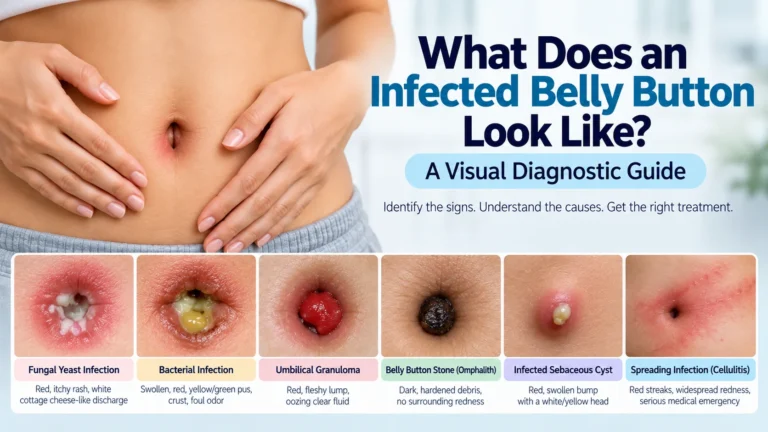
Yes, if left untreated, the beefy red fungal rash will aggressively spread outward from the umbilical cavity onto the surrounding flat skin of your stomach. You will often see satellite lesions, which are small, distinct red dots scattering beyond the main border of the rash.
You should consult a physician if the over the counter antifungal cream shows no improvement after two weeks, if the rash rapidly spreads across your entire abdomen, or if the navel begins leaking thick green or yellow pus, which indicates a secondary bacterial infection has developed.
Conclusion
Treating a belly button yeast infection requires a highly specific, disciplined clinical approach that entirely rejects the notion of general first aid. Because cutaneous candidiasis thrives on warmth, darkness, and trapped moisture, successfully eradicating the fungus demands environmental modification just as much as pharmacological intervention. By strictly avoiding cytotoxic chemicals and counterproductive antibacterial ointments, and instead utilizing targeted azole antifungals to shatter the yeast cell membrane, you can rapidly halt the relentless pruritus. Coupling this medical treatment with the absolute desiccation of the umbilical cavity ensures that the microscopic spores have no biological pathway to survive. Whether managing a sudden acute flare up or addressing the structural skin folds contributing to chronic recurrences, adhering to this strict clinical protocol will definitively clear the fungal overgrowth and permanently restore the calm, healthy epidermal barrier of your navel.
Disclaimer
This blog is for informational and educational purposes only, and does not intend to substitute any professional medical advice or consultation. For any health related concerns, please consult with your physician, or call 911.