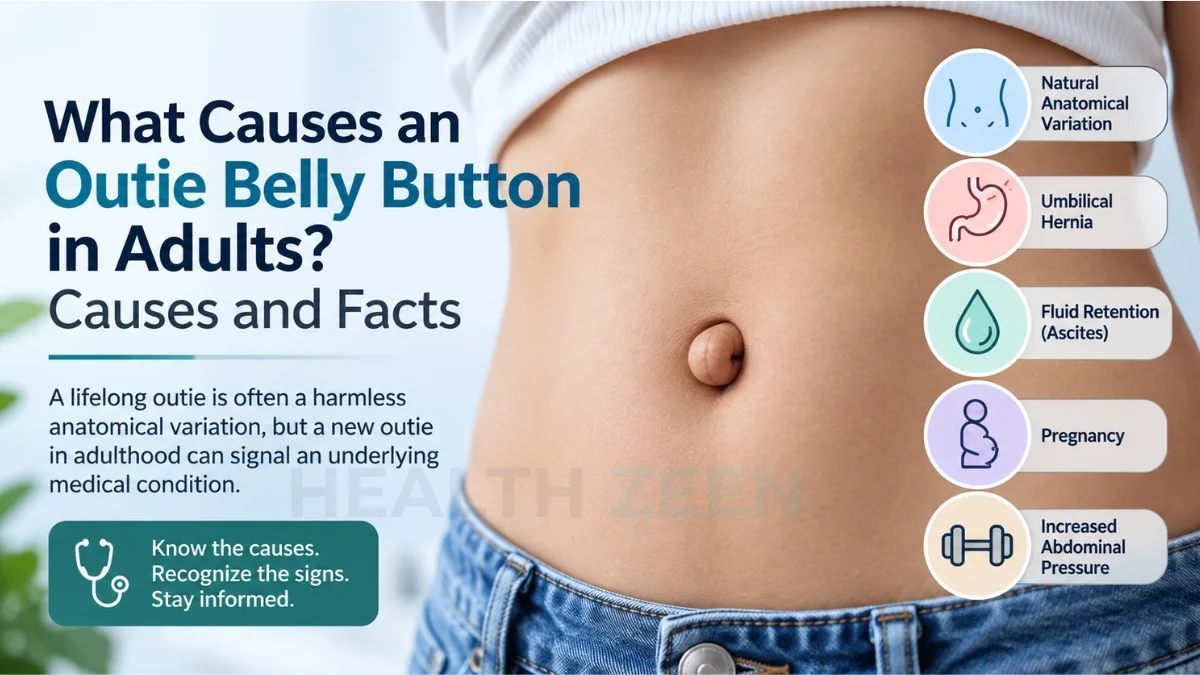
What Causes an Outie Belly Button in Adults? Causes and Facts
A lifelong outie belly button is a harmless anatomical variation caused by dense fibrous scar tissue formation. However, if a flat navel suddenly protrudes in adulthood, it is a critical clinical symptom of increased intra-abdominal pressure primarily driven by an adult umbilical hernia, severe fluid retention like ascites, or extreme fascial stretching during pregnancy.
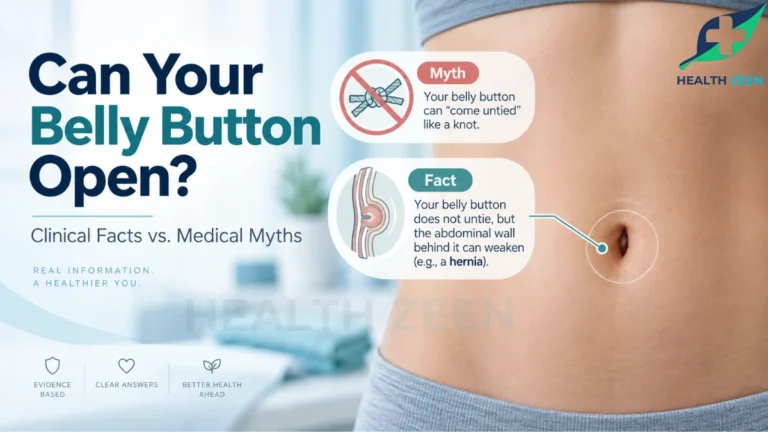
While many individuals believe the shape of their navel was determined entirely by how medical professionals managed their physical birth, the adult umbilicus is governed strictly by internal anatomy and abdominal pressure. Clinically known as a central cicatrix, the belly button is a permanent scar resting directly over the linea alba, the thick connective tissue dividing your abdominal muscles. When this centralized fibrous tissue heals thickly or is subjected to extreme internal mechanical force throughout your adult life, it loses its inward tether and physically protrudes outward, creating what is colloquially known as an outie.
To understand what causes an outie belly button, you must analyze the structural integrity of the adult abdominal wall. The umbilicus represents a natural structural weak point because it completely lacks the protective subcutaneous fat and thick rectus abdominis muscle layers present across the rest of the stomach.
When the abdominal fascia seals closed during early human development, the resulting scar tissue typically tethers itself tightly to the underlying deep tissue, pulling the overlying skin inward to create a depression. However, if an individual naturally produces a denser, thicker layer of fibrous connective tissue during the healing process, this heavy scar tissue physically pushes the localized skin outward. This purely anatomical variation is completely harmless and simply represents a morphological difference in human cellular regeneration.
What Causes an Adult to Suddenly Develop an Outie?
If you have possessed a flat or depressed navel for your entire life and suddenly develop an outie in adulthood, it is no longer a simple cosmetic variation. A newly protruding belly button is a critical clinical symptom indicating a severe increase in intra-abdominal pressure that is physically forcing the thinnest part of your stomach wall outward.
Adult Umbilical Hernias
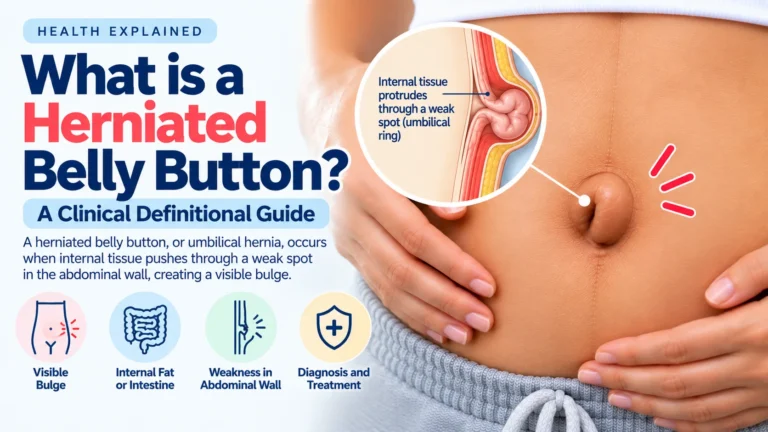
An adult umbilical hernia is the single most common medical reason a flat navel suddenly transforms into an outie. This structural defect occurs when extreme internal pressure forces a small portion of the intestines or abdominal adipose tissue (fat) to push aggressively through a weakened fascial ring directly behind the navel. According to the StatPearls Clinical Database (NCBI), adult umbilical hernias frequently present as a soft, tender outie that becomes significantly more prominent when you cough, laugh, or attempt to lift heavy objects.
Ascites and Severe Fluid Retention
Ascites is a severe medical condition characterized by the massive accumulation of fluid directly within the peritoneal cavity of the abdomen, most commonly caused by chronic liver cirrhosis or portal hypertension. As the volume of ascitic fluid rapidly expands, it exerts immense, unrelenting pressure against the anterior abdominal wall. This extreme outward hydraulic pressure forces the umbilicus to evert, transforming it into a tight, highly stretched outie belly button.
Chronic Intra-Abdominal Pressure
Individuals who routinely subject their core to extreme mechanical stress frequently develop protruding navels over time. Chronic heavy weightlifting, severe chronic coughing associated with pulmonary diseases, and chronic severe constipation all require forceful bearing down (the Valsalva maneuver). This continuous, repetitive internal pressure gradually stretches the central cicatrix, forcing the fibrous scar tissue to lose its inward tether and bulge outward.
Pregnancy and Diastasis Recti
Adult females frequently experience a structural change in their belly button during the late second and third trimesters of pregnancy. As the uterus rapidly expands, it exerts extreme mechanical tension across the linea alba. This stretching forces the central umbilicus to pop outward. Furthermore, if the central abdominal muscles separate entirely, a condition clinically known as diastasis recti, the lack of centralized muscular support guarantees that the belly button will remain a protruding outie long after childbirth until the fascia is surgically or physically rehabilitated.
Can You Physically Change an Outie into an Innie?
You cannot physically change an outie into an innie using abdominal binders, specialized tapes, or deep tissue massage. Because the protrusion is dictated by dense internal fibrous scar tissue or active abdominal hernias, external surface pressure will not permanently alter the connective tissue structure.
However, board-certified plastic surgeons and general surgeons frequently alter the morphological shape of the adult navel through a minor surgical procedure called an umbilicoplasty. During this procedure, the surgeon excises the excess protruding scar tissue, repairs any underlying fascial defects or small hernias, and strategically sutures the remaining skin directly to the deep abdominal fascia to create a permanent, depressed inner cavity.
While a lifelong outie belly button is biologically normal, a newly developed protruding navel requires immediate clinical evaluation to rule out severe structural complications.
You must seek immediate emergency medical care if your outie belly button suddenly becomes exceptionally hard to the touch, dark red or purple in color, or exquisitely painful when pressed. Furthermore, if this painful protrusion is accompanied by a sudden high fever, severe uncontrollable nausea, or an absolute inability to pass intestinal gas, you must proceed to a surgical emergency department without delay. These critical clinical markers strongly indicate a strangulated umbilical hernia, a life-threatening emergency where the trapped internal tissue is actively dying due to a severed blood supply.
Yes, it is relatively rare for an adult to have a natural outie belly button. Clinical anatomical studies suggest that less than ten percent of the global adult population possesses a naturally protruding navel, making the depressed innie significantly more common.
Yes, rapid and severe abdominal weight gain drastically increases intra-abdominal pressure. This excessive internal volume physically pushes against the thinnest section of the abdominal wall, forcing a previously flat navel to protrude outward.
Does how they cut the cord cause an outie?
No, the specific clinical method used to cut or clamp the umbilical cord does not dictate whether you develop an outie. The final morphological shape is determined entirely by how your individual body generates scar tissue beneath the skin.
If you have had an outie your entire life without pain, it is likely just thick scar tissue. However, if the outie developed suddenly in adulthood, is soft to the touch, or aches when you lift heavy objects, it is almost certainly an active umbilical hernia.
Your belly button became an outie during pregnancy due to the massive physical expansion of the underlying uterus. This growth aggressively stretches the anterior abdominal wall, physically pushing the centralized scar tissue outward to accommodate the internal volume.
Will a pregnancy outie go back to normal?
In most cases, a pregnancy-induced outie will naturally retract into an innie a few months after delivery as the uterus shrinks and the abdominal fascia regains its elasticity. However, if you developed severe diastasis recti, the protrusion may remain permanent.
While the thick scar tissue of the navel itself will not easily burst, the thinned skin covering a massive, untreated umbilical hernia or severe ascites can eventually ulcerate, tear, and rupture under extreme, prolonged internal pressure.
Doctors fix a protruding belly button by performing a localized surgical umbilicoplasty. The surgeon removes the thick underlying scar tissue, closes any open holes in the abdominal muscle, and sutures the surface skin tightly to the deep fascia.
No, an outie belly button typically smells significantly less than an innie. Because the skin protrudes outward, it receives adequate air circulation and does not feature deep, dark folds that trap moisture, dead skin cells, and odor-causing bacteria.
No, you should never forcefully push your outie belly button inward. If the protrusion is caused by a localized hernia, aggressive manual pressure can accidentally damage the trapped intestines, leading to severe localized bleeding and dangerous internal inflammation.
Conclusion
An outie belly button is a distinct morphological variation governed strictly by the structural integrity of your abdominal fascia and localized intra-abdominal pressure. While a lifelong protruding navel is a harmless result of dense fibrous scar tissue formation, developing a sudden outie in adulthood is a critical diagnostic marker. Increased internal volume from severe ascites, fascial separation during pregnancy, or the development of an adult umbilical hernia are the primary medical drivers forcing the central cicatrix outward. If your protruding navel becomes painful, discolored, or rigid to the touch, you must seek immediate clinical evaluation from a medical provider to rule out life-threatening incarcerated hernias requiring emergency surgical repair.
Disclaimer
This blog is for informational & educational purposes only, and does not intend to substitute any professional medical advice or consultation. For any health related concerns, please consult with your physician, or call 911.