Why Does My Stomach Hurt Around My Belly Button? Clinical Causes and Anatomy
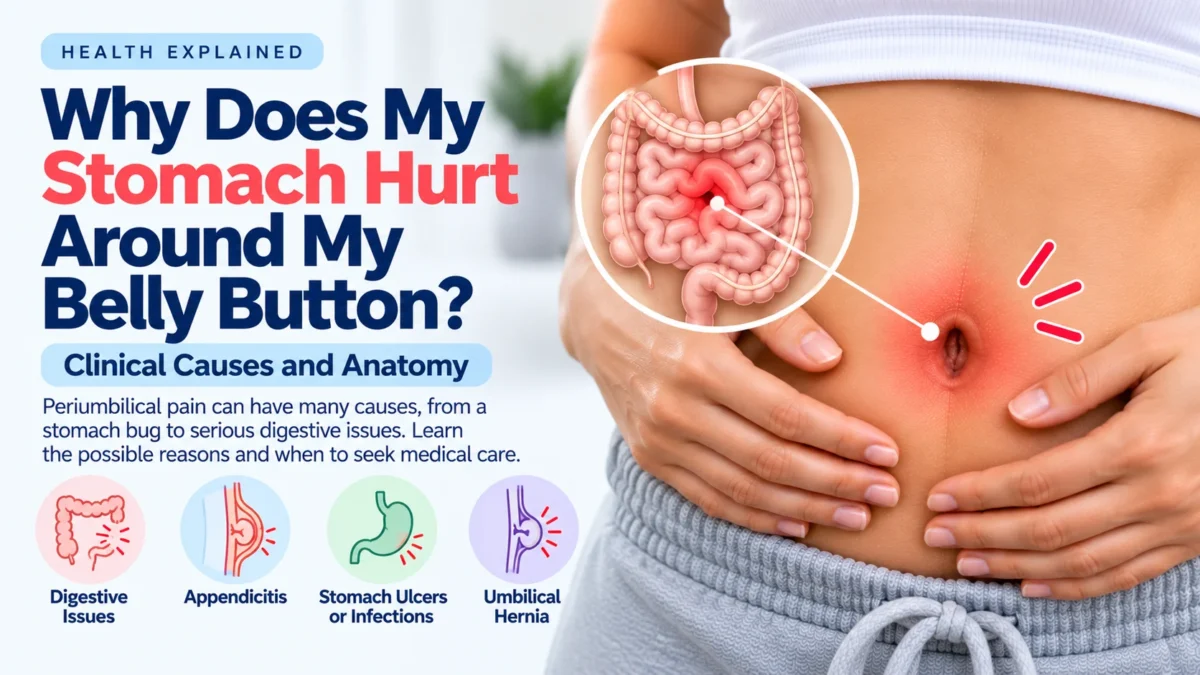
Experiencing stomach pain centered precisely around your belly button is one of the most fascinating and complex symptoms in clinical medicine. This specific sensation, medically known as periumbilical pain, is rarely caused by an issue with the belly button itself. Instead, the umbilicus acts as a neurological distress siren for your entire digestive system. Because your abdominal organs lack the precise, localized nerve endings found on your exterior skin, distress deep within your gut is frequently transmitted through a shared neurological highway that terminates right at the center of your abdomen.
When your stomach hurts around your navel, it could be a temporary reaction to a viral stomach bug, but it is also the classic early warning sign of severe, life-threatening gastrointestinal emergencies. Identifying the exact nature of the pain whether it is a dull, generalized ache, a sharp stabbing sensation, or a cramping wave is critical. By understanding how referred visceral nerve pain works and recognizing the specific symptoms of conditions like acute appendicitis, small bowel obstructions, and umbilical hernias, you can determine when to rest at home and when to rush to the emergency room.
The Neurology of Periumbilical Pain: Visceral vs. Somatic Pathways
To understand why a problem in your intestines causes pain in your belly button, you must understand the difference between visceral and somatic nerve pain, and how human embryology wires our nervous system.
During fetal development, your digestive tract develops in three distinct sections: the foregut, the midgut, and the hindgut. Your midgut contains your small intestine, the first half of your large intestine, and your appendix. The nerve supply for all the organs in the midgut is centralized and funnels back to the spinal cord through a single major neurological intersection known as the T10 dermatome. The T10 spinal nerve happens to supply the exact strip of skin that crosses directly over your belly button.
When an organ in your midgut becomes inflamed or infected, it triggers visceral pain. Visceral pain is dull, poorly localized, and difficult for the brain to pinpoint. Because the distress signals from the appendix and small intestine travel up the T10 nerve pathway, your brain misinterprets the origin of the pain and projects it onto the T10 skin area. Therefore, a dull, aching pain around the belly button almost always indicates a developing problem somewhere within your midgut organs, not the skin of the navel itself.
Early Acute Appendicitis: The Shifting Pain
The most clinically significant cause of pain around the belly button is early acute appendicitis. The appendix is a small, finger-like pouch attached to the beginning of your large intestine, located in the lower right side of your abdomen.
When the appendix first becomes blocked and inflamed, it triggers generalized visceral pain along the T10 nerve pathway. This is why the very first symptom of appendicitis is almost always a dull, continuous, and highly annoying ache centered squarely around the belly button. Over the next six to twelve hours, as the appendix swells massively with pus and inflammation, it begins to physically rub against the interior lining of the abdominal wall, known as the peritoneum.
The peritoneum has somatic nerves, which are highly precise. Once the swollen appendix touches the peritoneum, the pain suddenly shifts. It moves away from the belly button and migrates sharply down to the right lower quadrant of your abdomen. If your belly button pain suddenly travels to your lower right side, becomes sharp, and is accompanied by a fever and extreme nausea, you are experiencing a textbook case of acute appendicitis and require immediate emergency surgery before the organ ruptures.
Small Bowel Obstruction
Because your small intestine is densely coiled directly behind your belly button, any severe blockage within this organ will instantly trigger intense periumbilical pain. A small bowel obstruction occurs when the intestine is physically blocked by dense internal scar tissue from a previous surgery, a twisting of the bowel, or a severe inflammatory disease.
The pain associated with a bowel obstruction is distinct from the continuous ache of appendicitis. It typically presents as severe, colicky cramping that comes in intense waves. As your digestive system violently contracts to try and push food and fluids past the physical blockage, you will experience a massive spike in cramping pain right behind the navel, followed by a brief period of relief. A complete bowel obstruction is a surgical emergency and is almost always accompanied by severe abdominal bloating, a complete inability to pass gas, and projectile vomiting that may smell like feces.
Umbilical Hernias and Fascial Defects
If the pain around your belly button is sharp, highly localized, and physically worsens when you cough, sneeze, or lift a heavy object, you are likely dealing with an umbilical hernia.
An umbilical hernia occurs when the dense connective tissue behind your belly button, known as the abdominal fascia, develops a small tear or structural weakness. When you create intra-abdominal pressure by lifting or straining, a small portion of your underlying fatty tissue or even a loop of your small intestine pushes through this tear, creating a visible, tender bulge directly inside or immediately next to the navel.
If the hernia can be gently pushed back in, it is not an immediate emergency. However, if the protruding intestine gets trapped tightly within the fascial tear, the blood supply is cut off. This is known as a strangulated hernia. A strangulated hernia causes sudden, agonizing, excruciating pain right at the belly button, accompanied by a hard, discolored bulge. This requires immediate emergency surgery to prevent the trapped intestinal tissue from dying.
Gastroenteritis and Stomach Ulcers
Not all periumbilical pain requires surgery. Highly common inflammatory conditions can also trigger extreme discomfort in the center of the abdomen.
Viral or bacterial gastroenteritis, commonly referred to as the stomach flu, causes diffuse inflammation throughout the entire mucosal lining of your stomach and intestines. This widespread inflammation triggers generalized visceral pain that frequently centers around the belly button. Gastroenteritis pain is usually crampy and is heavily accompanied by profuse watery diarrhea, generalized body aches, and vomiting.
Alternatively, peptic ulcer disease can cause pain that radiates down toward the navel. If you have a bleeding ulcer in the first part of your small intestine, known as the duodenum, the highly acidic stomach fluids will continuously burn the raw, damaged tissue. This causes a deep, gnawing, burning pain just above or directly behind the belly button that often worsens intensely a few hours after eating a meal or in the middle of the night when the stomach is empty.
Acute Mesenteric Ischemia: The Silent Emergency
In older adults, particularly those with a history of cardiovascular disease, smoking, or atrial fibrillation, sudden pain around the belly button can indicate a terrifying and highly lethal condition known as acute mesenteric ischemia.
This condition occurs when a blood clot breaks loose and becomes lodged in one of the primary mesenteric arteries that supply oxygen-rich blood to your small intestines. When the intestine is suddenly starved of oxygen, it begins to die rapidly. The hallmark clinical sign of mesenteric ischemia is severe, agonizing periumbilical pain that feels completely out of proportion to a physical exam. If a doctor presses gently on the belly button, the patient will scream in agony, yet the stomach may feel soft rather than rigid. This condition requires immediate, life-saving vascular surgery to remove the clot and restore blood flow before the entire midgut undergoes necrosis.
When to Go to the Emergency Room
Because the belly button is the central alarm system for the entire midgut, you must never ignore severe periumbilical pain. While mild cramping from a stomach bug will pass, there are critical red flag symptoms that demand immediate medical evaluation.
You must rush to the emergency room if your belly button pain is accompanied by a high fever and uncontrollable shivering. Seek immediate care if the pain starts at the navel and migrates to the lower right side of your stomach. If your abdomen becomes distended, swollen, and feels hard and rigid to the touch, you may be experiencing internal bleeding or a ruptured organ. Finally, if you experience rebound tenderness, which is a sharp, blinding pain that occurs not when a doctor presses down on your stomach, but precisely at the moment they suddenly let go, you must be evaluated for severe internal peritonitis immediately.
Frequently Asked Questions
The area around your belly button hurts because the nerves supplying your small intestine and appendix converge at the T10 spinal nerve root, which maps directly to the skin of your navel. Distress deep in your midgut is felt as referred visceral pain right at the belly button.
Yes, a dull, aching pain that begins precisely at the belly button is the classic first sign of acute appendicitis. Within six to twelve hours, as the inflammation worsens and touches the abdominal wall, this pain typically migrates sharply to the lower right quadrant of the abdomen.
Yes, a peptic ulcer located in the duodenum, which is the very beginning of the small intestine, can cause a deep, burning, and gnawing pain that radiates directly behind or slightly above the belly button. This pain often flares up several hours after a meal.
What does the pain of a small bowel obstruction feel like?
The pain of a small bowel obstruction typically presents as intense, colicky cramping that comes in severe waves, centered around the belly button. As the intestines struggle to push fluid past the physical blockage, the cramps peak sharply and are almost always accompanied by severe bloating and vomiting.
If your pain is highly localized to the belly button and physically worsens when you cough, sneeze, laugh, or lift something heavy, you likely have an umbilical hernia. You will often feel or see a small, tender bulge protruding from the navel when you strain your abdominal muscles.
You should go to the ER immediately if your belly button pain is suddenly excruciating, accompanied by a high fever, uncontrollable vomiting, an inability to pass gas, or if your abdominal muscles feel rock hard and rigid to the touch, as these indicate a life-threatening surgical emergency.
Yes, trapped intestinal gas can cause surprisingly sharp, intense, and stabbing pains anywhere along the digestive tract, including directly behind the belly button. However, gas pain is usually temporary, moves around the abdomen, and resolves immediately after passing flatus or having a bowel movement.
Mesenteric ischemia occurs when a blood clot blocks the arteries supplying oxygen to your intestines. As the intestinal tissue is starved of blood, it triggers severe, agonizing pain around the navel that feels entirely out of proportion to a standard physical examination, requiring immediate emergency vascular surgery.
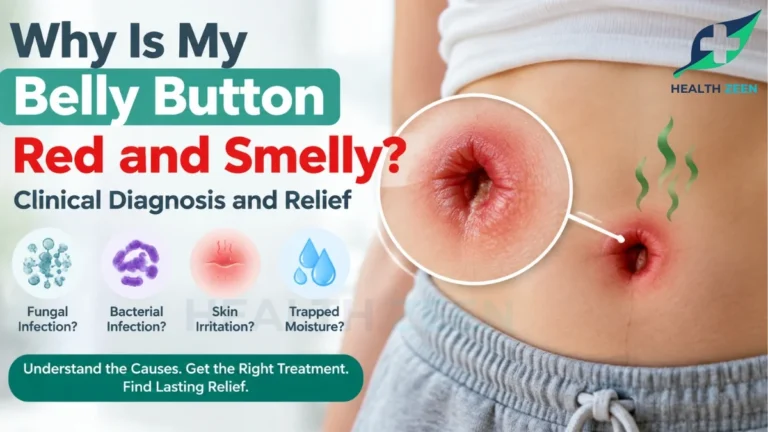
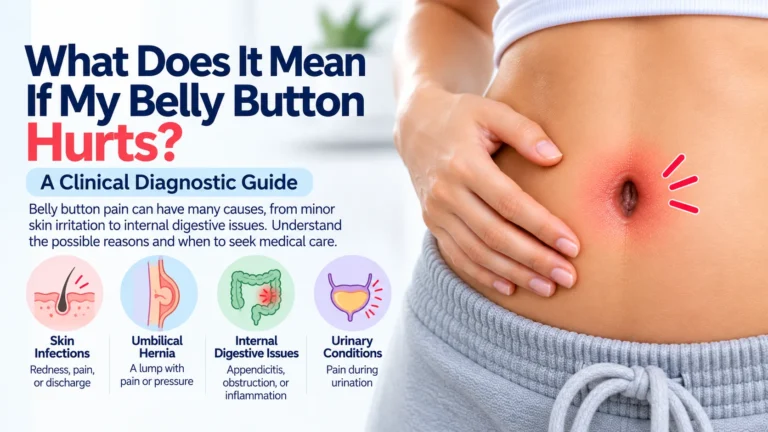
If your belly button hurts exclusively when you press directly on it, you may be feeling a localized skin infection, an inflamed cyst, or an underlying umbilical hernia. If the pain is deep and rebounds sharply when you release the pressure, it is a sign of severe internal peritoneal inflammation.
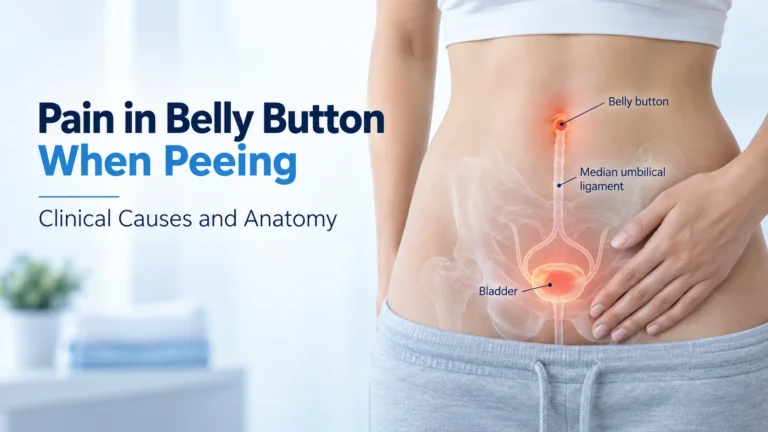
Yes, a severe lower urinary tract infection can cause referred pain near the belly button. When the bladder becomes highly inflamed, the violent muscle spasms that occur during urination can pull on the median umbilical ligament, sending sharp, stinging pain straight up into the navel.
Conclusion
Pain around the belly button is a complex neurological phenomenon that serves as a critical diagnostic window into the health of your midgut. Because human embryology wired the nerve supply of the small intestine and appendix directly to the T10 dermatome, any inflammation, obstruction, or loss of blood flow deep within your digestive tract will trigger the central alarm system of your umbilicus. While minor cramping from food poisoning or trapped gas will typically resolve on its own, the sudden onset of severe periumbilical pain must always be treated with high clinical suspicion. Recognizing the classic shifting pain pattern of acute appendicitis, the agonizing waves of a bowel obstruction, and the physical bulge of a strangulated hernia can literally save your life. If your navel pain is severe, accompanied by a fever, or makes your abdominal wall feel rigid, bypass the home remedies and seek emergency medical evaluation immediately to protect your internal organs from irreversible damage.
Disclaimer
This blog is for informational & educational purposes only, and does not intend to substitute any professional medical advice or consultation. For any health related concerns, please consult with your physician, or call 911.