
Why Does My Belly Button Hurt While Pregnant? Causes and Relief
Your belly button hurts while pregnant primarily due to the massive biomechanical expansion of your uterus, severe stretching of the anterior abdominal wall, and extreme tension on your round ligaments. As the pregnancy progresses into the second and third trimesters, increased intra-abdominal pressure frequently triggers pregnancy-induced umbilical hernias or diastasis recti, causing sharp, localized pain directly at the navel.
Experiencing sharp, pulling, or aching pain around the umbilicus is one of the most common physical complaints during gestation. Because the belly button represents the absolute thinnest section of the human abdominal fascia, it is highly susceptible to structural strain as the fetus grows. Understanding why your navel hurts requires mapping the exact trimester of your pregnancy, as the underlying clinical causes shift dynamically from early internal ligament tension to late-stage severe dermal stretching and muscular separation.
During the early stages of pregnancy, the localized pain you feel near your belly button is rarely caused by direct pressure on the navel itself, as the uterus is still relatively small. Instead, the discomfort originates from the rapid shifting of your internal pelvic anatomy.
Round Ligament Tension
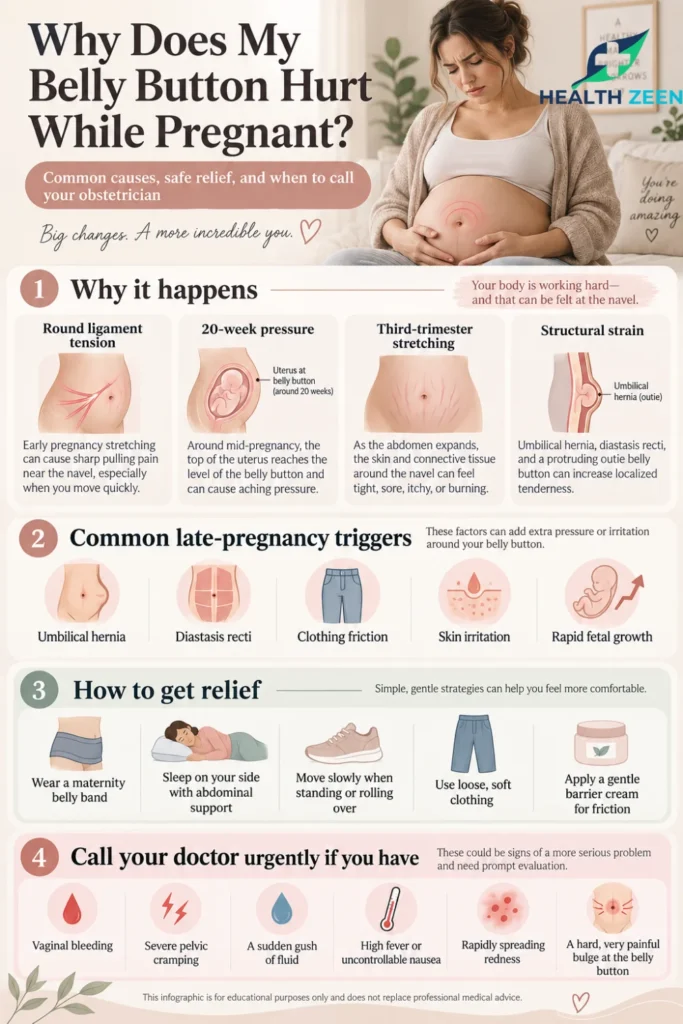
Round ligament pain is the primary driver of umbilical discomfort during the late first and early second trimesters. The round ligaments are thick fibrous cords that suspend the uterus within the lower pelvis. As the uterus rapidly enlarges, these ligaments stretch to their maximum capacity. Any sudden movement, such as coughing, rolling over in bed, or standing up quickly, forcefully yanks on these tight cords. This mechanical snapping sends a sharp, shooting pain radiating from the deep pelvic region diagonally upward, frequently terminating directly near the belly button.
The 20-Week Anatomical Landmark
The anatomical relationship between your growing uterus and your belly button drastically changes halfway through your pregnancy. At exactly twenty weeks of gestation, the fundus (the top of the expanding uterus) reaches the exact level of your umbilicus. From this specific week forward, the heavy, muscular uterus physically presses against the back of your belly button from the inside. This constant, direct internal pressure stimulates the highly sensitive T10 spinal nerve pathway running behind the navel, frequently causing a deep, localized aching sensation.
As you transition into the third trimester, the fetus undergoes its most rapid growth phase. The pain at the belly button shifts from internal ligament tension to severe structural and dermatological strain across the anterior abdominal wall.
Extreme Dermal and Fascial Stretching
By the third trimester, the skin and the underlying linea alba (the central connective tissue of the abdomen) are stretched to their absolute biological limits. Because the belly button is a permanent central scar lacking protective muscle coverage, it absorbs the brunt of this extreme tension. The severe stretching pulls the skin of the umbilicus incredibly tight, causing localized dermal irritation, intense itching, and a persistent sore, burning sensation.
Pregnancy-Induced Umbilical Hernias
The massive increase in intra-abdominal pressure during the third trimester frequently forces the central abdominal fascia to fail. When the connective tissue directly behind the navel separates slightly, small sections of intestinal fat can push through the opening, creating a pregnancy-induced umbilical hernia. This structural defect transforms a normal innie belly button into a protruding outie. When the uterus rubs against this herniated tissue, or when the pregnant woman coughs or bears down, it triggers sharp, stabbing pain localized entirely at the central protrusion.
Diastasis Recti
In some pregnancies, the extreme outward pressure causes the left and right rectus abdominis muscles to separate completely down the midline of the stomach, a condition known as diastasis recti. Because the belly button sits exactly on this midline, the muscular separation eliminates all localized structural support. This leaves the navel feeling exceptionally vulnerable, tender, and painful when you attempt to sit up or engage your core muscles.
External Friction and Dermatological Irritation
Beyond structural expansion, simple external friction becomes a primary source of navel pain late in pregnancy. As the extreme internal pressure forces a previously flat belly button to protrude outward, the newly exposed, highly sensitive internal skin of the navel constantly rubs against your maternity clothing.
This relentless daily friction physically degrades the delicate epidermal barrier of the umbilicus, causing severe contact dermatitis. The skin becomes raw, red, and incredibly tender to the touch, making even the sensation of a soft cotton shirt resting against the abdomen feel highly abrasive and painful.
While you cannot stop the natural biological expansion of your abdomen, you can implement several clinical strategies to mitigate the structural strain and alleviate the localized umbilical pain.
Wearing a specialized maternity support belt, often called a belly band, provides immediate relief. These rigid, elastic garments lift the heavy lower abdomen and physically support the uterus, drastically reducing the severe stretching tension placed on the central belly button and the round ligaments. Furthermore, side-sleeping with a firm maternity pillow wedged directly under your abdomen prevents gravity from violently pulling the heavy uterus downward, minimizing the painful internal stretching of the umbilical fascia while you rest. For dermatological friction, applying a thick layer of hypoallergenic cocoa butter or a clinical barrier cream protects the protruding navel from abrasive clothing.
When Should You Consult an Obstetrician?
While mild to moderate belly button pain is a normal biomechanical symptom of a healthy pregnancy, specific clinical red flags require immediate evaluation by your obstetrician to rule out severe obstetric complications.
You must seek immediate emergency medical care if the pain at your belly button is accompanied by any vaginal bleeding, severe lower pelvic cramping, or a sudden gush of clear amniotic fluid. Additionally, if you develop a severe high fever, uncontrollable nausea, localized redness spreading rapidly across your abdomen, or if an umbilical hernia becomes rock-hard and agonizing to touch, you must proceed to a hospital immediately. These symptoms indicate a strangulated hernia, premature labor, or a severe internal infection requiring urgent medical intervention.
Your belly button hurts while pregnant because the rapidly growing uterus severely stretches your abdominal skin, puts extreme tension on your internal round ligaments, and physically presses against the sensitive nerves resting directly behind the navel.
Occasional sharp, fleeting pain near the belly button is normal and typically caused by a sudden stretching of the round ligaments when you change positions quickly. However, continuous, unrelenting sharp pain requires immediate clinical evaluation.
Belly button pain usually becomes most noticeable around the twentieth week of gestation. This is the exact anatomical point when the top of the expanding uterus reaches the level of the umbilicus and begins pressing against it directly.
Yes, a protruding outie belly button frequently causes superficial pain during pregnancy because the highly sensitive inner skin of the navel is suddenly exposed to constant, severe friction from your clothing.
You likely have a pregnancy-induced umbilical hernia if your belly button has popped out into a distinct, soft bulge that feels highly tender when pressed, and the sharp pain intensifies significantly when you cough, laugh, or try to lift an object.
No, belly button pain does not mean your baby is abnormally large. It simply means your abdominal fascia and connective tissues are experiencing their maximum natural biological stretching limit to safely accommodate the growing fetus.
You can relieve belly button pain by wearing a supportive maternity belly band to lift the weight of the uterus off your central fascia, sleeping on your side with a wedge pillow, and applying barrier creams to prevent clothing friction.
Your belly button feels like it is tearing because it is the thinnest section of the abdominal wall. The extreme outward pressure of the third trimester physically pulls the dense scar tissue of the navel apart, causing a severe burning or tearing sensation.
Yes, diastasis recti causes belly button pain. When the central abdominal muscles separate down the middle of your stomach, the belly button loses all of its muscular support, leaving the central connective tissue highly vulnerable and tender to any core movement.
Yes, the structural belly button pain will subside almost immediately after delivery as the uterus shrinks and the extreme intra-abdominal pressure is removed. However, if you developed an umbilical hernia, the localized tenderness may persist until surgically repaired.
Conclusion
Belly button pain during pregnancy is a direct consequence of the extraordinary biomechanical forces required to accommodate a developing fetus. From the sharp round ligament tension of the early trimesters to the massive structural expansion pushing the uterus against the navel at twenty weeks, your central abdomen absorbs immense daily strain. As you enter the third trimester, the extreme outward pressure frequently triggers severe dermal stretching, uncomfortable friction, and temporary umbilical hernias. Utilizing maternity support bands and practicing safe side-sleeping techniques can significantly reduce this fascial tension. However, if your umbilical discomfort is ever accompanied by severe pelvic cramping, vaginal bleeding, or a hardened abdominal bulge, you must seek immediate obstetric evaluation to ensure the safety of both you and your baby.
Disclaimer
This blog is for informational & educational purposes only, and does not intend to substitute any professional medical advice or consultation. For any health related concerns, please consult with your physician, or call 911.