What Is Your Belly Button Connected To? Internal Adult Anatomy
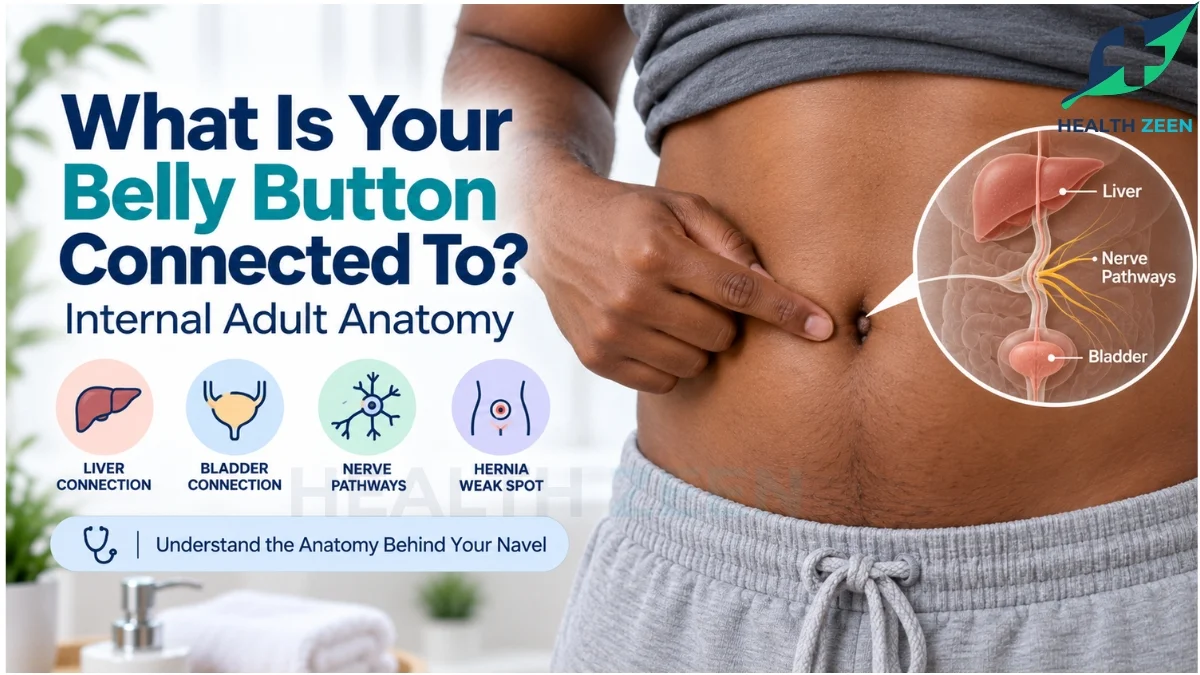
In adult human anatomy, your belly button is not connected to your stomach or intestines. It is a permanent structural scar anchored directly to your liver and bladder through thick fibrous cords called the umbilical ligaments, and it is heavily innervated by the highly sensitive parietal peritoneum nerve network.
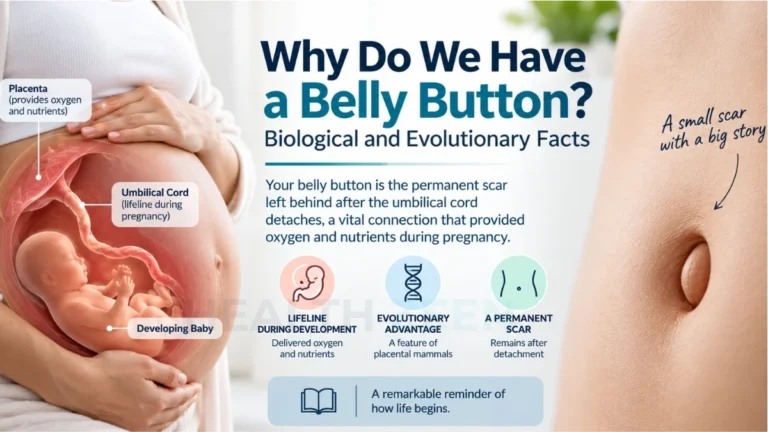
Many adults assume their belly button is simply a cosmetic dimple on the surface of their stomach, while others mistakenly believe it connects directly to their digestive tract. Clinically known as the umbilicus, the belly button is essentially a permanent, centralized scar (cicatrix) on your abdomen. While it served as your primary life-support connection to the placenta before birth, adult internal anatomy is vastly different. Understanding exactly what structural ligaments and spinal nerves remain tethered to the back of your navel explains why the area is so physically sensitive and why it remains a common site for complex adult hernias.
In a fully developed adult, the active blood vessels that once flowed through the navel have completely closed, collapsed, and hardened. They transformed into thick bands of inflexible fibrous connective tissue called ligaments. These tough ligaments remain permanently tethered to the back of the belly button, connecting it physically to your liver and your bladder.
The Liver and the Round Ligament
The inside of your belly button is physically anchored to your liver through a thick band of tissue called the round ligament of the liver, clinically known as the ligamentum teres hepatis. Before birth, this structure was a massive vein carrying oxygen-rich blood directly to the developing fetal heart. After the first few weeks of life, this vein completely collapses and hardens into a solid fibrous cord. This rigid cord runs upward from the inside of your navel, directly dividing the left part of the liver, and anchors into the falciform ligament. Because of this permanent physical connection, severe stretching or abdominal trauma can cause deep pulling sensations radiating from the navel upward toward the rib cage.
The Bladder and the Median Umbilical Ligament
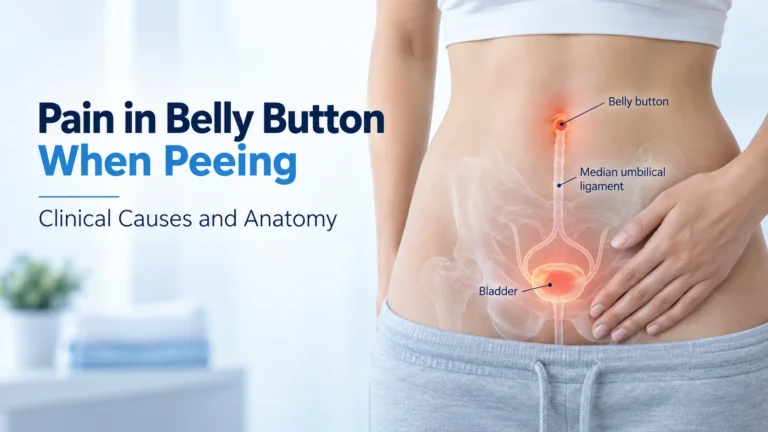
The lower half of your belly button is tethered directly to the top dome of your urinary bladder. This connection is facilitated by the median umbilical ligament. This fibrous cord is the evolutionary remnant of the urachus, a tube that drained liquid waste from the bladder during early developmental stages. In a healthy adult, this tube has completely solidified into a permanent suspensory ligament. It runs straight down the internal midline of the abdominal wall, physically suspending the bladder from the back of the belly button.
The Medial Umbilical Ligaments
In addition to the central connection to the bladder, two lateral cords known as the medial umbilical ligaments run diagonally downward from the belly button toward the deep pelvis. These cords are the solidified remnants of the umbilical arteries. While they no longer carry any circulating blood, they form distinct structural ridges along the inside of the abdominal wall, anchoring the navel securely to the lower pelvic fascia.
Poking your belly button feels incredibly weird, frequently causing a sharp tingling sensation in your groin, due to its direct connection to the parietal peritoneum and the spinal nervous system.
The parietal peritoneum is a delicate, highly sensitive silk-like membrane that lines the entire inner wall of your abdominal cavity. Directly behind the belly button, the abdominal skin and muscle layers are extremely thin, placing your finger virtually directly against this sensitive peritoneal lining.
According to the National Institutes of Health (NIH), the nerve fibers supplying the skin of the umbilicus and the underlying peritoneum are derived from the tenth thoracic spinal nerve, clinically identified as the T10 dermatome. Because the T10 nerve pathway also shares sensory branches that travel downward into the lower pelvic region, pressing deeply on your belly button stimulates this specific nerve network. Your brain frequently misinterprets this localized navel pressure as a sharp, pulling, or tingling sensation originating deep within your groin or lower urinary tract.
No, your belly button is not connected to your stomach, your small intestine, or your large intestine. This is one of the most widespread anatomical myths among adults.
The human digestive tract is a completely closed, continuous physiological system that runs from the esophagus down to the rectum. The umbilicus sits strictly on the exterior anterior abdominal wall, serving as a protective structural barrier. While the intestines physically rest immediately behind the abdominal wall and the navel, there is no direct tissue connection or structural tube linking the inside of your belly button to any part of your gastrointestinal system.
What Happens When These Connections Fail?
While the fibrous ligaments tethered to the adult navel are generally harmless, structural failures or incomplete closures of these connections occasionally cause severe medical issues in adults requiring surgical intervention.
Adult Urachal Cysts
If the median umbilical ligament connecting the navel to the bladder did not solidify completely, it can leave behind a small, hollow cavity known as a urachal cyst. In adults, this hidden cyst can suddenly fill with fluid and become severely infected. The StatPearls Clinical Database (NCBI) indicates that an infected adult urachal cyst causes intense lower abdominal pain, high fever, and thick, foul-smelling purulent discharge actively leaking out of the belly button, requiring emergency surgical excision.
Susceptibility to Umbilical Hernias
Because the belly button represents the exact intersection where multiple thick ligaments and fascial tissue meet, it remains a permanent structural weak point in the adult linea alba (the central abdominal connective tissue). Heavy weightlifting, chronic coughing, or rapid weight gain can force the underlying intestines to push aggressively through this weakened scar tissue, resulting in a painful adult umbilical hernia that frequently requires laparoscopic mesh repair.
Yes, the belly button is technically a specialized scar, clinically referred to as a cicatrix. It marks the exact anatomical location where the umbilical cord was naturally severed and healed over, permanently closing the abdominal wall.
No, the belly button does not connect to your stomach or any part of your digestive system. It sits on the external abdominal wall, completely separate from the enclosed gastrointestinal tract resting behind it.
You feel pain in your groin when you touch your belly button because the pressure stimulates the parietal peritoneum and the T10 spinal nerve network. This specific nerve pathway shares sensory signals with the lower pelvic region, creating a phenomenon known as referred pain.
Directly behind the belly button is the linea alba (fibrous connective tissue), the sensitive parietal peritoneum membrane, and immediately beneath that, the transverse colon and sections of the small intestine.
No, there are no large, active blood vessels directly behind a healthy adult belly button. The massive veins and arteries that existed before birth have permanently collapsed and solidified into hard, fibrous ligaments.
Yes, the skin and internal fascia of the belly button are heavily innervated by the tenth thoracic spinal nerve (T10 dermatome), which connects directly to the central nervous system and spinal cord.
The belly button is a weak spot for hernias because it is the thinnest part of the abdominal wall and lacks protective muscle coverage. It relies entirely on centralized scar tissue, which can tear under severe intra-abdominal pressure.
No, your belly button cannot come untied. It is a permanently healed, solid structural scar integrated directly into your abdominal fascia. However, the tissue can tear, resulting in a hernia, which people often mistake for the navel coming undone.
Do adults still have an umbilical cord inside them?
No, adults do not have an umbilical cord inside them. The internal segments of those embryonic vessels have completely shrunk, hardened, and transformed into the solid round and median umbilical ligaments.
What is the round ligament of the liver?
The round ligament of the liver is a thick, solid cord of fibrous tissue that anchors the inside of the adult belly button directly to the liver. It is the permanent biological remnant of the primary umbilical vein.
Conclusion
Understanding what your belly button is connected to demystifies many of the strange physical sensations associated with the human navel. In adult anatomy, the umbilicus is far more than a simple surface scar; it remains a centralized structural anchor point. While it no longer connects to active blood supplies, it is permanently tethered to the liver and the urinary bladder via thick fibrous cords known as the round and median umbilical ligaments. Furthermore, its direct structural relationship with the highly sensitive parietal peritoneum and the T10 spinal nerve explains why deep pressure on the navel triggers distinct referred pain in the lower pelvis. Recognizing this complex internal anatomy helps patients differentiate between normal nerve sensitivity and dangerous structural defects like adult umbilical hernias or infected urachal cysts.
Disclaimer
This blog is for informational & educational purposes only, and does not intend to substitute any professional medical advice or consultation. For any health related concerns, please consult with your physician, or call 911.