Why Is My Belly Button Bleeding? Causes, Symptoms, and Treatments
A bleeding belly button is primarily caused by physical trauma from aggressive scratching, severe localized bacterial or fungal infections, ruptured sebaceous cysts, or an umbilical granuloma. You must clean the area gently with sterile saline and seek immediate medical evaluation if the bleeding is accompanied by thick purulent pus, a foul odor, or severe abdominal pain to prevent systemic complications.
Seeing blood emanating from your navel is a highly alarming symptom that immediately requires clinical attention. The umbilicus is a deeply folded, sensitive area of thin skin that acts as a natural collection point for sweat, dead skin cells, and clothing friction. While minor spots of blood frequently result from simple micro-tears caused by aggressive scratching, persistent bleeding points toward a deeper structural or infectious etiology. You must identify the exact underlying cause of the hemorrhage to prevent localized pathogens from entering the bloodstream and to rule out rare conditions like umbilical endometriosis.
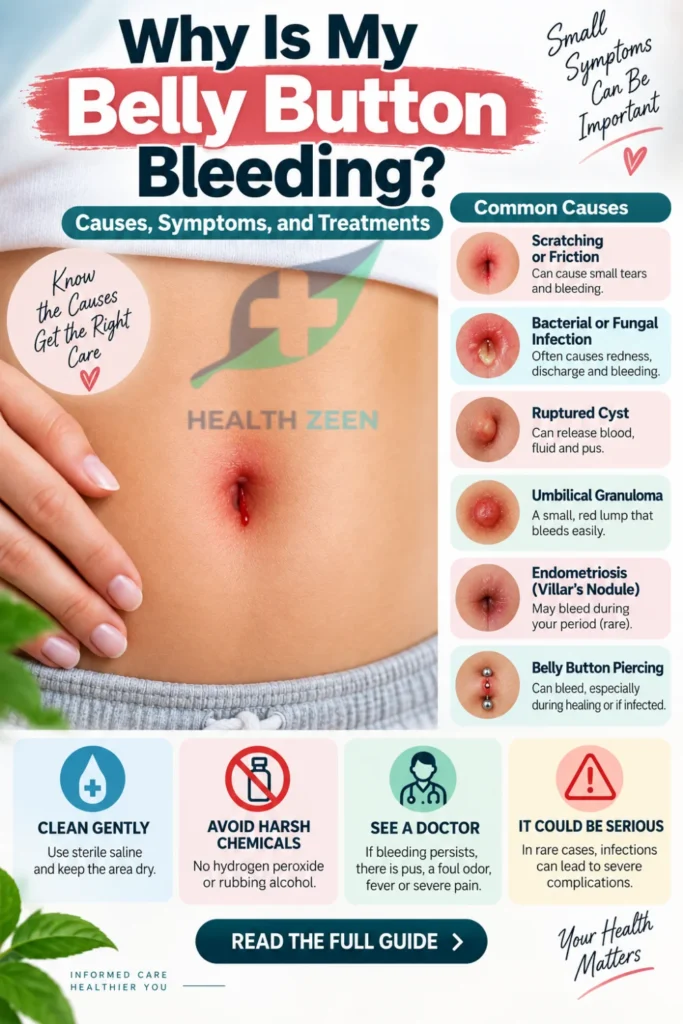
Aggressive friction, acute localized infections, ruptured dermal cysts, and umbilical granulomas primarily cause a belly button to bleed. These distinct medical conditions compromise the delicate epidermal barrier inside the naval cavity, exposing the underlying capillaries to the external environment.
Aggressive Scratching and Friction
The most common cause of a bleeding belly button is physical trauma resulting from aggressive scratching or chronic friction. Patients suffering from dry skin, eczema, or contact dermatitis frequently experience intense localized itching. Scratching the umbilicus with sharp fingernails easily lacerates the thin, sensitive skin tissue. Additionally, tight-fitting clothing, heavy belt buckles, and high-waisted jeans constantly rub against the navel, causing microscopic abrasions that eventually bleed.
Bacterial and Fungal Infections
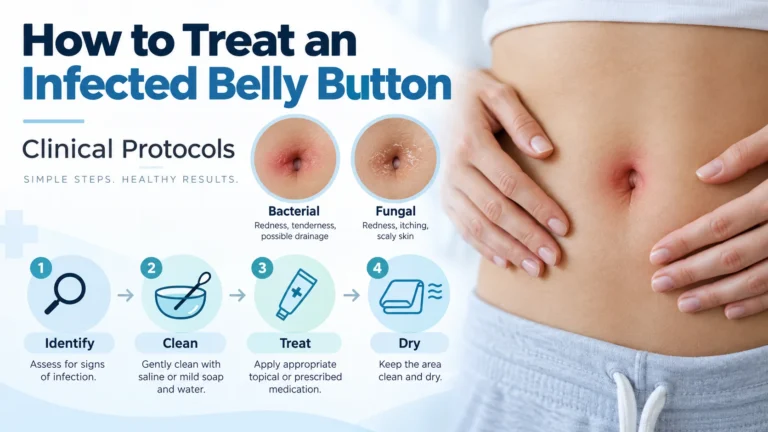
When trapped moisture and dead skin cells accumulate inside the dark folds of an “innie” belly button, they create a primary breeding ground for pathogens. Severe bacterial infections (omphalitis) or fungal yeast overgrowths (candidiasis) cause intense inflammation, swelling, and severe tissue irritation. According to the Centers for Disease Control and Prevention (CDC), chronic Candida infections severely degrade the skin’s structural integrity, causing the inflamed epidermal layers to crack, weep clear fluid, and actively bleed upon minimal contact.
Ruptured Cysts (Sebaceous and Epidermoid)
Small epidermoid and sebaceous cysts frequently form beneath the abdominal skin when keratin or sebum actively blocks a hair follicle inside the navel. Over time, these cysts fill with thick, yellow, foul-smelling keratin. If subjected to intense physical pressure, the cyst ruptures. A ruptured umbilical cyst releases a mixture of blood, clear fluid, and thick necrotic pus directly into the belly button cavity.
Umbilical Granulomas
An umbilical granuloma is a small, red, bead-like lump of moist scar tissue that forms inside the belly button. While highly common in newborn infants following the detachment of the umbilical cord, granulomas can occasionally develop in adults after a severe navel infection or abdominal surgery. According to the StatPearls Clinical Database (NCBI), umbilical granulomas are highly vascularized (filled with tiny blood vessels), making them bleed profusely and continuously leak a clear, yellowish fluid when irritated.
Primary Umbilical Endometriosis (Villar’s Nodule)
In rare cases, women may experience belly button bleeding synchronized with their menstrual cycle. This phenomenon occurs due to primary umbilical endometriosis, clinically known as Villar’s nodule. Endometrial tissue (the tissue that normally lines the inside of the uterus) incorrectly implants and grows inside the umbilicus. A study published by the National Institutes of Health (NIH) confirms that this displaced tissue swells and actively bleeds from the belly button during menstruation, accompanied by a distinct, dark-colored nodule and localized pain.
Yes, a belly button piercing frequently causes localized bleeding, especially during the initial healing phase or if the jewelry gets aggressively snagged on clothing. Puncturing the abdominal tissue creates a deep, open trauma wound. Fresh piercings naturally secrete lymph fluid and small amounts of blood as the capillaries seal.
However, if an old, fully healed piercing suddenly starts bleeding, it strongly indicates jewelry rejection, localized contact dermatitis (metal allergy), or a severe surgical site infection. An infected piercing typically presents with throbbing pain, severe redness, and a mixture of fresh blood and thick, green purulent discharge.
The color and consistency of the fluid accompanying the blood provide critical diagnostic clues regarding the exact underlying pathogen or structural defect.
Red or Dark Brown Blood
Bright red blood indicates a fresh, active laceration, typically from a fingernail scratch or a torn piercing. Dark brown, old blood suggests a resolving minor injury or the presence of a bleeding Villar’s nodule associated with an active menstrual cycle.
Yellow or Green Pus with Blood
A mixture of blood and thick yellow or green pus is the definitive clinical hallmark of a severe, active bacterial infection (omphalitis) or a ruptured sebaceous cyst. This combination frequently produces a highly pungent, rotting odor requiring immediate topical or oral antibiotics.
Clear or White Fluid with Blood
Clear, watery lymph fluid mixed with small streaks of blood frequently indicates an irritated umbilical granuloma or a weeping fungal yeast infection. A thick, white, cottage-cheese-like discharge mixed with pinpoint bleeding points directly toward severe candidiasis.
Medical professionals diagnose a bleeding navel through direct visual inspection, physical palpation, and targeted microbial cultures. You must undergo a formal clinical evaluation if the bleeding fails to resolve after three days of basic home care.
- Physical Examination: The physician visually inspects the naval cavity using a dermatoscope to identify microscopic skin tears, umbilical hernias, hidden granulomas, or dark endometrial nodules.
- Swab Culture: If purulent discharge is present alongside the blood, the doctor utilizes a sterile cotton swab to collect a fluid sample. The laboratory analyzes this sample to identify the exact bacterial or fungal strain driving the infection.
- Imaging: For persistent, unexplained bleeding, doctors may order an abdominal ultrasound to rule out deep urachal cysts or internal fistulas connecting the intestines to the umbilicus.
What Are the Medical Treatments?
A physician prescribes specific targeted medical therapies based entirely on the confirmed underlying cause of the umbilical hemorrhage.
- Silver Nitrate Application: Dermatologists frequently apply silver nitrate chemically to cauterize (burn off) and seal a bleeding umbilical granuloma in a single, quick office visit.
- Antimicrobial Medications: Doctors prescribe localized miconazole creams for fungal overgrowths and oral cephalexin to eradicate deep-tissue bacterial infections causing bloody, purulent discharge.
- Surgical Excision: General surgeons perform minor outpatient procedures under local anesthesia to completely extract recurrent sebaceous cysts or remove endometrial tissue (Villar’s nodule) from the navel.
You must prioritize extreme care and sterility when cleaning a bleeding belly button to prevent secondary bacterial infiltration.
- Use Sterile Saline: Never use tap water on an actively bleeding navel. Spray a sterile, isotonic wound-wash saline solution directly into the cavity to flush out dried blood and debris safely.
- Apply Gentle Pressure: If the bleeding is active, press a sterile, non-woven gauze pad gently against the navel for three to five minutes to encourage natural capillary coagulation.
- Avoid Harsh Chemicals: Keep rubbing alcohol, hydrogen peroxide, and iodine entirely away from the bleeding site. These aggressive chemicals violently destroy regenerating cells and severely delay natural wound closure.
- Keep It Dry: Once clean, pat the area completely dry with a clean paper towel. Apply a dry, sterile bandage over the navel to protect it from clothing friction while it heals.
When Should You Consult a Doctor?
You must consult a healthcare provider immediately if the bleeding is heavy, continuous, or completely fails to stop after applying five minutes of direct pressure.
Seek immediate emergency medical care if the bleeding is accompanied by a sudden high fever, uncontrollable vomiting, severe abdominal rigidity, or red streaks spreading outward from the umbilicus across your stomach. These are critical clinical markers indicating that a localized umbilical infection has breached the abdominal wall and is actively entering the bloodstream, risking life-threatening sepsis.
No, it is never physiologically normal for a belly button to bleed. Any presence of blood indicates a break in the delicate epidermal tissue caused by physical trauma, an active bacterial or fungal infection, a ruptured cyst, or an underlying structural mass.
Your belly button is bleeding and smelling due to a severe localized bacterial infection or a ruptured sebaceous cyst. The foul odor is directly generated by the metabolic byproducts of anaerobic bacteria breaking down trapped organic debris and dead skin cells.
Yes, aggressively picking your belly button with sharp fingernails or tweezers is the most common cause of localized umbilical bleeding. This action physically lacerates the very thin, sensitive tissue inside the navel cavity.
You stop a belly button from bleeding by immediately applying gentle, continuous pressure using a sterile gauze pad for three to five minutes. Once the bleeding stops, flush the area gently with sterile saline and apply a clean, dry bandage.
Your belly button is bleeding during your period due to a rare condition called primary umbilical endometriosis (Villar's nodule). Displaced endometrial tissue growing inside the navel actively swells and bleeds in synchronization with your monthly menstrual cycle.
Yes, a severe yeast infection (candidiasis) can cause your belly button to bleed. The aggressive fungal overgrowth severely inflames and degrades the local skin barrier, causing it to crack, weep fluid, and bleed upon the slightest physical friction.
You can apply a very thin layer of Neosporin on a minor, superficial scratch inside the belly button to prevent infection. However, you should avoid using thick ointments on deep or heavily bleeding wounds, as they trap moisture and prevent adequate drainage.
A small, red, bleeding lump inside your belly button is most likely an umbilical granuloma. This is a highly vascularized piece of raw scar tissue that forms after an infection or surgery and bleeds very easily when touched.
No, an umbilical hernia typically does not cause surface-level belly button bleeding. While a hernia causes a visible bulge and sharp pain when coughing or lifting heavy objects, it involves internal muscle weakness rather than external epidermal lacerations.
You should go to the ER immediately if the belly button bleeding is heavy and won't stop, or if it is accompanied by a high fever, severe abdominal pain, radiating redness, or thick, foul-smelling green pus.
Conclusion
A bleeding belly button is a critical clinical symptom that demands immediate attention. While a minor micro-tear from aggressive scratching or tight clothing frequently resolves with gentle saline cleaning and a sterile bandage, persistent hemorrhage points toward deeper pathological issues. Severe bacterial colonizations, ruptured sebaceous cysts, umbilical granulomas, and rare conditions like primary umbilical endometriosis require professional clinical evaluation. You must maintain strict hygiene, avoid harsh chemicals like hydrogen peroxide, and seek immediate emergency medical care if the bleeding is accompanied by a high fever or thick, purulent pus to prevent dangerous systemic complications.
Disclaimer
This blog is for informational & educational purposes only, and does not intend to substitute any professional medical advice or consultation. For any health related concerns, please consult with your physician, or call 911.