Skip to content
healthzeen logo
  • Home
  • About Us
  • Contact Us
  • Editorial Guidelines
  • HealthZeen Medical Review Board
  • Medical Disclaimer
healthzeen logo
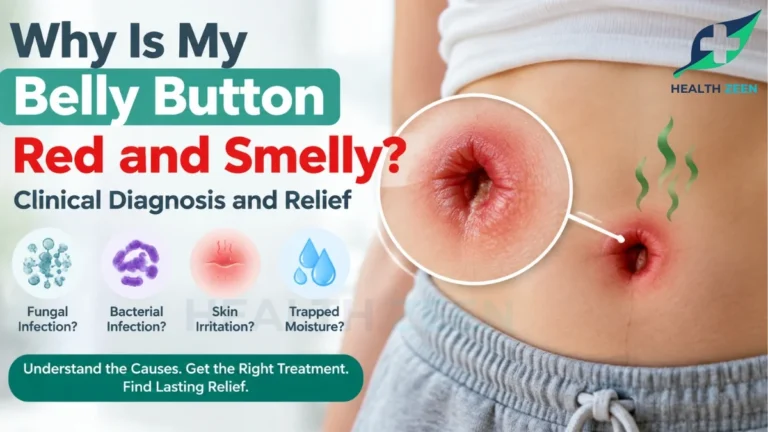
  • HealthZeen guide: Why Is My Belly Button Red and Smelly? Shows an inflamed navel. Lists causes: Fungal Yeast Infection (musty smell), Bacterial Infection (strong odor), Skin Irritation & Friction, and Trapped Moisture. Relief tips include keeping the area clean and dry, wearing breathable clothing, and using the right antifungal or antibiotic treatment. Warns to seek medical care if redness spreads or you develop a fever.
    Gastroenterology

    Why Is My Belly Button Red and Smelly? Clinical Diagnosis and Relief

    ByHealthZeen Team September 11, 2026September 12, 2026

    Discovering that your belly button is both bright red and emitting a foul odor is a highly specific clinical presentation that requires immediate attention. In medical dermatology, the combination of localized umbilical erythema, which is the severe redness, and malodor, which is the foul smell, almost exclusively points to an active, multiplying microbial infection. While…

    Read More Why Is My Belly Button Red and Smelly? Clinical Diagnosis and ReliefContinue

  • HealthZeen guide: How to Treat a Belly Button Infection. Shows a 3-step clinical protocol. Step 1: Clean safely with sterile saline. Step 2: Dry completely to reduce moisture. Step 3: Use targeted treatment like topical antifungals for yeast or topical antibiotics for bacteria. Warns to completely avoid alcohol and hydrogen peroxide. Advises seeing a doctor if redness spreads, pus develops, fever starts, or pain worsens.
    Gastroenterology

    How to Treat a Belly Button Infection: Clinical Protocols

    ByHealthZeen Team September 11, 2026September 10, 2026

    You treat a belly button infection by first using sterile saline to safely wash away the bacterial biofilm, then applying targeted topical medications based on the specific pathogen. A fungal yeast infection requires an over-the-counter antifungal cream like clotrimazole, while a bacterial infection producing foul-smelling pus requires prescription topical mupirocin or oral antibiotics to eradicate….

    Read More How to Treat a Belly Button Infection: Clinical ProtocolsContinue

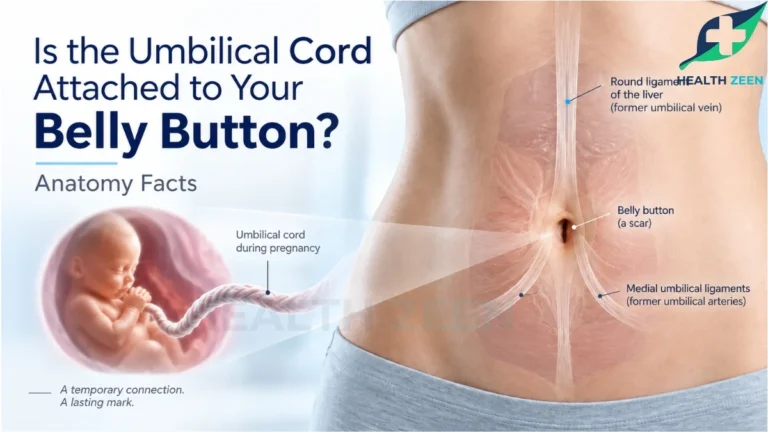
  • HealthZeen guide: Is the Umbilical Cord Attached to Your Belly Button? Visualizes fetal connection to the placenta. Shows how the clamped cord dries and heals into a scar after birth. In adulthood, the external cord is gone, but internal structures remain as fibrous ligaments. Quick facts clarify the navel is a lifelong scar and whether it becomes an innie or outie depends strictly on natural healing, not how it was cut.
    Gastroenterology

    Is the Umbilical Cord Attached to Your Belly Button? Anatomy Facts

    ByHealthZeen Team September 10, 2026September 9, 2026

    The umbilical cord is no longer attached to your belly button, because your belly button is actually the permanent physical scar left behind after the cord was severed at birth. During your entire developmental period in the womb, the umbilical cord was attached directly to the exact center of your abdomen, serving as the critical…

    Read More Is the Umbilical Cord Attached to Your Belly Button? Anatomy FactsContinue

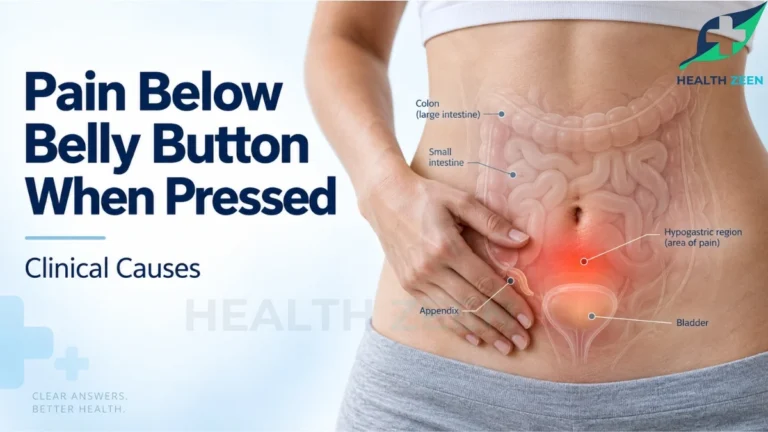
  • HealthZeen guide: Pain Below Belly Button When Pressed. Shows the hypogastric region. Lists common causes: bladder infection, constipation, appendicitis, diverticulitis, and ovarian cyst/PID. Explains how pressing inflamed tissue triggers pain and warns about rebound tenderness. Urgent care signs include a rigid abdomen, high fever, vomiting, and severe pain. Prompt medical evaluation is required for severe tenderness.
    Gastroenterology

    Pain Below Belly Button When Pressed: Clinical Causes

    ByHealthZeen Team September 10, 2026September 9, 2026

    Experiencing pain below your belly button when pressed is a specific clinical symptom indicating inflammation in the hypogastric region of your abdomen. When you apply physical pressure to this area and feel sharp or aching pain, doctors refer to this as localized tenderness. This tenderness strongly suggests that the underlying organs, such as your bladder,…

    Read More Pain Below Belly Button When Pressed: Clinical CausesContinue

  • An educational health graphic by HealthZeen titled Will a Belly Button Infection Go Away on Its Own, featuring a person's abdomen. Clinical callouts point to the navel illustrating how trapped moisture, bacteria, and yeast or fungus contribute to infections, along with a medical note stating that bacterial infections rarely resolve on their own.
    Gastroenterology

    Will a Belly Button Infection Go Away on Its Own? Healing Facts

    ByHealthZeen Team September 9, 2026September 8, 2026

    No, a true bacterial belly button infection will rarely go away on its own. Because the deep anatomical folds of the adult umbilicus constantly trap heat, moisture, and dead skin cells, the environment actively prevents spontaneous clinical resolution. While a very mild superficial fungal yeast overgrowth might resolve if you drastically alter the localized environment…

    Read More Will a Belly Button Infection Go Away on Its Own? Healing FactsContinue

  • An educational medical guide titled Can Your Belly Button Get Infected? Clinical Mechanisms, featuring a close-up of a person's abdomen. The visual uses graphic callouts pointing directly to the navel to illustrate the three primary clinical causes of an infection: trapped moisture, bacterial overgrowth, and fungal growth.
    Gastroenterology

    Can Your Belly Button Get Infected? Clinical Mechanisms

    ByHealthZeen Team September 9, 2026September 8, 2026

    Yes, your belly button can easily get infected. In fact, due to its unique anatomical structure, the adult umbilicus is one of the most highly susceptible areas on the human body for developing localized bacterial and fungal infections. The deep, enclosed cavity naturally traps moisture, dead skin cells, and daily sweat, creating an ideal microenvironment…

    Read More Can Your Belly Button Get Infected? Clinical MechanismsContinue

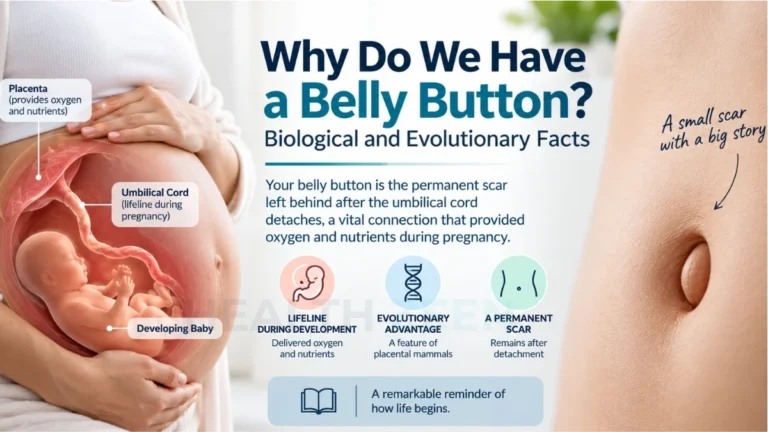
  • An educational medical guide titled Why Do We Have a Belly Button? Biological and Evolutionary Facts, featuring a pregnant woman cradling her abdomen alongside a detailed internal cross-section of a developing fetus in the womb. The anatomical diagram highlights the umbilical cord acting as a vital lifeline connected to the placenta for oxygen and nutrients, paired with a close-up of an adult navel demonstrating the permanent physical scar left behind after the cord naturally detaches at birth
    Gastroenterology

    Why Do We Have a Belly Button? Biological and Evolutionary Facts

    ByHealthZeen Team September 8, 2026September 7, 2026

    Humans have a belly button because we belong to a biological class known as placental mammals, requiring a direct vascular connection to a maternal blood supply for oxygen and nutrient transfer during gestation. The belly button, clinically known as the umbilicus, is simply the permanent fibrous scar left behind on the abdominal wall once this…

    Read More Why Do We Have a Belly Button? Biological and Evolutionary FactsContinue

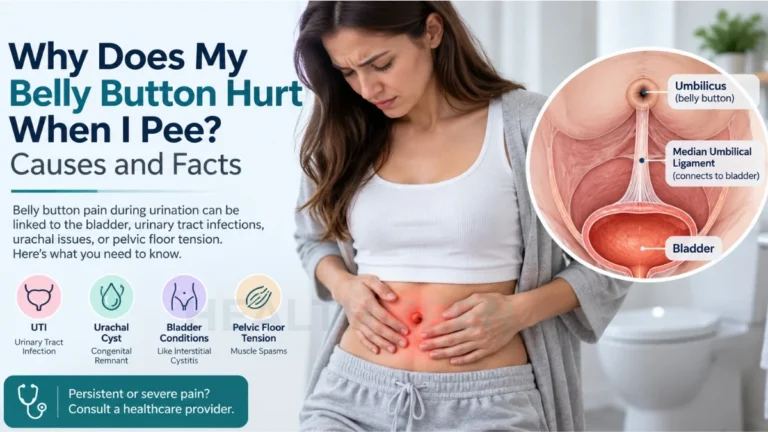
  • An educational medical guide titled Why Does My Belly Button Hurt When I Pee? Causes and Facts, featuring a woman in a bathroom experiencing visible discomfort while clutching her inflamed lower abdomen. A magnified anatomical cross-section illustrates the direct internal connection between the umbilicus and the bladder via the median umbilical ligament, highlighting primary medical causes for this radiating pain such as urinary tract infections (UTIs), urachal cysts, bladder conditions like interstitial cystitis, and pelvic floor muscle spasms
    Gastroenterology

    Why Does My Belly Button Hurt When I Pee? Causes and Facts

    ByHealthZeen Team September 8, 2026September 7, 2026

    Belly button pain when you pee is primarily caused by an infected adult urachal cyst, interstitial cystitis, or referred nerve pain from a severe urinary tract infection. You must seek immediate medical evaluation if the localized navel pain is accompanied by cloudy urine, visible blood, or a sudden high fever, as these indicate a severe…

    Read More Why Does My Belly Button Hurt When I Pee? Causes and FactsContinue

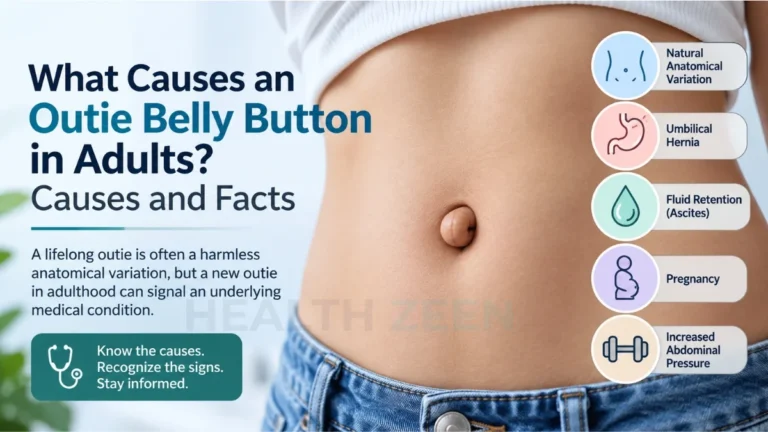
  • An educational medical guide titled What Causes an Outie Belly Button in Adults? Causes and Facts, featuring a close-up of a person's abdomen displaying a distinct protruding navel. The visual explains the clinical difference between a lifelong harmless anatomical variation and a newly developed outie, highlighting primary underlying causes such as umbilical hernias, fluid retention (ascites), pregnancy, and increased abdominal pressure.
    Gastroenterology

    What Causes an Outie Belly Button in Adults? Causes and Facts

    ByHealthZeen Team September 7, 2026September 7, 2026

    A lifelong outie belly button is a harmless anatomical variation caused by dense fibrous scar tissue formation. However, if a flat navel suddenly protrudes in adulthood, it is a critical clinical symptom of increased intra-abdominal pressure primarily driven by an adult umbilical hernia, severe fluid retention like ascites, or extreme fascial stretching during pregnancy. While…

    Read More What Causes an Outie Belly Button in Adults? Causes and FactsContinue

Page navigation

Previous PagePrevious 1 2 3 4 5 6 Next PageNext

Useful Links

  • About Us
  • Contact Us
  • Medical Disclaimer
  • Correction & Update Policy
  • Editorial Guidelines
  • Funding & Advertising Policy
  • HealthZeen Medical Review Board
  • Privacy Policy & Terms of Use

Medical Content Reviewers

  • Dr. Christina Elizabeth Killoran, MD
  • Dr. Christopher J. Goulet, MD
  • Dr. Elizabeth Marie Tiffany, MD
  • Dr. Fawad A. Khan, MD
  • Dr. Glenn Michael Johnson, MD
  • Dr. Hazem Nassif, MD

Medical Content Reviewers

  • Dr. Heidi Bendorf Chasan, MD
  • Dr. Hilamber Subba, MD
  • Dr. Muhammed A. Niaz, MD
  • Dr. Nathan Harvey Fischman, MD
  • Dr. Nicholas Joseph Yokan, MD
  • Dr. Stephan Paul Babirak, MD

© 2026 healthzeen.com

  • Home
  • About Us
  • Contact Us
  • Editorial Guidelines
  • HealthZeen Medical Review Board
  • Medical Disclaimer