
Why Does My Belly Button Keep Getting Infected? Clinical Causes and Prevention
Experiencing a single belly button infection is a common annoyance, but when your umbilicus keeps getting infected repeatedly despite your best efforts to clean it, you are dealing with a chronic dermatological condition. Chronic recurrent umbilical infections, medically known as recurrent omphalitis or chronic cutaneous candidiasis, indicate that the underlying environment of your navel is structurally or systemically compromised.
When an infection returns week after week or month after month, simply applying more antibacterial or antifungal cream is no longer a viable long-term solution. To break this frustrating cycle, you must understand the microscopic and anatomical factors that are allowing pathogens to survive in a dormant state inside your naval cavity. From the formation of impenetrable microbial biofilms to underlying systemic health conditions like uncontrolled blood glucose, discovering why your belly button keeps getting infected is the only way to permanently eradicate the pathogens and restore your epidermal barrier.
The Role of Microbial Biofilms in Chronic Infections
The single most common reason a belly button infection keeps returning is the presence of a microbial biofilm. This is a highly advanced survival mechanism utilized by both aggressive bacteria and fungal yeast.
When opportunistic pathogens like Staphylococcus aureus or Candida albicans colonize the deep, dark cavity of your belly button, they do not just float freely on the surface of your skin. If the infection is not completely eradicated during the first few days, these microbes secrete a thick, slimy, glue-like substance known as an extracellular polymeric substance. This substance forms a microscopic physical shield over the colony, permanently anchoring the microbes to your umbilical scar tissue.
This biofilm is incredibly resilient. When you apply an over the counter antibiotic or antifungal cream, the medication often kills the loose microbes on the surface, which temporarily stops the redness, the foul odor, and the discharge. You mistakenly believe the infection is cured and stop the treatment. However, the medication cannot penetrate the thick biofilm shield. The core colony survives in a dormant state. The moment your belly button gets slightly damp from sweat or shower water, the surviving pathogens rapidly multiply again, causing the infection to roar back to life within days.
Anatomical Risk Factors for Recurrent Infections
Sometimes, the reason your belly button keeps getting infected has nothing to do with hygiene, but rather the specific physical anatomy of your abdomen. The structural shape of your navel can act as a permanent, inescapable trap for biological debris.
Deep Umbilical Folds and Obesity
Adults with excess abdominal weight, or those who have experienced massive weight loss resulting in excess loose skin, often develop incredibly deep umbilical folds. A deep innie belly button severely restricts localized airflow. This creates an anatomical incubator that constantly traps daily sweat, dead keratin cells, and clothing lint. Because oxygen cannot reach the base of a deep navel, anaerobic bacteria thrive in this enclosed environment. No matter how thoroughly you wash the area, the deep physical folds will inevitably trap moisture again the next day, setting the stage for a rapid recurrent infection.
Congenital Urachal Anomalies
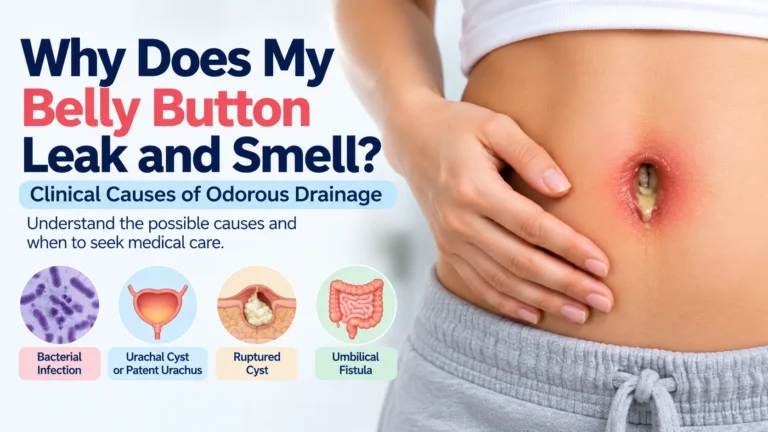
In rare cases, chronic recurrent infections are caused by an underlying congenital defect hidden entirely behind the abdominal wall. During fetal development, a tube called the urachus connects the belly button to the bladder. If a microscopic remnant of this tube fails to close before birth, it can form an internal urachal cyst. This cyst constantly secretes small amounts of fluid directly into the back of the belly button. Because the umbilicus is permanently weeping fluid from the inside, the cavity never truly dries out, leading to non-stop, chronic bacterial and fungal infections that require surgical intervention to cure.
Systemic Health Conditions Driving Chronicity
If your anatomical structure is normal but your belly button keeps getting infected, the root cause is frequently a systemic issue occurring within your bloodstream and immune system.
Uncontrolled Diabetes Mellitus
Chronic, recurrent yeast infections in the belly button are one of the primary dermatological warning signs of undiagnosed or poorly managed diabetes. When your blood sugar levels are chronically high, your body attempts to purge the excess glucose through various pathways, including your sweat glands. When you sweat, you are physically flooding your naval cavity with sugar-rich moisture. Candida yeast feeds exclusively on sugar. The constant supply of glucose provides the yeast with unlimited energy, making it mathematically impossible to permanently cure the fungal infection until your internal blood sugar levels are strictly regulated.
Chronic Hyperhidrosis
Hyperhidrosis is a clinical medical condition characterized by severe, uncontrollable overactive sweat glands. Adults with this condition constantly produce heavy perspiration, even while resting in a cool environment. Because the belly button is a recessed basin, the excessive sweat constantly pools at the bottom of the scar. This relentless moisture permanently destroys the stratum corneum, the protective outer layer of the skin, leaving the raw tissue highly susceptible to continuous bacterial and fungal invasions.
The Danger of Incomplete Treatments and Pathogen Resistance
Human error during the treatment phase is a massive driver of chronic infections. Many adults contribute to their own recurrent umbilical infections by misusing topical medications.
When a doctor prescribes a topical antibiotic like mupirocin or an antifungal like clotrimazole, the instructions typically require you to apply the medication for ten to fourteen days. However, the visible symptoms of the infection, such as the redness, pain, and foul smell, often disappear entirely within three to four days. Believing the infection is cured, patients frequently stop applying the cream prematurely.
This is a critical clinical error. Stopping the medication early leaves the strongest, most resilient microbes alive at the base of the navel. These surviving pathogens quickly mutate and develop a genetic resistance to the medication you just used. When the infection inevitably returns a week later, the original cream will no longer work, resulting in a chronic, treatment-resistant super infection.
The Presence of Umbilical Granulomas
If you are dealing with a recurrent infection that constantly bleeds or weeps clear fluid despite rigorous antibiotic treatment, you may have developed an umbilical granuloma.
A granuloma is a small, fleshy, bright red overgrowth of raw scar tissue that forms inside the navel when a previous infection failed to heal smoothly. This raw tissue has no protective epidermal skin layer over it. Because it is permanently exposed, it constantly secretes fluid and acts as a permanent entry point for opportunistic bacteria. Unless a physician physically removes or chemically cauterizes the granuloma using silver nitrate, the raw tissue will continue to trigger recurrent infections indefinitely.
How to Break the Cycle of Recurrent Infections
To stop your belly button from getting infected repeatedly, you must implement a strict daily protocol designed to permanently alter the micro-environment of your navel, making it impossible for pathogens to survive.
Eradicating the Biofilm and Resistance
If you suspect a biofilm has formed, you must consult a physician. Over the counter creams will no longer work. A doctor will likely prescribe a highly potent, clinical-grade topical medication or a course of oral antibiotics or systemic antifungals. You must commit to completing the entire course of the medication, even if your belly button looks and feels perfectly normal after two days. This is the only way to destroy the dormant microbes hiding at the base of the biofilm.
Meticulous Mechanical Drying
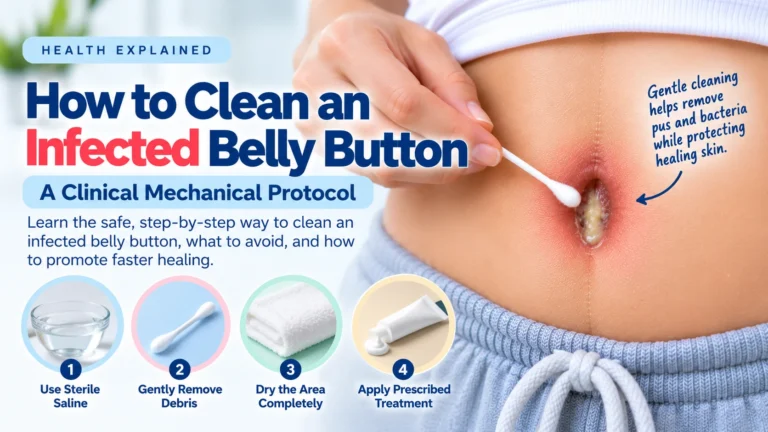
You must eliminate the moisture that pathogens require to multiply. After every single shower or workout, you cannot rely on air drying. Take a clean, dry paper towel, fold it into a soft point, and gently press it deep into the folds of your belly button to absorb every microscopic drop of hidden moisture. Never use a damp bath towel to dry your navel, as towels frequently harbor mold spores and bacteria that will instantly re-infect the cavity.
Managing Systemic Health
If you have diabetes, work closely with your endocrinologist to stabilize your daily glycemic index. Lowering your overall blood sugar will immediately reduce the amount of glucose secreted into your abdominal sweat, starving the chronic yeast of its primary food source. Additionally, wear loose, highly breathable cotton clothing to prevent sweat from pooling in your abdominal folds throughout the day.
Frequently Asked Questions
Your belly button keeps getting infected because the underlying environment remains structurally compromised. Deep anatomical folds trap daily moisture, microbial biofilms protect dormant bacteria from medications, and systemic issues like uncontrolled diabetes constantly feed yeast infections, creating a cycle of recurrent chronicity.
To stop recurrent infections, you must break the moisture cycle. You must meticulously dry the deep inside of your navel with a clean paper towel after every shower. Additionally, you must complete the entire prescription course of any antibacterial or antifungal cream to prevent pathogens from building resistance.
Yes, a deep belly button is a major anatomical risk factor for frequent infections. The deep, enclosed folds completely block airflow and act as a biological trap, permanently collecting daily sweat, dead keratin skin cells, and microscopic clothing lint, which creates the perfect dark incubator for bacteria.
If the infection returns immediately after stopping the cream, it means the pathogens have formed a protective biofilm, or you stopped the treatment prematurely. The cream only killed the surface microbes, allowing the dormant microbes hidden deep in the scar tissue to rapidly multiply the moment the medication was removed.
No, it is absolutely not normal to get a belly button infection every month. Chronic monthly infections indicate a systemic issue, such as uncontrolled blood sugar, a hidden urachal cyst leaking fluid from the inside, or an untreated umbilical granuloma that requires professional medical evaluation.
Yes, weight loss can significantly help reduce recurrent infections if obesity is causing deep abdominal skin folds. By reducing the depth of the naval folds, you increase localized airflow and reduce the amount of skin-to-skin friction and trapped sweat that causes the protective epidermal barrier to break down.
If your belly button is chronically red and intensely itchy despite good hygiene, you are likely suffering from a recurrent fungal yeast infection. This is incredibly common in adults who have a high sugar diet or unmanaged diabetes, as the Candida yeast continuously feeds on the excess glucose in your sweat.
You must never use rubbing alcohol to stop chronic infections. While alcohol kills bacteria, it violently strips away your natural skin oils and destroys healthy new skin cells. This leaves the interior tissue completely raw, severely dry, and highly susceptible to even worse secondary bacterial infections.
Yes, wearing tight, synthetic, non-breathable pants creates severe mechanical friction against your stomach while simultaneously trapping extreme body heat. This combination rapidly breaks down the delicate skin inside the navel and forces sweat to pool inside the cavity, triggering repeated microbial outbreaks.
You should see a dermatologist or general surgeon if your belly button infections return constantly despite meticulous drying and full courses of over-the-counter medications. You may require a prescription oral antibiotic, chemical cauterization of a hidden granuloma, or surgical closure of a weeping congenital urachal cyst.
Conclusion
A belly button that keeps getting infected is not merely a hygiene issue; it is a complex dermatological puzzle driven by microscopic biofilms, anatomical moisture traps, and systemic health conditions. When aggressive bacteria or fungal yeast establish a permanent colony deep within the folds of the umbilicus, standard over-the-counter creams are rarely enough to break the cycle of chronicity. To permanently eradicate recurrent omphalitis, you must adopt a holistic clinical approach. This includes working with a physician to completely destroy treatment-resistant pathogens, managing underlying conditions like uncontrolled diabetes that actively feed fungal overgrowths, and implementing an uncompromising daily routine of meticulously drying the naval cavity. By fundamentally changing the micro-environment of your belly button from a damp, enclosed incubator into a dry, highly aerated space, you can finally halt the endless cycle of recurrent infections and permanently restore the health of your epidermal barrier.
Disclaimer
This blog is for informational & educational purposes only, and does not intend to substitute any professional medical advice or consultation. For any health related concerns, please consult with your physician, or call 911.