Where Is the Uterus in Relation to the Belly Button? Anatomy Facts
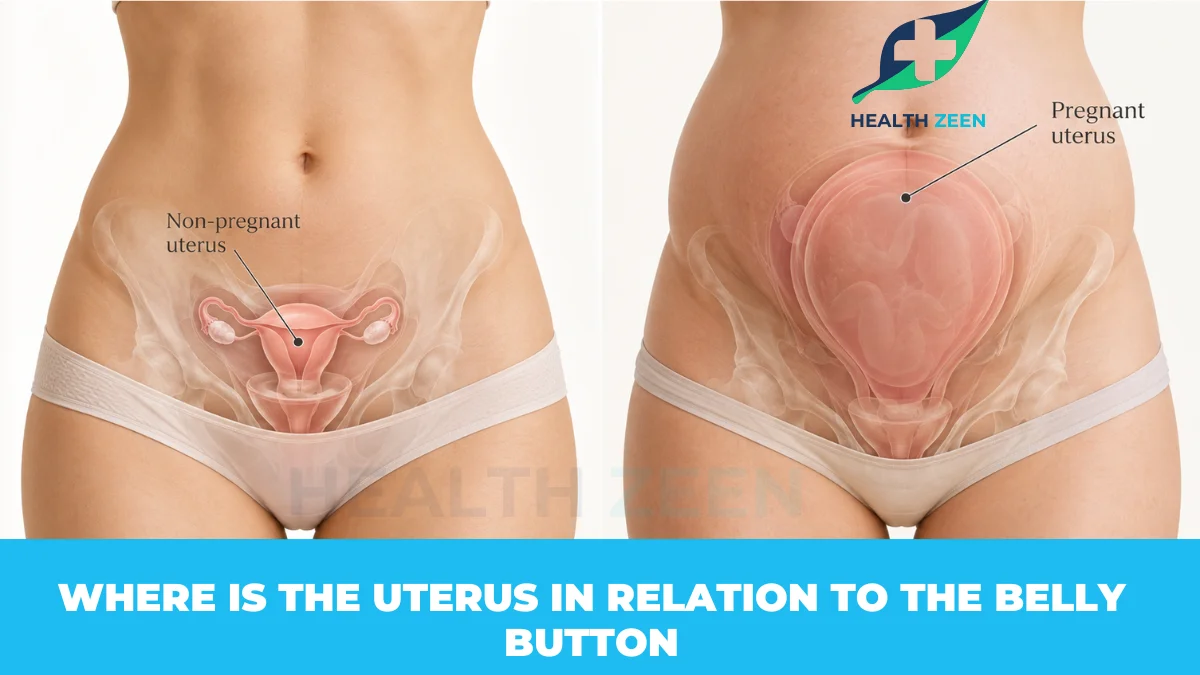
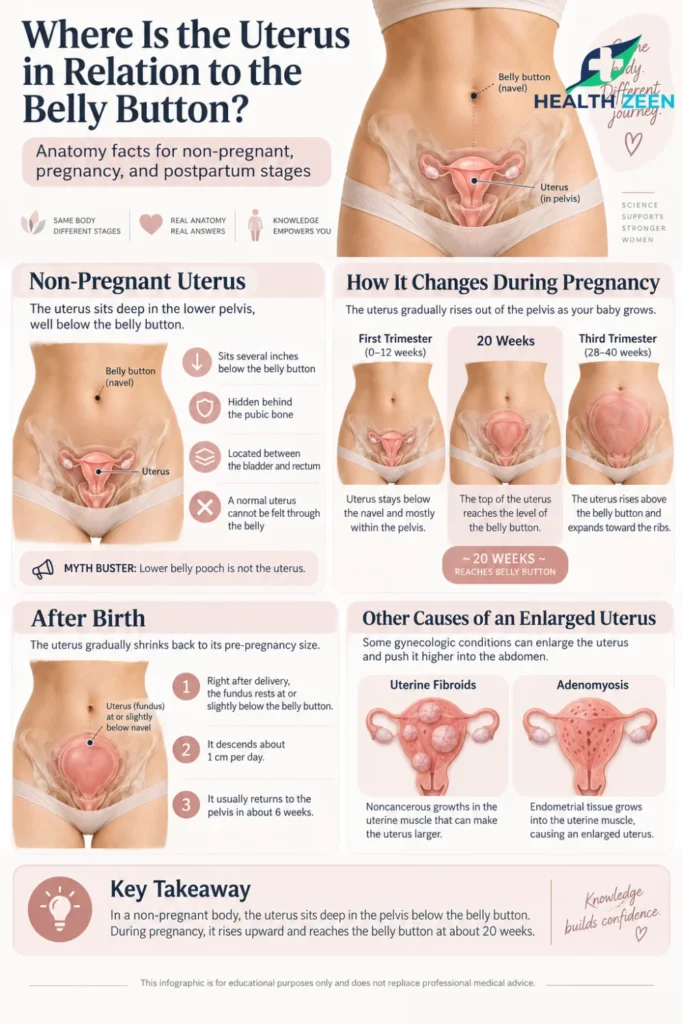
In a healthy, non-pregnant adult female, the uterus sits deep inside the lower pelvic cavity, located several inches strictly below the belly button and tucked safely behind the pubic bone. However, during pregnancy, the uterus rapidly expands upward, with the top of the organ aligning exactly with the center of the belly button at twenty weeks of gestation.
Understanding the precise anatomical relationship between the umbilicus and the female reproductive organs requires visualizing the abdomen in dynamic stages. The uterus is not a static, fixed organ; it is an incredibly elastic muscle capable of massive expansion. Because the belly button serves as the primary centralized landmark on the anterior abdominal wall, medical professionals frequently use its exact spatial relationship to the uterus to track fetal growth, diagnose severe uterine fibroids, and monitor postpartum internal healing. Differentiating between where the uterus rests normally and how it shifts upward explains many distinct abdominal sensations and physical changes.
The Non-Pregnant Uterus: Deep Pelvic Anatomy
To locate the uterus in relation to your belly button when you are not pregnant, you must look significantly downward into the lower pelvic region. The human navel sits halfway up the abdomen, far removed from the reproductive organs.
In its normal, unexpanded state, the adult uterus is roughly the size and shape of an inverted pear, measuring only three to four inches in length. It rests deep within the lower pelvic cavity, completely shielded by the hard symphysis pubis bone located just above your genital region. Structurally, the uterus is sandwiched directly between the urinary bladder in the front and the rectum in the back. Because it is tethered so deeply within the pelvis by strong round ligaments, you cannot physically feel a healthy, non-pregnant uterus by pressing on your belly button or your lower stomach.
The Myth of the Lower Belly Pooch
Many women mistakenly believe that a small, visible bulge below the belly button is their actual uterus pushing outward against the skin. From a strict anatomical perspective, this is a misconception. Because a healthy, non-pregnant uterus is tucked completely behind the pelvic bone, it does not protrude into the soft abdominal tissue. The natural lower belly pooch is primarily composed of superficial subcutaneous fat, normal fascial curvature, and protective internal padding, not the physical mass of the uterus itself.
Where Is the Uterus During Pregnancy?
The spatial relationship between the uterus and the belly button changes drastically during gestation. Obstetricians use a clinical measurement called fundal height to track this specific upward expansion. Fundal height measures the distance from the top of the symphysis pubis bone to the fundus, which is the very top dome of the expanding uterus.
During the first twelve weeks of pregnancy, the uterus remains entirely below the belly button, safely contained within the hard pelvic cavity. Around the twelfth week, it becomes just large enough to rise slightly above the pubic bone, allowing a doctor to feel the firm fundus by pressing gently on the lowest part of the abdomen.
The twentieth week of gestation represents a major anatomical milestone. At exactly twenty weeks, the fundus of the expanding uterus reaches the exact level of the umbilicus. If a physician places a tape measure on the patient’s abdomen, the top edge of the uterus will align perfectly behind the belly button. This is why many women begin to feel distinct physical pressure, skin stretching, and referred nerve pain radiating from their navel midway through their second trimester.
As the pregnancy progresses beyond twenty weeks, the uterus continues to climb rapidly upward, pushing past the belly button toward the diaphragm. By the thirty-sixth week of gestation, the top of the uterus reaches the absolute highest point in the abdomen, wedging itself directly beneath the rib cage and severely compressing the stomach and lungs.
Postpartum Uterine Involution
Once a woman gives birth, the uterus does not instantly shrink back to its original three-inch size, nor does it immediately disappear back into the deep pelvis. The process of the uterus shrinking and descending is clinically known as involution.
Immediately after delivering the baby and the placenta, the heavy, contracted uterus drops back down, with the fundus resting roughly at or slightly below the level of the belly button. Over the next several days, you can physically feel a hard, grapefruit-sized mass located right beneath your navel. As the internal muscle fibers aggressively contract to stop uterine bleeding, the organ steadily descends into the pelvis by roughly one centimeter per day. It typically takes a full six weeks for the uterus to completely disappear below the pelvic bone and lose its spatial relationship with the belly button.
Can Medical Conditions Enlarge the Uterus?
Pregnancy is not the only physiological event that alters the spatial relationship between the uterus and the navel. Specific gynecological conditions can cause massive, abnormal uterine expansion in non-pregnant adults.
Uterine fibroids are dense, non-cancerous muscular tumors that develop within the uterine walls. While most fibroids remain small, they can occasionally grow large enough to mimic a second-trimester pregnancy. A uterus severely engorged with massive fibroids can expand entirely out of the pelvic cavity, extending upward until the top of the organ reaches the belly button. Similarly, adenomyosis, a condition where the inner uterine lining grows aggressively into the muscular wall, can drastically increase the overall size of the uterus, causing it to push upward into the lower abdomen and create visible bloating.
Frequently Asked Questions About Uterine Anatomy
In a non-pregnant woman, the uterus is located deep within the lower pelvis, several inches directly below the belly button and hidden behind the pubic bone. You cannot feel it from the surface of your stomach.
The healthy, non-pregnant uterus sits strictly below the belly button. It only rises to the level of the belly button halfway through pregnancy, and pushes above it during the third trimester.
The non-pregnant uterus is located approximately four to six inches below the belly button, depending on a woman's height and torso length. It rests in the lowest section of the abdominal cavity, securely shielded by the pelvic girdle.
Is the lower belly pooch my uterus?
No, the lower belly pooch is not your uterus. A normal-sized uterus is hidden completely behind the pubic bone. The visible lower stomach curvature consists of natural subcutaneous fat, skin elasticity, and superficial abdominal fascia.
The top of the uterus, known as the fundus, reaches the exact level of the belly button at twenty weeks of gestation. This is a critical anatomical landmark used by obstetricians to ensure normal fetal growth.
You cannot feel your uterus through your belly button unless you are at least twenty weeks pregnant or suffering from severely enlarged uterine fibroids that have pushed the organ abnormally high into the abdominal cavity.
Your belly button hurts as your uterus grows because the expanding organ pushes aggressively against the anterior abdominal wall, stretching the thin umbilical skin and stimulating the sensitive T10 spinal nerve pathway running directly behind the navel.
Where does the uterus go right after giving birth?
Right after giving birth, the heavy uterus drops down so that the top rests at or just slightly below the belly button. It feels like a firm, round grapefruit located directly in the center of your abdomen.
Yes, severe uterine fibroids can cause the uterus to expand so massively that the top of the organ pushes out of the pelvis and reaches the level of the belly button, frequently mimicking the physical appearance of a five-month pregnancy.
In a non-pregnant adult, the organs directly behind the belly button are the transverse colon and sections of the small intestine. The uterus is located much lower down in the pelvis, surrounded by the bladder and rectum.
Conclusion
The spatial relationship between the uterus and the belly button serves as a dynamic anatomical map throughout a woman’s life. In a standard, non-pregnant state, the uterus has no direct physical interaction with the navel; it rests safely shielded inside the deep lower pelvic cavity, firmly anchored behind the pubic bone. However, because the uterus is designed to accommodate massive biological expansion, its location shifts aggressively during gestation. Using the umbilicus as a centralized geographical landmark, physicians can accurately track a pregnancy by observing the uterine fundus reach the belly button at twenty weeks and push past it in the final trimester. Recognizing this specific internal movement helps patients differentiate between normal abdominal anatomy, the physical stretching of pregnancy, and the abnormal upward expansion caused by severe uterine fibroids.
Disclaimer
This blog is for informational & educational purposes only, and does not intend to substitute any professional medical advice or consultation. For any health related concerns, please consult with your physician, or call 911.