What Is a Belly Button? Anatomy, Purpose, and Morphology
The belly button, clinically referred to as the umbilicus, is a permanent, central abdominal scar composed of dense fibrous connective tissue. In adult anatomy, it serves no active physiological function but acts as a critical anatomical landmark for surgeons performing laparoscopic procedures and dividing the abdomen into diagnostic quadrants.
Many individuals view the navel solely as a cosmetic feature of the human abdomen, entirely unaware of its complex structural composition. While it served a vital life-sustaining purpose before you were born, the adult umbilicus represents the exact point where the abdominal muscle walls permanently fused together. Understanding the true anatomical nature of this central cicatrix explains why it exists in various distinct shapes, why it is highly susceptible to specific dermatological infections, and why medical professionals rely on it heavily during diagnostic examinations.
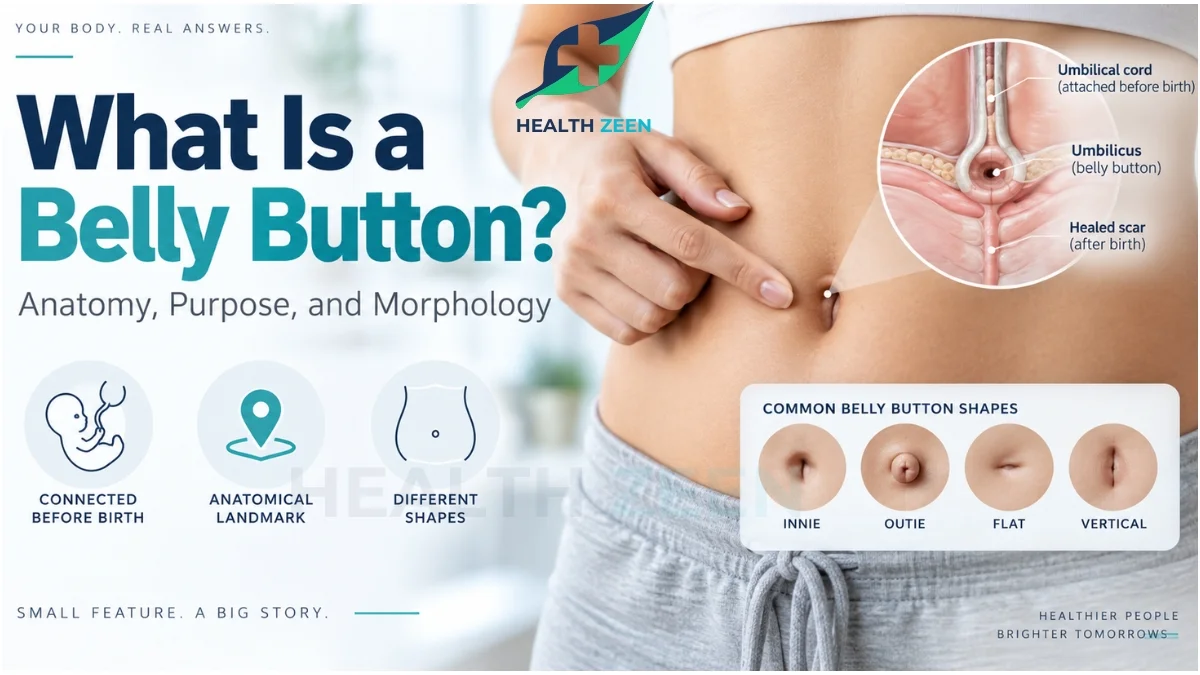
In medical terminology, the belly button is known as the umbilicus. Structurally, it is a specialized type of scar tissue known as a cicatrix. When you examine the abdominal wall, the umbilicus sits directly on the linea alba, which is the tough, fibrous band of connective tissue running vertically down the exact center of your abdomen.
Because the navel is essentially a healed puncture wound spanning the entire thickness of the abdominal wall, it lacks the protective subcutaneous fat and thick muscle layers present in the rest of your stomach. The skin of the umbilicus is tethered directly to the underlying abdominal fascia. This distinct lack of structural padding makes the belly button the absolute thinnest section of the human abdomen, making it a permanent structural weak point prone to tissue herniation.
In a fully developed adult, the belly button does not perform any active physiological or biological function. It does not process food, absorb nutrients, or connect to your gastrointestinal tract. However, while it lacks a physiological role, it serves an incredibly important functional purpose in modern adult medicine and diagnostic surgery.
The umbilicus is the primary anatomical landmark used by medical professionals to map the human abdomen. Physicians draw imaginary horizontal and vertical lines intersecting directly over the belly button to divide the stomach into four distinct clinical quadrants. This precise mapping allows doctors to accurately diagnose the source of severe abdominal pain, such as isolating appendicitis in the lower right quadrant.
Furthermore, the belly button is the preferred entry point for minimally invasive laparoscopic surgery. General surgeons utilize the umbilicus to insert medical cameras and surgical instruments into the abdominal cavity because cutting through this existing scar tissue completely hides the new surgical scars and provides centralized access to all major internal organs.
Human belly buttons exhibit a wide range of morphological variations. The final shape of your adult navel is not determined by how the umbilical cord was cut at birth, but rather by how your individual abdominal fascia healed, the thickness of your subcutaneous fat, and the strength of your internal scar tissue.
The Innie (Depressed Umbilicus)
The vast majority of adults possess an innie belly button. This morphological shape occurs when the fibrous scar tissue heals tightly and pulls the overlying abdominal skin deeply inward toward the underlying fascia. Innies feature deep, overlapping skin folds that create a dark, damp internal cavity.
The Outie (Protruding Umbilicus)
An outie belly button protrudes outward past the flat surface of the stomach. In adults, a prominent outie frequently indicates the presence of a small, underlying umbilical hernia. This occurs when the internal abdominal fascia does not close completely, allowing a small piece of fatty tissue to continuously push the umbilical scar outward.
Vertical and Horizontal Shapes
The structural orientation of the umbilicus often changes dynamically based on adult weight distribution and age. A vertically oriented belly button is frequently associated with tight abdominal muscles and a strong linea alba. Conversely, a horizontal belly button typically develops when increased abdominal adipose tissue (belly fat) physically pulls the skin sideways, stretching the central scar horizontally.
The Human Umbilical Microbiome
Beyond its structural significance, the adult belly button functions as a highly unique biological ecosystem. Because the deep folds of the umbilicus are rarely exposed to direct sunlight, air circulation, or heavy friction, they provide a highly stable environment for microscopic organisms.
A landmark biological study conducted by the National Institutes of Health (NIH) cataloged the unique bacterial diversity residing within the human navel. Researchers discovered that the average adult belly button harbors dozens of distinct strains of bacteria, many of which are completely entirely unique to that specific individual. This trapped microbiome is completely harmless under normal conditions. However, if you neglect standard hygiene and allow excess sweat, lint, and keratin to accumulate, this stable bacterial ecosystem rapidly overgrows, resulting in severe malodor and localized inflammatory infections.
Because the umbilicus is a structurally thin intersection of fascial tissue, it is the most common site for specific adult abdominal complications.
Adult umbilical hernias occur frequently when excessive intra-abdominal pressure from heavy weightlifting, chronic coughing, or severe obesity forces the intestines to breach the thin scar tissue behind the navel. Additionally, the deep anatomical folds of an innie belly button frequently trap dense accumulations of oxidized dead skin cells. Over several years, this debris hardens into a solid, painful mass known clinically as an omphalith, or navel stone, which requires professional dermatological extraction.
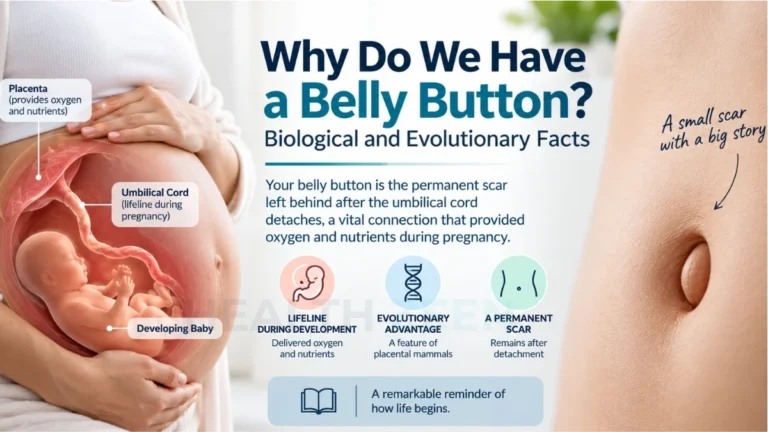
The belly button is the permanent physical scar left behind after the umbilical cord, which supplied oxygen and nutrients before birth, detaches and heals. In adulthood, it serves no active biological purpose but functions as a critical anatomical landmark for surgeons.
No, the belly button is not an organ. It is a dense, fibrous cicatrix (scar tissue) located on the anterior abdominal wall that covers the small fascial opening where fetal blood vessels once entered the body.
When you press your belly button, you push directly against the thin abdominal wall and the highly sensitive parietal peritoneum membrane resting immediately behind it. This direct pressure frequently stimulates the T10 spinal nerve, causing a strange tingling sensation in the groin.
The belly button is considered a structural weak spot because it lacks the thick layers of rectus abdominis muscle that protect the rest of the stomach. It relies entirely on thin, inelastic scar tissue to hold the abdominal wall closed.
No, the belly button does not go all the way through your stomach. It is a closed, blind-ended depression on the surface of the skin that terminates at the fibrous fascia of the abdominal wall.
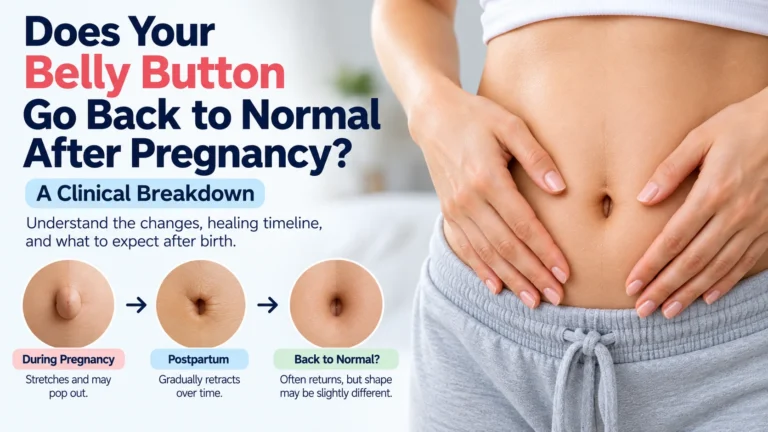
Adults typically develop a sudden outie belly button due to a newly formed umbilical hernia. Increased internal abdominal pressure from rapid weight gain, pregnancy, or heavy lifting pushes internal fatty tissue through the weakened navel, turning an innie into an outie.
The general structural layout of your abdominal fascia is genetically inherited, but the specific, final shape of your belly button (such as the exact depth or fold pattern) is completely random and heavily influenced by how your body forms scar tissue.
Yes, a plastic surgeon can surgically alter the shape of your belly button through a cosmetic procedure called an umbilicoplasty. This surgery frequently repairs stretched horizontal navels, removes excess skin, or corrects protruding outies by reinforcing the underlying muscle.
The black stuff hiding deep inside an innie belly button is a combination of trapped clothing lint, oxidized dead skin cells, dried sweat, and sebum. If left uncleaned, this debris hardens into a dense, solid navel stone.
A belly button is technically a permanently healed wound. It marks the exact location of a natural biological rupture that occurred at birth, which the body sealed shut using dense fibrous connective tissue.
Conclusion
The belly button is far more than a simple cosmetic dimple; it is a complex, structural cicatrix that permanently seals the center of the human abdominal wall. While its life-sustaining physiological functions cease entirely after birth, the umbilicus transitions into a vital anatomical landmark for modern diagnostic medicine and minimally invasive laparoscopic surgery. Because it represents the thinnest section of the abdominal fascia, it remains highly susceptible to structural failures like adult umbilical hernias. Understanding the true clinical nature of the navel encourages adults to prioritize localized hygiene, protecting its unique microbiome and preventing the painful accumulation of bacterial debris within its deep anatomical folds.
Disclaimer
This blog is for informational & educational purposes only, and does not intend to substitute any professional medical advice or consultation. For any health related concerns, please consult with your physician, or call 911.