Why Does My Belly Button Smell? Causes, Symptoms, and Treatments
A foul-smelling belly button is primarily caused by poor localized hygiene, severe bacterial infections like omphalitis, or a fungal Candida yeast overgrowth. Trapped sweat, dead skin cells, and moisture in the navel cavity create a breeding ground for pathogens, requiring daily saline irrigation and targeted antimicrobial ointments to resolve completely.
Patients frequently ask why their belly button smells even after basic washing routines. According to a biodiversity study published by the National Institutes of Health (NIH), the average human umbilicus hosts over 67 distinct bacterial phylotypes under normal physiological conditions. Poor hygiene quickly transforms this dark, damp area into a primary breeding ground for severe yeast infections and ruptured sebaceous cysts. You must identify the exact underlying clinical cause to eliminate the chronic odor and prevent severe dermatological complications.
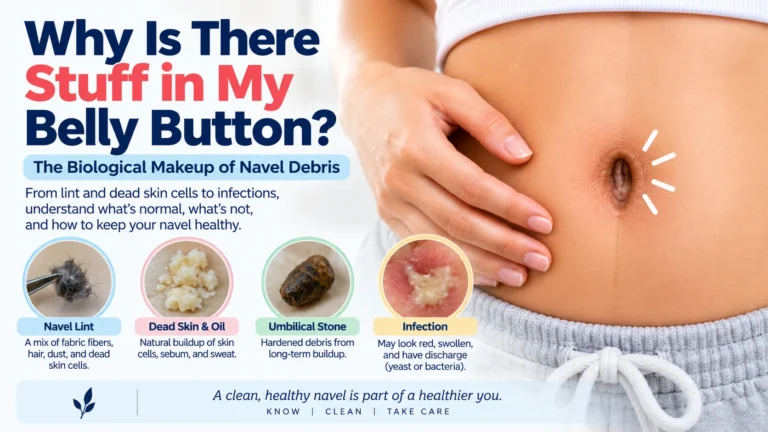
Bacterial infections, fungal overgrowth, sebaceous cysts, and navel stones primarily cause your belly button to smell. These four distinct clinical conditions trap moisture and organic debris inside the naval cavity, triggering rapid microbial reproduction and foul-smelling discharge.
Bacterial Infections (Omphalitis)
Staphylococcal and Corynebacterium strains thrive inside the dark folds of an “innie” belly button, producing a pungent odor. These specific bacteria consume trapped sweat and dead skin cells to multiply. A severe bacterial colonization leads directly to omphalitis. According to the StatPearls Clinical Database (NCBI), localized bacterial infections like omphalitis cause continuous purulent discharge, intense localized pain, and visible abdominal swelling. You require prescription-strength topical antibiotics to eradicate a severe omphalitis infection completely.
Fungal Overgrowth (Candidiasis)
The Candida yeast species requires warm, moist environments to multiply rapidly, creating a distinct, yeast-like smell. A damp umbilicus provides the perfect anatomical habitat for fungal overgrowth. Candidiasis triggers intense pruritus (severe itching) and severe erythema (redness) around the entire naval cavity. The American Academy of Dermatology (AAD) states that fungal skin infections (candidiasis) produce a thick, white, cottage cheese-like discharge deep within the skin folds. You must apply an over-the-counter antifungal cream twice daily to treat this specific pathogenic overgrowth.
Sebaceous and Epidermoid Cysts
Small localized lumps form under the abdominal skin when keratin or sebum blocks a hair follicle, leading to potential odor. A ruptured epidermoid cyst releases a thick, foul-smelling yellow discharge directly into the navel. The trapped keratin oxidizes and rots beneath the dermal layers. These cysts require formal clinical evaluation by a dermatologist to prevent recurrent localized infections.
An omphalith develops when sebum, keratin, and trapped cellular debris harden inside a deep navel over several years. This dark, stone-like mass harbors immense populations of trapped anaerobic bacteria. Navel stones generate a chronic foul odor and cause persistent physical irritation against the abdominal wall. You require professional clinical extraction by a medical provider using sterile forceps to remove a deeply embedded omphalith safely.
Different belly button odors indicate specific infections by revealing the exact metabolic byproducts of the colonizing pathogens. Bacterial digestion of skin cells produces cheese-like smells, while specific anaerobic bacteria generate distinct fecal or fishy odors.
Why Does It Smell Like Cheese?
Specific bacterial strains, including Brevibacterium, digest trapped dead skin cells inside the navel cavity, producing a sharp, cheese-like odor. These bacteria release isovaleric acid during their natural digestive process. Microbiological research indicates that isovaleric acid generates the identical pungent smell found in aged cheeses or unwashed feet. You must practice daily saline irrigation to eliminate these specific bacterial populations effectively.
Why Does It Smell Like Poop or Sewage?
A fecal or sewage-like odor emerges from the umbilicus due to the presence of anaerobic bacteria or an underlying urachal cyst. Anaerobic bacteria thrive in oxygen-deprived environments deep within the abdominal skin folds. A ruptured urachal cyst leaks necrotic fluid and embryonic waste products directly into the belly button. You require immediate medical imaging to rule out a gastrointestinal fistula producing this dangerous clinical symptom.
Why Does It Have a Fishy Odor?
A fishy odor emanating from the belly button indicates a severe localized bacterial infection producing elevated trimethylamine levels. Elevated levels of trimethylamine result directly from specific bacterial metabolic processes breaking down cellular debris. You must apply prescribed topical antimicrobial ointments to eliminate the trimethylamine-producing bacteria and resolve the sharp fishy smell entirely.
Yes, obesity and diabetes directly increase navel infection risks by creating deeper skin folds and compromising the local immune system. Increased abdominal adipose tissue forms overlapping skin folds around the umbilicus. These overlapping folds trap excess moisture and prevent adequate air circulation, creating an optimal environment for intertrigo. Intertrigo is an inflammatory skin condition caused by skin-to-skin friction and trapped sweat.According to the Centers for Disease Control and Prevention (CDC), uncontrolled blood sugar levels in diabetic patients severely impair the immune response and fuel recurrent fungal infections. Candida thrives exclusively on elevated glucose levels secreted in the sweat and abdominal skin tissues. A compromised immune system fails to eradicate these opportunistic fungal pathogens naturally. Diabetic patients must monitor their glycemic index strictly to prevent chronic umbilical candidiasis.
Yes, a belly button piercing can cause a foul smell by harboring trapped bacteria and causing a localized surgical site infection. New and unhealed piercings expose the internal dermal layers to external pathogens daily. The healing tissue produces natural lymph fluid, which crusts around the metallic jewelry. This crusted fluid traps dead skin and sweat beneath the surface, leading to a pungent rotting odor.An infected piercing generates thick purulent discharge, intense erythema, and severe throbbing pain. The jewelry acts as a foreign body, complicating the natural immune response. You must clean the piercing daily with a sterile saline solution to prevent localized necrosis and chronic bacterial colonization.
Post-surgical belly button odor indicates a developing surgical site infection or incomplete internal wound healing. Laparoscopic surgeries frequently utilize the umbilicus as a primary entry point for medical instruments and cameras. External bacteria can infiltrate the healing incision site during the immediate post-operative recovery phase.This bacterial infiltration leads directly to purulent discharge, severe abdominal tenderness, and a highly foul odor. The dissolving stitches trap microscopic blood clots and tissue debris, which break down and produce a distinct rotting smell. You require immediate oral antibiotics from your surgeon to manage a post-surgical umbilical infection and prevent life-threatening systemic complications.
Medical professionals diagnose a smelling navel using physical examinations, microbial swab cultures, and advanced diagnostic imaging. Individuals wondering what causes belly button to smell persistently must undergo this standard clinical evaluation to identify the exact etiology.
- Physical Examination: The physician visually inspects the umbilicus for anatomical abnormalities, trapped foreign objects, epidermal cysts, or distinct signs of severe inflammation.
- Microbial Swab Culture: The doctor extracts a fluid sample from the navel using a sterile cotton swab to identify the exact bacterial or fungal pathogen responsible for the malodor.
- Diagnostic Imaging: Medical technicians utilize ultrasound or CT scans to visualize the internal abdominal wall to detect hidden urachal cysts or umbilical hernias contributing to the purulent discharge.
What Are the Medical Treatments for a Smelly Umbilicus?
Medical treatments for a smelly umbilicus include topical antifungal creams, oral antibiotics, and clinical cyst drainage. A physician prescribes specific pharmacological treatments based entirely on the exact pathogen identified through a microbial swab culture.
- Antifungal Medications: Doctors prescribe miconazole or clotrimazole creams to eradicate Candida overgrowth and resolve the associated yeast-like odor completely.
- Topical and Oral Antibiotics: Physicians utilize cephalexin or clindamycin ointments to treat severe staphylococcal infections causing chronic purulent discharge.
- Clinical Extraction: Dermatologists physically extract embedded omphaliths using sterile forceps to eliminate chronic odor sources safely.
- Surgical Drainage: Medical professionals lance and drain infected sebaceous cysts under local anesthesia to prevent recurrent abscess formation.
You clean a smelly belly button at home by practicing daily washing with antibacterial soap, applying sterile saline solutions, and ensuring thorough drying. You maintain proper umbilical hygiene by implementing strict cleaning protocols tailored to your specific navel anatomy.
Dip a cotton swab into a sterile saline solution or mild antibacterial soap to dislodge trapped cellular debris from the deep folds. Wash the interior cavity gently to prevent micro-abrasions to the sensitive skin. Rinse the cavity with clean running water to remove all loosened organic matter. Pat the umbilicus completely dry using a clean, soft towel. Moisture retention fuels rapid fungal reproduction and bacterial colonization inside deep navels.
Apply a mild, fragrance-free antibacterial soap to a washcloth and wash the protruding tissue gently during a daily shower. The exposed nature of an “outie” navel prevents deep debris accumulation, making standard washing highly effective. Rinse the area thoroughly to remove all remaining soap residue. Dry the protruding skin entirely to prevent any surface-level bacterial colonization.Keep harsh chemicals, heavy lotions, and scented creams out of the naval cavity at all times. Apply these cosmetic products only under direct medical supervision, because they trap moisture and destroy healthy regenerating skin tissue.
When Should You Consult a Doctor?
You should consult a doctor when purulent discharge, severe erythema, or intense localized pain accompany the belly button odor. Persistent odors failing to resolve with proper home hygiene require immediate professional clinical evaluation. Contact a healthcare provider immediately to schedule a diagnostic swab culture and receive targeted prescription therapy.Proceed to an emergency room immediately, if your core body temperature exceeds 101°F (38.3°C). Seek urgent medical care without delay, if the redness and swelling rapidly expand across your abdominal wall. Request immediate emergency medical assistance, if you experience sudden, sharp abdominal pain radiating from the navel. Delaying medical intervention exacerbates underlying infections and leads directly to severe systemic medical complications.
Yes, a smelly belly button frequently indicates poor hygiene. Trapped sweat, dead skin cells, and soap residue accumulate in the navel cavity daily, fueling rapid bacterial and fungal overgrowth that produces foul odors.
Yes, a yeast infection caused by the Candida fungus directly causes a belly button to smell. This fungal overgrowth thrives in warm, moist environments and produces a distinct, yeast-like odor accompanied by thick white discharge.
A minor belly button infection typically lasts between three to seven days with proper daily saline cleaning and topical antimicrobial treatments. Severe bacterial or fungal infections require prescription medications and may persist for several weeks without clinical intervention.
No, hydrogen peroxide is not safe for routine belly button cleaning. This harsh chemical destroys healthy regenerating skin cells and delays the natural healing process of irritated umbilical tissues.
Your belly button smells after working out due to the rapid accumulation of fresh sweat and sebum in the abdominal skin folds. This warm moisture accelerates bacterial digestion of cellular debris, immediately generating a sharp odor.
Yes, pregnancy can cause a smelly belly button by physically stretching the abdominal skin and expanding the navel cavity. This structural change exposes hidden trapped debris and increases moisture retention, fostering localized microbial growth and odor.
Yes, belly button stones (omphaliths) smell strongly. These hardened masses of keratin, sebum, and dirt harbor dense populations of anaerobic bacteria that continuously release pungent metabolic byproducts deep inside the navel.
The best cream for a smelly belly button depends entirely on the underlying pathogen. Doctors prescribe clotrimazole for fungal yeast infections and mupirocin or clindamycin ointments for severe bacterial colonizations.
Your belly button bleeds and smells due to a severe localized infection, a ruptured epidermoid cyst, or excessive aggressive scratching. The presence of blood alongside a foul odor requires immediate clinical evaluation to prevent systemic complications.
Rubbing alcohol eliminates belly button odor temporarily by killing surface bacteria, but medical professionals advise against its regular use. Isopropyl alcohol severely dries out the delicate umbilical skin, leading to micro-tears and subsequent recurrent infections.

Conclusion
A foul-smelling belly button originates primarily from bacterial colonizations, fungal overgrowths, and poor localized hygiene. You must identify specific clinical symptoms, including purulent discharge or severe erythema, to determine the exact underlying pathogen. Implementing strict daily washing routines with mild antibacterial soap and thoroughly drying the umbilicus effectively prevents microbial accumulation. You should seek immediate medical intervention when persistent odors are accompanied by sharp abdominal pain or spreading redness to avoid severe systemic complications and restore optimal umbilical health.
Disclaimer
This blog is for informational & educational purposes only, and does not intend to substitute any professional medical advice or consultation. For any health related concerns, please consult with your physician, or call 911.