What is a Herniated Belly Button? A Clinical Definitional Guide
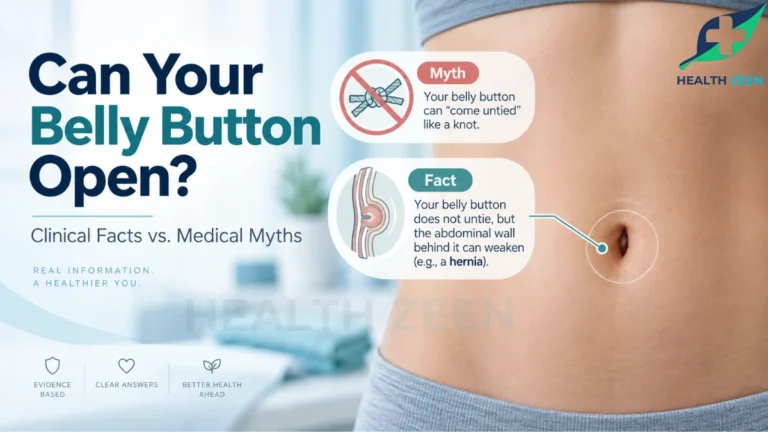
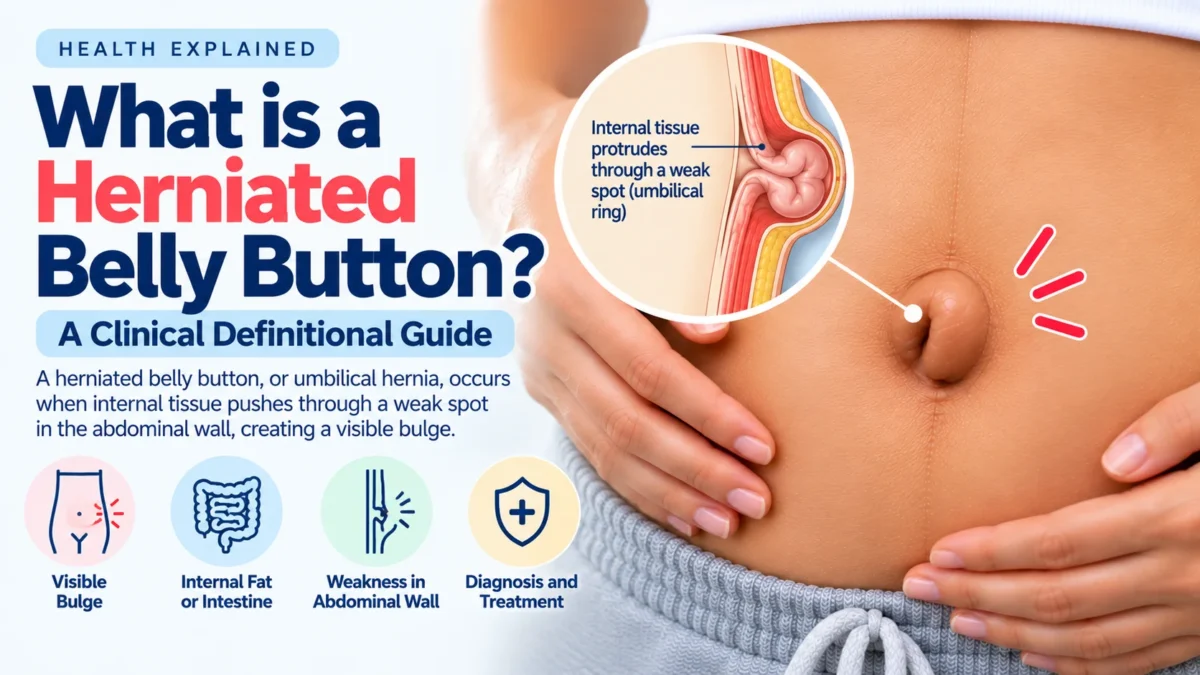
When you notice a sudden, unusual bulge protruding from your navel, you may be told that you have a herniated belly button. While the phrase is highly common, it is actually a slight clinical misnomer. The belly button itself is not what is herniating. Clinically diagnosed as an umbilical hernia, this condition occurs when the internal contents of your abdominal cavity escape through a structural failure in your abdominal wall, using the navel simply as an exit point.
To truly understand what a herniated belly button is, you must look past the visible lump of skin and examine the complex anatomy functioning beneath the surface. In clinical medicine, a true hernia is not just a random bump; it is defined by a specific anatomical triad consisting of a defect, a sac, and the contents. By breaking down the mechanical failure of the umbilical ring, identifying exactly what type of tissue is protruding, and understanding the distinct clinical stages of herniation, you can accurately comprehend the physical reality of a herniated navel.
The Anatomical Triad of an Umbilical Hernia
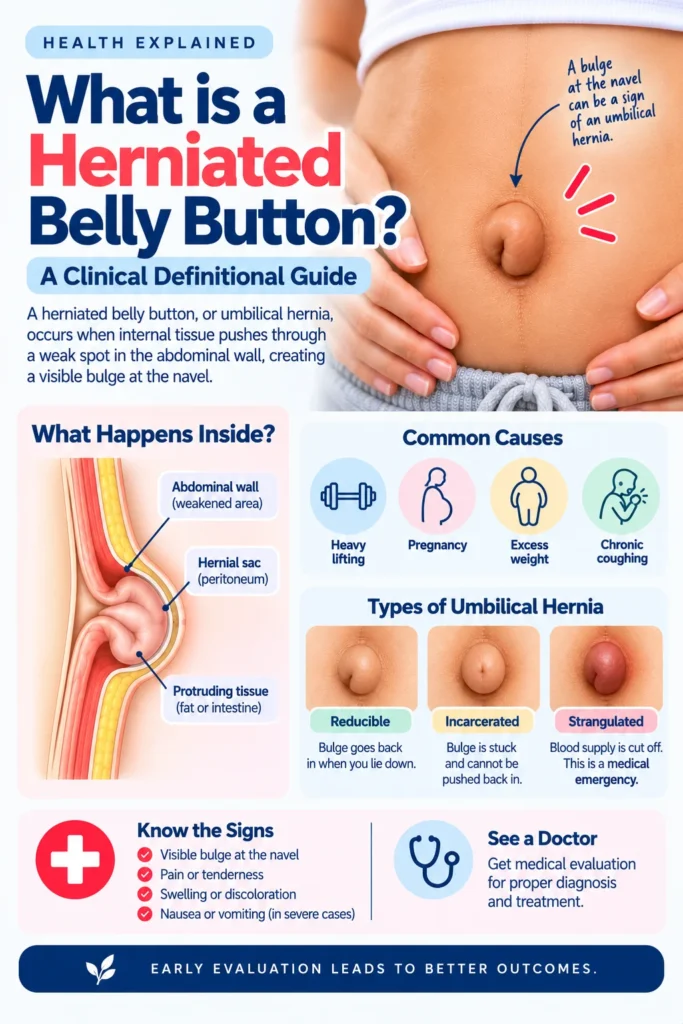
A herniated belly button is formally defined by three distinct anatomical components that must all be present for a true herniation to occur.
The first component is the fascial defect. Your anterior abdominal wall is protected by a thick, highly resilient sheet of connective tissue called fascia, specifically the linea alba. Directly behind your belly button lies a natural weak point in this fascia known as the umbilical ring. A hernia is born the moment this ring physically tears or stretches open, creating a structural hole, which doctors call the defect.
The second component is the hernial sac. The entire inside of your abdominal cavity is lined with a thin, balloon-like membrane called the peritoneum. When the fascial defect opens up, the immense pressure inside your stomach forces a small section of this peritoneal lining out through the hole. This creates a tiny, empty pouch resting just beneath the skin of your belly button.
The third and most critical component is the contents. The empty peritoneal sac is rapidly filled by internal abdominal structures. Once biological material enters the sac and pushes the belly button skin outward, the condition is officially classified as a herniated belly button.
The Contents: What is Inside the Hernia?
The physical texture and severity of a herniated belly button depend entirely on what specific internal structures have been forced into the hernial sac.
In the vast majority of adult cases, the protruding material is entirely composed of omentum. The omentum is a specialized apron of highly vascularized adipose tissue, or visceral fat, that naturally hangs down over your internal organs. Because it rests directly against the inner abdominal wall, it is usually the first tissue to slip through a torn umbilical ring. A belly button herniated with omental fat will typically feel soft, squishy, and doughy to the touch.
However, if the fascial defect is unusually large, a loop of the small intestine can be forced into the sac. An intestine-filled hernia represents a significantly more complex clinical scenario. This type of herniation often feels much firmer, is highly sensitive to physical pressure, and can occasionally produce audible gurgling sounds as digestive gases and fluids attempt to navigate the trapped loop of bowel.
The Three Clinical Stages of Herniation
A herniated belly button is not a static condition. It is a progressive mechanical failure that is clinically categorized into three distinct stages based on mobility and blood supply.
The Reducible Hernia
In its earliest and mildest stage, an umbilical hernia is classified as reducible. This means the protruding fat or intestine remains highly mobile. When you stand up or cough, the bulge pushes outward. However, when you lie completely flat on your back and relax your abdominal muscles, the protruding tissue easily slips back through the fascial defect and returns to its proper place inside the abdominal cavity. Reducible hernias are generally painless and present only a mild aching sensation.
The Incarcerated Hernia
If a reducible hernia is ignored, the constant mechanical friction can cause the tissue inside the sac to swell. Alternatively, the edges of the torn fascia may contract. When this happens, the protruding tissue becomes tightly wedged inside the defect and can no longer be pushed back into the abdomen, regardless of your physical position. This is known as an incarcerated hernia. The bulge becomes permanent, feels firm to the touch, and typically causes a constant, sharp, pulling pain.
The Strangulated Hernia
An incarcerated hernia can rapidly escalate into a strangulated hernia, which is a life-threatening medical emergency. Strangulation occurs when the fascial defect acts like a tight tourniquet, completely cutting off the arterial blood supply to the trapped tissue. Deprived of oxygen, the tissue inside the belly button begins to undergo necrosis, meaning it is actively dying. A strangulated hernia turns dark red, purple, or black, becomes agonizingly painful, and triggers severe systemic symptoms.
Visual and Physical Symptoms
Identifying a herniated belly button involves looking for highly specific visual and tactile cues. The most obvious sign is a distinct, localized swelling protruding directly out from the center of the navel, or immediately adjacent to the umbilical scar.
Unlike a localized skin infection, the skin covering a standard reducible hernia will perfectly match your normal skin tone, and it will not feel hot to the touch. The physical size of the bulge will dynamically change based on your internal abdominal pressure. The herniation will look most prominent when you are lifting a heavy object, straining on the toilet, or experiencing a heavy coughing fit. Conversely, the bulge may seemingly disappear entirely when you wake up in the morning after lying flat in bed all night.
Frequently Asked Questions
A herniated belly button is a structural failure where the dense connective tissue behind your navel tears open. This hole allows internal abdominal fat or a section of your small intestine to push outward through the abdominal wall, creating a visible, squishy bulge right at the umbilicus.
You can usually tell your belly button is herniated if you have a soft, painless bulge at the navel that pushes outward when you stand, cough, or strain, but completely flattens out or disappears when you lie flat on your back and relax your stomach muscles.
Yes, a herniated belly button is simply the common, informal term for an umbilical hernia. Medical professionals prefer the term umbilical hernia because it accurately describes the anatomical location of the fascial defect within the umbilical ring.
In most cases, the soft, squishy tissue that you feel inside the hernia is the omentum. This is a natural layer of protective visceral fat that covers your internal organs. In more advanced cases, the tissue may actually be a trapped loop of your small intestine.
No, an adult herniated belly button cannot biologically heal itself. The condition is a physical tear in dense, avascular connective tissue. Because this fascia lacks a heavy blood supply, it cannot regenerate or stitch itself back together. It requires surgical intervention, often with medical mesh, to permanently close the hole.
If left untreated, the daily pressures of moving, lifting, and coughing will slowly force the fascial tear to grow wider. Over time, more internal tissue will spill into the sac, greatly increasing the risk of the hernia becoming permanently trapped, or incarcerated, outside the abdominal wall.
A strangulated hernia is excruciatingly painful. The bulge will feel rock hard, highly sensitive to even the lightest touch, and the overlying skin will often turn dark red or purple. This intense pain is typically accompanied by a high fever, severe nausea, and sudden projectile vomiting.
Yes, congenital umbilical hernias are highly common in infants. They occur when the umbilical ring fails to properly close immediately after birth. However, unlike adult hernias, the vast majority of infant umbilical hernias will naturally close on their own before the child reaches the age of five.
Yes, carrying excess abdominal body fat significantly worsens a herniated belly button. The heavy accumulation of visceral fat creates a permanently high level of intra-abdominal pressure. This constant outward force relentlessly pushes against the torn fascia, causing the hernia to expand more rapidly.
You should strictly avoid any exercises that massively spike your core pressure, such as heavy weightlifting, deep squats, or intense abdominal crunches. These activities can force more intestines into the hernia. Light, low-impact cardiovascular exercises like walking or swimming are generally safe for reducible hernias.
Conclusion
Understanding what a herniated belly button is requires shifting your perspective from a simple surface blemish to a complex mechanical failure of the abdominal wall. The condition is fundamentally defined by the opening of a fascial defect, the creation of a peritoneal sac, and the unnatural migration of internal omental fat or intestinal loops. By recognizing the critical distinction between a highly mobile, reducible hernia and a rigidly trapped, incarcerated one, you can accurately gauge the severity of your structural condition. While a small protrusion of visceral fat may seem like a minor cosmetic annoyance, the underlying torn fascia will never biologically repair itself. Monitoring the dynamic changes in the bulge, avoiding activities that generate massive intra-abdominal pressure, and consulting a general surgeon for a definitive fascial repair are the most critical steps in preventing a harmless protrusion from escalating into a catastrophic strangulation.
Disclaimer
This blog is for informational and educational purposes only, and does not intend to substitute any professional medical advice or consultation. For any health related concerns, please consult with your physician, or call 911.