Why Do We Have a Belly Button? Biological and Evolutionary Facts
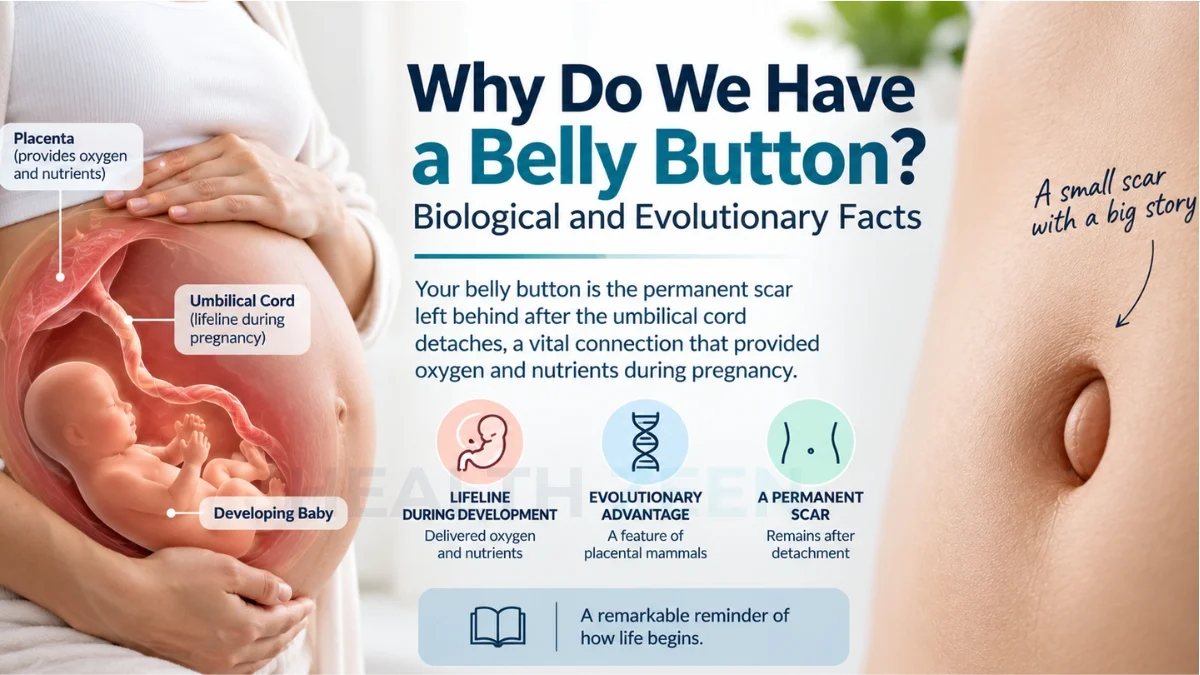
Humans have a belly button because we belong to a biological class known as placental mammals, requiring a direct vascular connection to a maternal blood supply for oxygen and nutrient transfer during gestation. The belly button, clinically known as the umbilicus, is simply the permanent fibrous scar left behind on the abdominal wall once this temporary life-support system naturally detaches and the central fascia seals shut.
While it is easy to view the navel as merely a strange cosmetic dimple on the center of the stomach, its existence represents one of the most critical evolutionary advancements in mammalian biology. Before the evolutionary development of the placenta and the umbilical cord, organisms relied entirely on the limited nutrients contained within an eggshell. Understanding exactly why humans evolved to have this abdominal connection, how the tissue permanently fuses together, and what the scar represents in adult anatomy requires a deep dive into evolutionary biology and structural connective tissue.
To understand why humans have a belly button, you must look at evolutionary biology and how different species gestate. Humans are classified as placental mammals. This biological classification dictates that offspring develop entirely inside the maternal body, requiring an advanced, continuous biological system to transfer heavy volumes of oxygen, nutrients, and waste over many months.
Evolution solved this complex biological requirement by developing the placenta and the umbilical cord. This system acts as a highly efficient, specialized vascular bridge. In contrast, marsupials like kangaroos gestate in a pouch, and egg-laying mammals like the platypus rely on egg yolk. Because they do not utilize a complex, long-term placental bridge during gestation, they do not possess a defined belly button. The presence of the umbilicus is the definitive anatomical signature of placental mammalian evolution.
The belly button does not exist prior to birth. It physically forms through a highly organized process of biological detachment and fascial fusion that occurs specifically at the center of the anterior abdominal wall.
During gestation, the thick blood vessels comprising the umbilical cord enter the abdominal cavity through a designated opening in the linea alba, the central band of connective tissue separating the abdominal muscles. Once the organism is separated from the placenta, this vascular connection is no longer biologically necessary. The blood vessels rapidly collapse, and the remnant tissue undergoes natural necrosis, meaning it dries up and completely falls off.
Following this detachment, the human body must permanently seal the open hole in the abdominal wall. It does this by rapidly generating dense fibrous connective tissue. This heavy scar tissue physically tethers the overlying skin directly to the deep abdominal fascia, permanently closing the hole and pulling the skin inward to create the characteristic depressed cicatrix we identify as a belly button.
While the adult belly button serves no active physiological function, the biological connection it represents was the single most vital component of early human development. The umbilical cord acted as a highly advanced bypass system.
Because developing lungs cannot breathe air and developing livers cannot filter complex toxins, the umbilical connection allowed the maternal organs to do the heavy physiological lifting. The connection contained one large vein carrying highly oxygenated, nutrient-rich blood directly to the developing heart, completely bypassing the dormant lungs. Simultaneously, two umbilical arteries carried deoxygenated blood and cellular waste products back out through the navel to the placenta for the maternal kidneys to filter. Once you begin breathing atmospheric oxygen autonomously, this entire vascular system becomes obsolete.
In a fully developed adult, the belly button possesses absolutely no active physiological purpose. It does not circulate blood, it does not digest food, and it does not connect to the internal intestinal tract. However, it serves a highly critical functional purpose in modern clinical medicine.
Because the umbilicus is a centralized scar resting exactly on the midline of the human abdomen, medical professionals utilize it as the primary anatomical landmark for diagnostic mapping. By drawing imaginary lines intersecting at the navel, physicians divide the abdomen into four clinical quadrants, allowing them to pinpoint the exact location of severe visceral pain. Furthermore, general surgeons rely heavily on the belly button during minimally invasive laparoscopic procedures. Because the navel is already composed of dense scar tissue, surgeons make their primary incisions directly through the umbilicus to hide surgical scarring and gain immediate, centralized access to all major internal abdominal organs.
Humans have a belly button because we are placental mammals. We require a temporary vascular cord to receive oxygen and nutrients during gestation. The belly button is the permanent scar left behind when that cord detaches and the abdominal wall seals shut.
No, not all animals have a belly button. Only placental mammals, such as humans, dogs, cats, and whales, have belly buttons. Animals that hatch from eggs, like birds and reptiles, or marsupials like kangaroos, do not develop true umbilical scars.
Yes, the belly button is technically classified as a specialized scar, known clinically as a cicatrix. It is formed entirely from dense fibrous connective tissue that permanently seals the central fascial opening in the abdominal wall.
Some people do not have a belly button due to rare congenital defects like omphalocele or gastroschisis, where the abdominal wall does not close properly. These conditions require immediate surgical correction, which frequently removes the natural umbilical scar entirely.
The adult belly button has no active biological purpose. Its only original biological purpose was to serve as the entry point for the umbilical cord vessels, which provided vital life-support before autonomous breathing began.
Belly buttons form different shapes based entirely on how your individual body heals and generates fibrous scar tissue. The thickness of your subcutaneous fat and the exact way the central fascia fuses determine whether you develop an innie or an outie.
No, the belly button does not connect to your stomach or your digestive tract. It is a closed, blind-ended scar resting on the exterior abdominal wall, physically separated from all internal digestive organs.
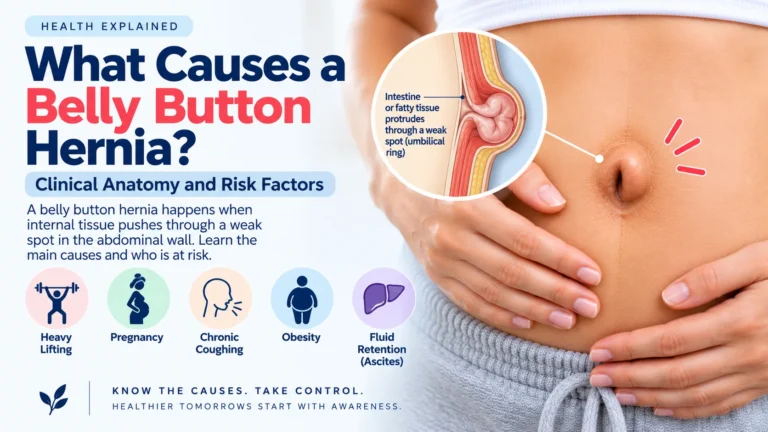
Yes, the belly button is a permanent structural weak spot on the human body. Because it lacks thick protective muscle layers and relies entirely on thin scar tissue, it is highly susceptible to tearing under pressure, resulting in an umbilical hernia.
What happens to the internal umbilical cord in adults?
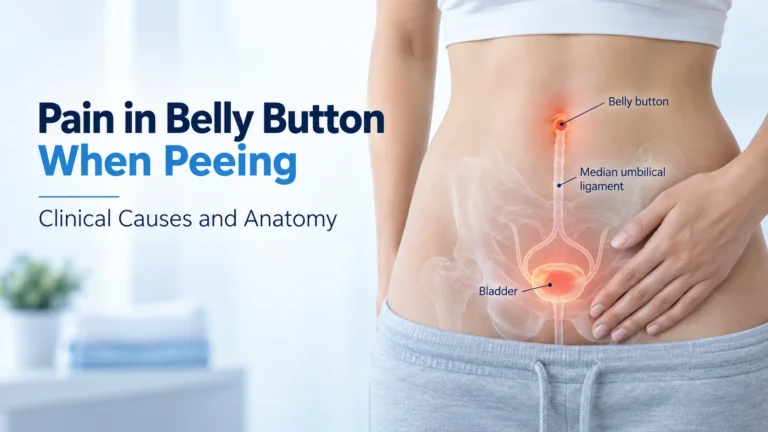
In adults, the internal remnants of the umbilical cord blood vessels completely collapse, dry up, and solidify into thick, fibrous cords called the round and median umbilical ligaments, which remain tethered to the back of the navel.
No, identical twins do not have the same belly button shape. While they share identical DNA, the formation of the umbilical scar is a random mechanical healing process, making every belly button completely unique, much like a fingerprint.
Conclusion
We have a belly button because it is the definitive anatomical marker of our evolution as placental mammals. This centralized abdominal cicatrix is the permanent structural evidence of the complex vascular system that sustained our biological development before we could process atmospheric oxygen or digest food autonomously. While the umbilicus loses all physiological function the moment the abdominal fascia permanently fuses shut, it remains an incredibly important structural feature in adult anatomy. It acts as the primary topographical landmark for surgical navigation and serves as a permanent biological reminder of the evolutionary advancements that make complex mammalian gestation possible.
Disclaimer
This blog is for informational & educational purposes only, and does not intend to substitute any professional medical advice or consultation. For any health related concerns, please consult with your physician, or call 911.